
Right on the first day of 2026, at the construction site of items belonging to the Dai Ngai bridge construction investment project on National Highway 60, in the territory of Tra Vinh and Soc Trang provinces (now in Vinh Long province and Can Tho city), the working atmosphere is still urgent and vibrant. Hundreds of engineers, workers and machinery and equipment are maintained for construction throughout the New Year with the determination to accelerate the progress of the key project connecting the two banks of the Hau River.
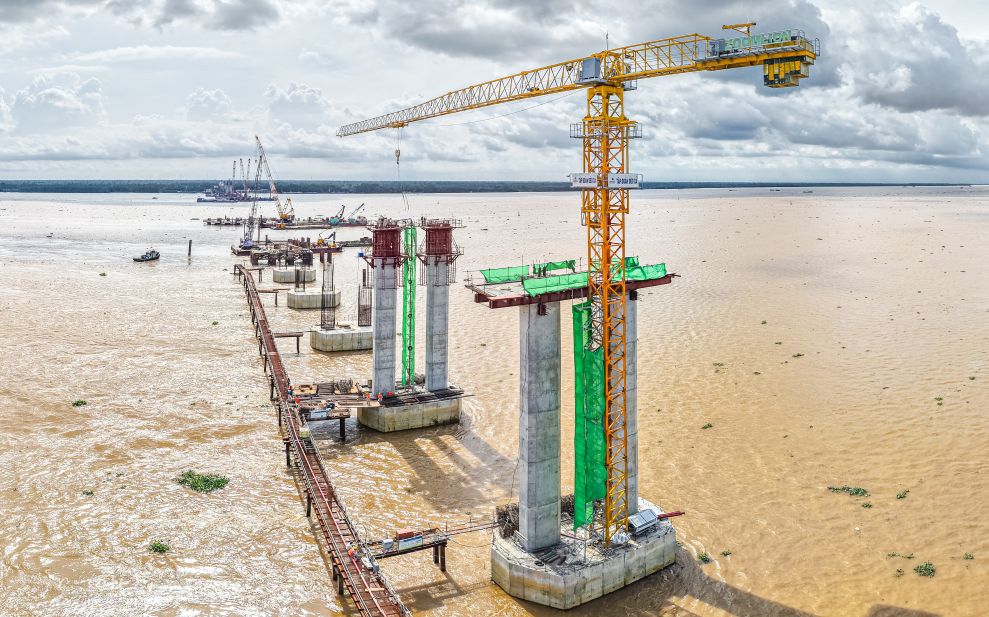
Dai Ngai 1 bridge is the main item of package 15-XL, with a total construction value of more than 3,907 billion VND. The project is designed according to a special-grade cable-stayed bridge structure, with a total length of more than 3 km, of which the main bridge is 2.59 km long, 21.5 m wide, spanning the Dinh An channel (Hau River). This is the second largest bridge in Vietnam after Can Tho bridge and the first cable-stayed bridge directly designed and implemented by domestic consultants.
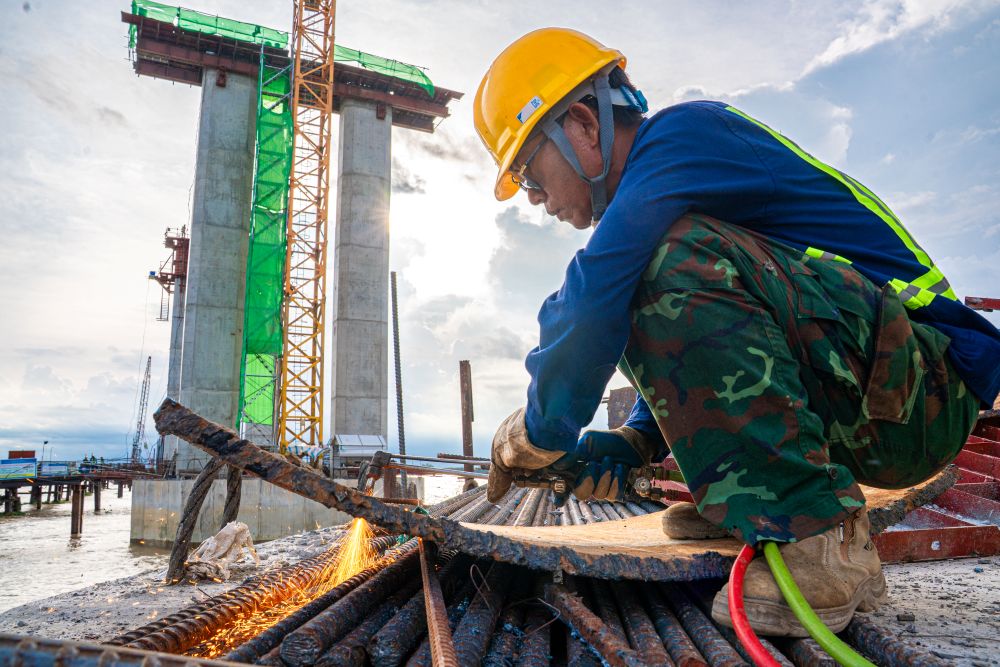
Mr. Phan Van Y - Deputy Managing Director of Dai Ngai 1 Bridge Project - said that currently the most important items of the project are being focused on synchronously deployed. In the main bridge area, construction teams are focusing on constructing tower pillars. In the approaching bridge section, the construction of the bridge body and bridge deck is also being accelerated. The construction process is currently facing many advantages because it is in the dry season, with little rain. In particular, the main items have been constructed above the water level, helping the project no longer be dependent or affected by the rising and falling tides as in the previous period.
We still maintain overtime, increased shifts, working even at night to speed up progress. Usually, each night the construction site maintains about a few dozen personnel, but in peak periods such as steel installation, the number of workers can be mobilized more," Mr. Y shared.
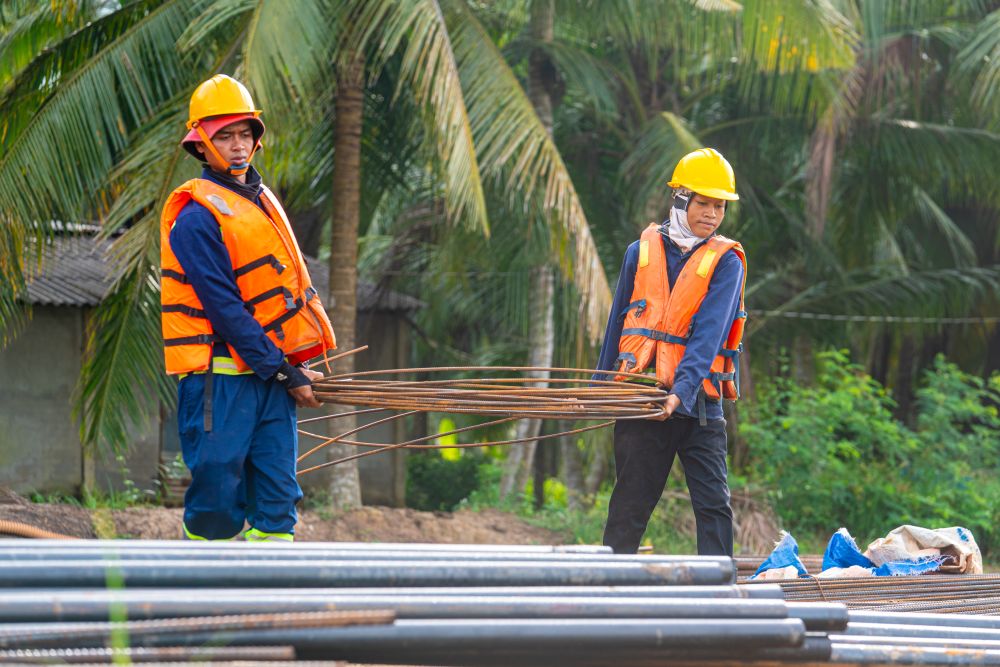
At package No. 11-XL also belonging to the Dai Ngai bridge project, the working atmosphere also took place urgently from the early days of the new year. After Dai Ngai 2 bridge was completed and temporarily opened to traffic, units are focusing on constructing the access road section from district road 10 to provincial road 933B, Cu Lao Dung area.
Mr. Trinh Ngoc Tuan, in charge of constructing the Cu Lao Dung section, said that the unit is gathering soil, building embankments, pouring concrete to tie the median strip and continuing to work overtime during Tet with about 30 personnel and equipment of all kinds. "The brothers work normally as usual and are all fully entitled to the bonus regime according to regulations," Mr. Tuan said.
Mr. Le Thanh Tien, a worker from Thanh Hoa, shared that although living conditions at the construction site are still difficult and they have to cook on their own, the brothers are all united for the common goal of the project. "Every year I only go home for about 10 days, the rest follow the project. The company also cares and supports, so the brothers are assured to work," Mr. Tien said.
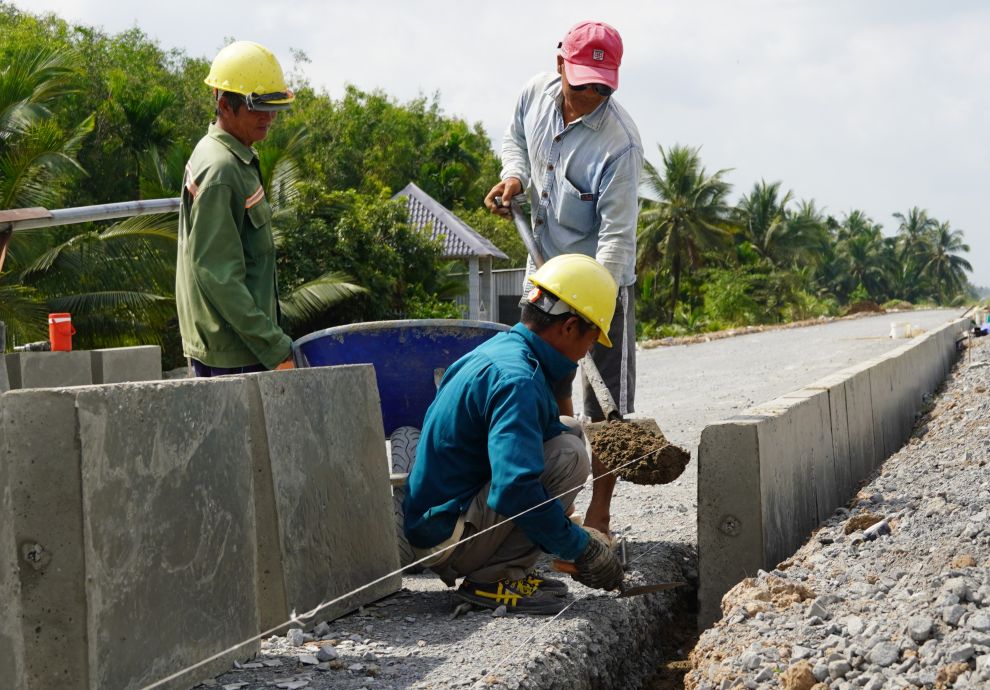
According to Project Management Board 85 (the project investor), currently the entire project has 41 construction teams, including 24 construction teams for Dai Ngai 1 bridge, 6 construction teams for roadbed and 11 construction teams for projects on the route. The total number of machinery and equipment is 182 equipment, with 466 personnel working regularly on the construction site.
Up to now, items belonging to packages 11-XL and 15-XL are being implemented to ensure quality, labor safety and environmental sanitation. In which, many bridge items have been completed or have reached high progress; the road section in some sections is still slow but is being focused on manpower and equipment to compensate for progress in the coming time.
The Dai Ngai bridge project has a total length of 15.14km. The section is designed with a level III plain road scale, design speed of 80km/h, with 4 lanes.
After the project is completed, all river ferry points passing through the coastal provinces of the Mekong Delta from Ca Mau to Ho Chi Minh City will be removed, connecting the entire National Highway 60 to improve transport capacity for the region, creating convenient traffic connections between the southern coastal provinces with each other and with Ho Chi Minh City.


