
Digital transformation enters a new phase
On the morning of August 18, at the I.C. E International Exhibition Center in Hanoi, the 2026 Banking Industry Digital Transformation Event opened with the theme "Smart banking in the data and AI era". Taking place on August 18-19, the event is an opportunity to review 5 years of implementing the Banking Industry Digital Transformation Plan to 2025, with orientations to 2030.
Attending the event were leaders of the Ministry of Science and Technology, the Central Propaganda Department, the Ministry of Foreign Affairs, the Ministry of Public Security; representatives of diplomatic missions, departments, ministries, branches, international organizations, financial institutions, technology businesses and a large number of representatives of the Banking sector.
On the banking sector side, there were Governor of the State Bank of Vietnam Pham Duc An, Deputy Governor Pham Tien Dung, along with leaders and members of the State Bank's Executive Board and the Banking Sector Digital Transformation Steering Committee.
Speaking at the opening, Deputy Governor Pham Tien Dung emphasized that science, technology, innovation and digital transformation are becoming important driving forces to promote national development, posing the requirement that the Banking sector must innovate operations and improve the quality of service to people and businesses.
According to the Deputy Governor, the Banking sector continues to take customers as the center, taking efficiency and service quality as the goal, bringing scientific and technological achievements into banking operations to be substantive, safe and effective. The event is a forum for management agencies, credit institutions, experts, international organizations and technology businesses to exchange and share experiences, and find solutions for the next digital transformation journey.

Speaking to direct, Governor of the State Bank of Vietnam Pham Duc An said that digital transformation in the banking sector is entering a new phase, shifting from policy to action, from progress management to result management. Each task must aim for specific products, real efficiency and value for people, businesses, and the economy.
The Governor emphasized that data and AI are not self-determined goals but must become resources and tools to improve management capacity, product innovation, risk management and better customer service.
Accordingly, the Banking sector focuses on 6 groups of tasks: completing the legal framework in the digital environment; upgrading digital infrastructure, modernizing payments and standardizing data; practical and responsible AI application; strengthening security, safety and digital trust; putting people and businesses at the center, promoting comprehensive finance; developing human resources in data, AI, technology and network security.

The Governor requested that digital transformation must have specific goals, products, and measurement targets; the head directly directs and is responsible for the results. This process must serve people, businesses, especially the elderly, vulnerable people, and people in remote and isolated areas, ensuring convenient and safe access to financial services.
The Governor affirmed that in the new period, the Banking sector needs to turn technology into productivity, data into resources, innovation into products and services, and digital transformation into convenience for people, opportunities for businesses, and new competitiveness of the economy.
Continuing the opening session, delegates focused on exchanging views on perfecting institutions, developing digital infrastructure and data, applying AI, implementing Project 06, ensuring network safety and security, strengthening connection and data sharing, towards a modern and safe digital banking ecosystem.
Agribank brings digital finance closer to people
With Agribank, digital transformation is not only building a technology platform but also associated with the goal of expanding access to financial services, especially in the agricultural and rural sectors.
Speaking at the event, Mr. Do Duc Thanh, Deputy General Director of Agribank, emphasized that digital transformation at Agribank is a journey to promote comprehensive finance. "For Agribank, digital transformation is not just technology but also a journey to create balance for all customers," he shared.

Currently, Agribank has more than 12 million accounts, 14 million cards in rural areas; more than half a million vulnerable people, 2 million people receiving social security and insurance allowances through accounts. More than 200 smart kiosks, hundreds of AI-integrated digital service stations and AI switchboards support 15 million customers.
At the experience space, Agribank introduces the digital banking ecosystem with Agribank Plus, Agribank Digital, Open Smart Bank, eKYC, QR payment, biometrics, Open API and Payment Hub.
Agribank Plus serves more than 15 million customers with nearly 200 products, services, and utilities; integrates online lending with 5,192 disbursed loans, sales of 38.4 billion VND, outstanding debt of 5.02 billion VND, serving 3,408 customers.
For corporate customers, Agribank eBanking and ERP Connect digitize many financial nghiệp vụ. Agribank eBanking currently serves more than 73,000 corporate customers, with an operating rate of 99.88%; in 2026 alone, there are more than 18,000 newly registered businesses.

Agribank also brings digital services closer to people through Smart Form kiosks and Digital Public Service Stations. Integrating AI, OCR, VNeID authentication and digital data, Digital Public Service Stations shorten the processing time of dossiers from about 15 minutes to 3-5 minutes. By June 30, 2026, more than 30,400 people have accessed and used it in 6 localities.
In parallel with developing digital services, Agribank focuses on data security, connecting the National Population Database, and integrating VNeID. In 2025, the bank has standardized data for more than 10.2 million individual customers and 143,693 organizational customers. The "Agribank Safe Flow - Safe Flow" solution contributes to identifying, preventing fraud and protecting customers in digital transactions.
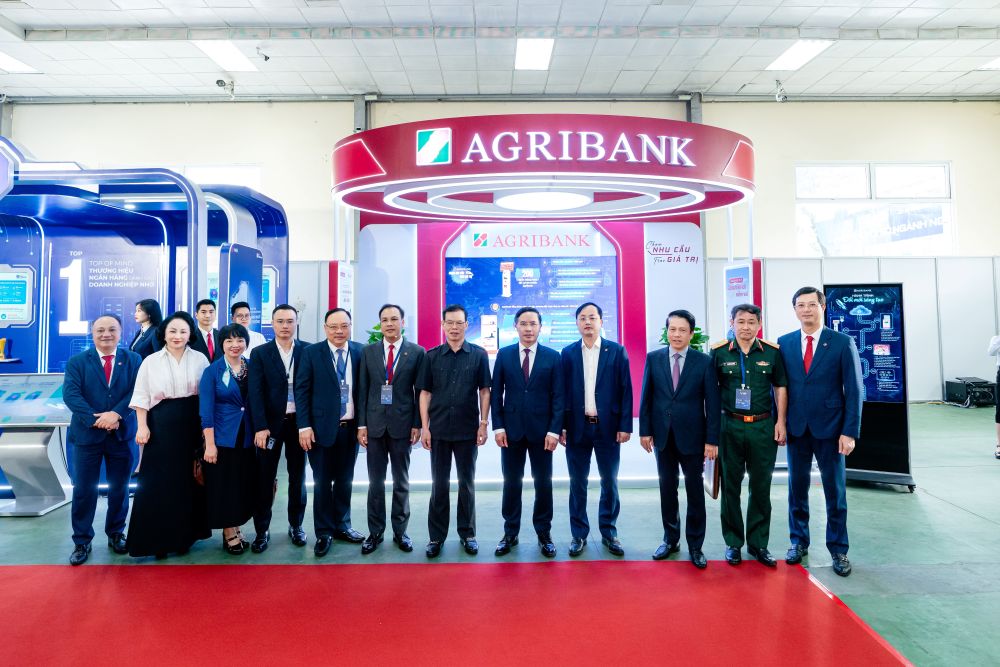
With a wide network, deeply linked to agriculture and rural areas, digital transformation helps Agribank narrow the gap in access to financial services, supporting people and businesses to participate more deeply in the digital economy.
From the digital platform built, Agribank aims for a smart banking model, where technology becomes a part of customer service, management and value creation methods, bringing digital utilities closer to people and businesses across the country.


