
Post-consumer packaging handling: from incentive to mandatory
On May 25, 2026, Decree 110/2026/ND-CP officially took effect, detailing Extended Producer Responsibility (EPR). Accordingly, manufacturers and importers of products and packaging on the list that must be recycled according to regulations and mandatory rates when brought to the Vietnamese market. This rate is adjusted to increase every 3 years, with an increase of a maximum of 10%, starting from 2029.
This is considered a step to improve the enforcement mechanism, turning the responsibility of handling packaging after consumption from voluntary activities into legal obligations.
Specifically, businesses subject to the provisions of Decree 110/2026/ND-CP are allowed to choose one of two forms: self-organizing packaging collection and recycling, or contributing financially to the Environmental Protection Fund to support recycling activities. Funding is a quick but "responsibility transfer" option. Meanwhile, self-organizing recycling requires businesses to invest long-term: from packaging design, collection network construction, cooperation with recycling units to controlling the entire cycle.
In fact, in Vietnam today, the infrastructure for sorting and collecting waste is still not synchronized, causing many challenges for recycling. According to the Ministry of Agriculture and Environment, the whole country generates about 25.3 million tons of domestic waste each year, of which up to 60% is treated through landfill.
Not just compliance: How Vinamilk turns EPR into an advantage
In this context, some practical models have been formed, becoming noteworthy "case studies" for the market. Vinamilk is one of the typical enterprises mentioned.
Instead of choosing to contribute financially - a solution that is inherently easier, Vinamilk proactively organizes collection and recycling with most of the packaging portfolio. Right from 2025, the enterprise has coordinated with licensed units to collect and recycle 6 groups of packaging and only contribute funds to one specific group, with a total volume of more than 12,800 tons - exceeding the mandatory rate according to regulations.
Stepping into 2026, Vinamilk continues to increase the recycling scale to more than 13,200 tons of packaging of all kinds. Contrary to concerns that organizing collection and recycling may incur more costs than contributing funds, the business said this plan helps save up to 1/3 of costs.
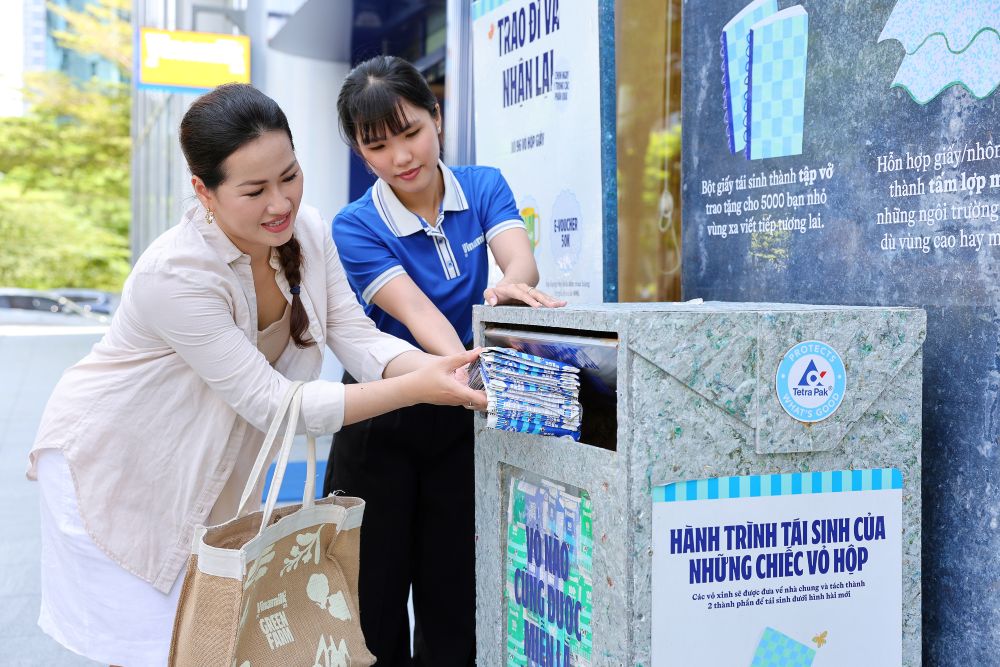
Recycling organization helps businesses control the entire packaging life cycle: from design, collection to output of recycled materials. Instead of "paying money to transfer responsibility", Vinamilk can know exactly how its packaging is being processed and transformed into what value. This is also an important premise for businesses to inventory greenhouse gases, thereby calculating a suitable carbon neutrality roadmap for the goal of achieving net zero emissions by 2050.
Packaging life cycle control: a comprehensive EPR approach
Vinamilk is one of the few businesses in Vietnam that proactively controls the life cycle of packaging, from design - use to post-consumer recycling from a very early stage.
Instead of a plain lid with plastic straws, the "pipe with ears" solution for users to open and drink directly has helped Vinamilk reduce more than 4.5 million straws, equivalent to 1.7 tons of plastic in 2025 alone. At the same time, optimizing the design of Probi drinking yogurt bottles and plastic straws in the domestic market helps reduce about 48 tons of virgin plastic. Along with limiting the exploitation of natural resources, these initiatives have helped the business reduce about 135 tons of CO2e.
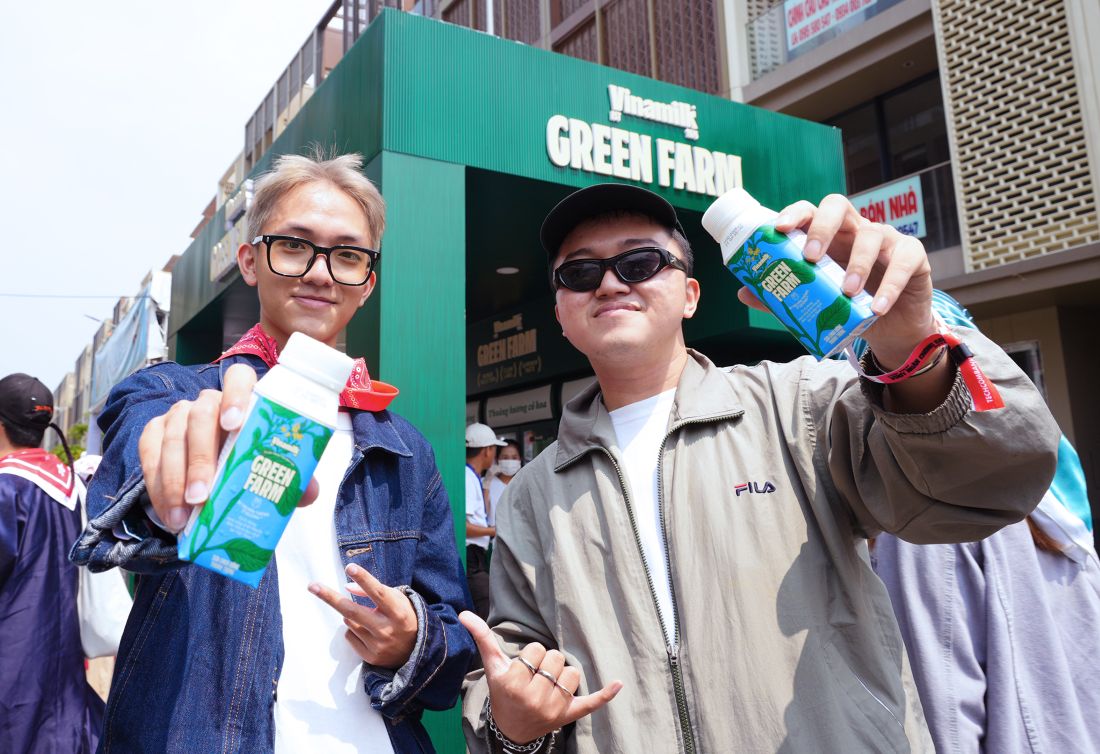
To date, 99% of Vinamilk's cartons have switched to using water-based ink instead of hard-to-decompose oil ink. For key product lines such as Green Farm drinking yogurt, packaging is designed with nearly 40% of ingredients from renewable materials, contributing to reducing dependence on virgin plastic and fossil fuels.


