
Houses and roads are continuously swept into the river
On July 12, the Disaster Prevention and Control Office under the Civil Defense Command of Ca Mau province said that from the beginning of 2026 to now, natural disasters have become complicated, in which landslides continue to be the type causing the heaviest damage in the province.
The whole province has experienced 81 landslides with a total length of about 2,217m, including 1,718m of riverside erosion, 429m of square shrimp farming bank erosion and 70m of erosion in salt production areas. The landslides affected 75 houses, with total estimated damage of more than 8.7 billion VND.
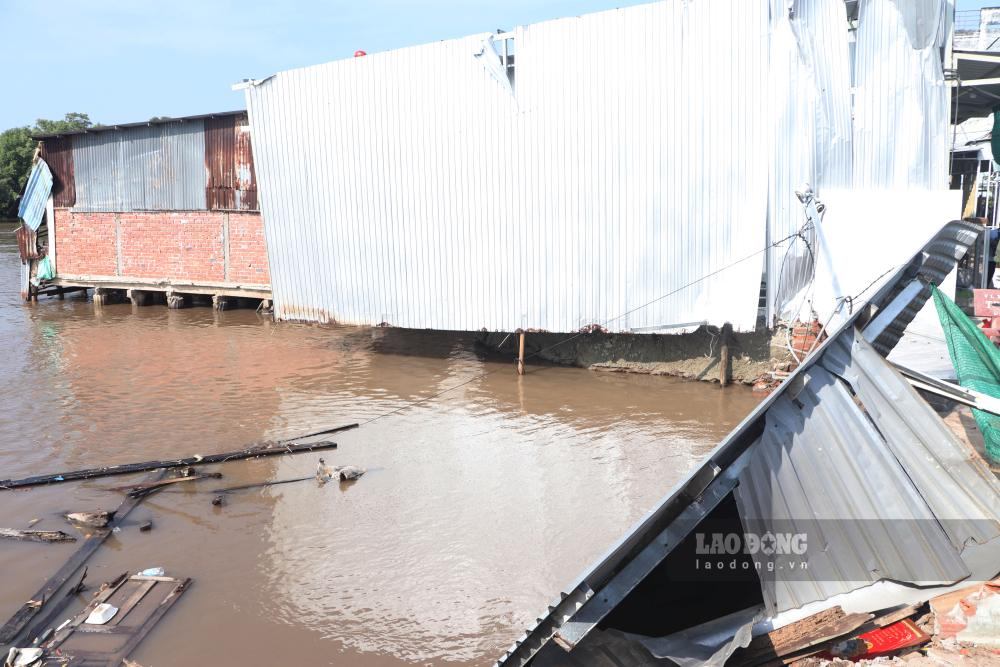
One of the serious landslide points occurred on Duong Thi Cam Van road along the Dam Doi river, Dam Doi commune. The landslide section about 70m long completely swept away a house, damaging two goods gathering points and many civil works. Total damage is estimated at more than 3 billion VND.
Mr. Nguyen Hoang Nghiep, a resident living near the landslide area, said that the incident happened very quickly.
In less than an hour, the soil at the foot of the house cracked open and collapsed into the river. Everyone only had time to move people and part of the property," Mr. Nghiep recounted.
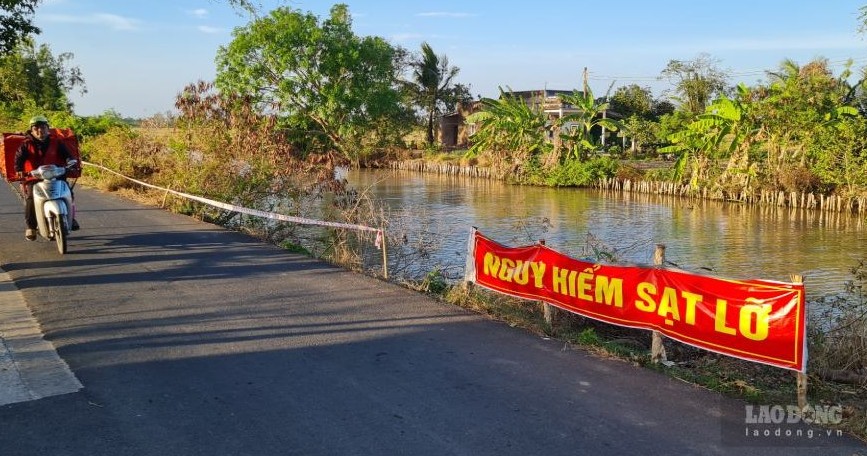
In Tan Thanh ward, the landslide on Cong Chua road, hamlet 13, also caused 4 houses to fall completely into the river, and 2 other houses showed many dangerous cracks. Property damage is about 900 million VND. Some other landslide points continue to appear in Tan Thuan commune, forcing local authorities to stretch warning ropes and organize the relocation of people from dangerous areas.
According to the Ca Mau Provincial Office for Natural Disaster Prevention and Control, in addition to landslides, since the beginning of the year, natural disasters have also caused 2 deaths due to lightning strikes, and 4 injuries due to tornadoes. There were 42 tornadoes that damaged 305 houses, 39 power poles and 73 trees. Unseasonal rain also caused damage to more than 1,526ha of salt production and more than 47ha of artichoke farming. Total damage from natural disasters in the province to date is estimated at more than 25 billion VND.
Race to keep land, protect residential areas
According to Mr. Pham Thanh Hai - Deputy Head of Ca Mau Sub-Department of Irrigation, most landslide points occur in areas with deep riverbeds, changes in flow direction, and strong impacts from tides. Weak soil combined with embankment erosion destabilizes the embankment, causing the risk of landslides to increase.
Not only riverbank erosion, the coastal area of Ca Mau is also under great pressure. According to the Department of Agriculture and Environment of Ca Mau province, the entire East Sea coastline currently has about 56.1km belonging to particularly dangerous erosion areas. Many sections of the coastline are encroached upon from 30-80m each year, especially in some places over 100m each year.
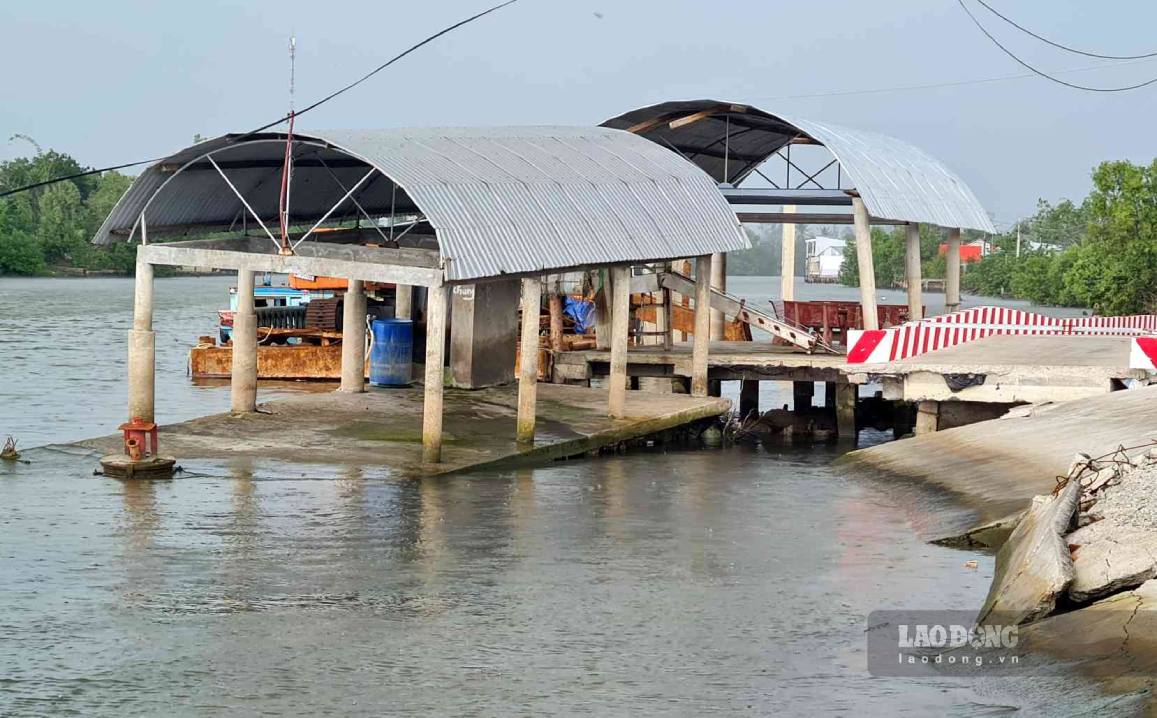
Prolonged erosion causes Ca Mau to lose about 250-300ha of protection forest each year. The natural wave belt is increasingly narrowing, leading to a direct threat to residential areas, transportation systems, electricity, schools, agency headquarters and coastal farming and production areas.
Mr. Nguyen Hoang Truong, a resident living in the coastal area, said that for many years his family has witnessed forest land and production land continuously being swept away by the sea. Many households have to relocate deep into the mainland to ensure safety.
Places where landslide protection embankments have been invested have shown clear effectiveness. People hope that the works will continue to be expanded to protect land and houses," Mr. Truong said.
Faced with the complicated developments of natural disasters, the People's Committee of Ca Mau province requested departments and sectors to closely monitor weather and hydrological developments, landslides and saltwater intrusion to proactively implement response plans. Along with the effective operation of the irrigation system, the locality continues to invest in landslide prevention and control works, protecting residential areas and key infrastructure.
Ca Mau is assessed as one of the provinces most heavily affected by climate change. In the context of increasingly extreme natural disasters, protecting riverbanks, coastlines and stabilizing livelihoods for people are becoming an urgent task of the locality.


