
In the context of the global economy entering a deep restructuring cycle, the shift of value chains no longer revolves around traditional centers but is forming new growth poles with high connectivity, where the flow of capital, goods, people and knowledge converges. One of the most prominent models of this trend is the economy operating around aviation (airport-driven economy), in which airports no longer play a simple role as transport infrastructure but become a platform for price creation.
Placed in the context of Vietnam, the need for a new generation aviation economic center becomes particularly urgent. With high economic openness, impressive growth rates and strategic position in the Asia-Pacific region, Vietnam has a clear advantage to participate more deeply in the global value chain. However, the infrastructure system and economic structure surrounding aviation have not yet formed a true center capable of leading growth on a large scale. This gap means that Vietnam has not fully exploited the potential of aviation as an economic driving force, as well as not having a "anchor point" strong enough to attract international capital and talent.
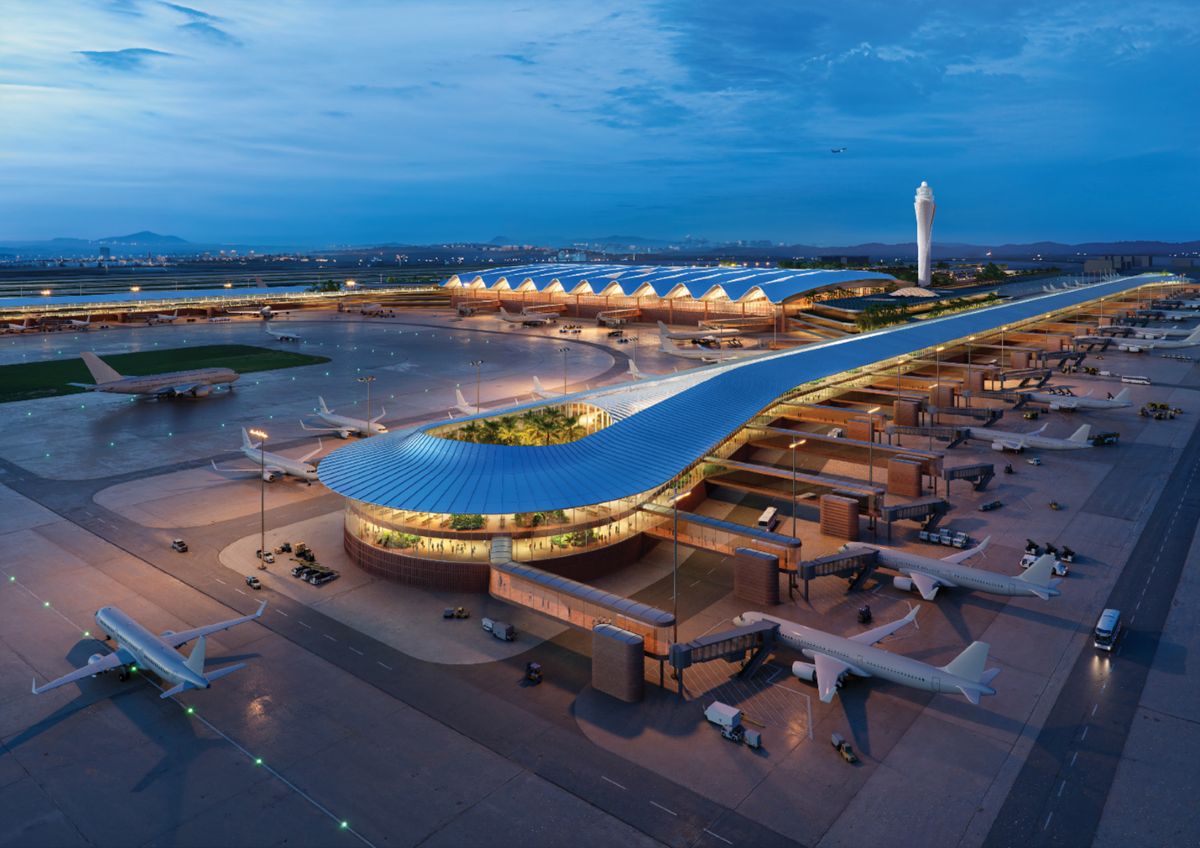
In that context, Gia Binh International Airport - invested by Masterise Aviation Infrastructure Joint Stock Company (MAI), a member of the Masterise Group (MAG) ecosystem - carries the meaning of a strategic shift. Not simply an infrastructure project, Gia Binh International Airport is shaped as an integrated development ecosystem, fully converging the elements of the new generation 2.0 Aviation Economic Center. The core advantage lies in its strategic position, allowing direct connection with regional development axes, thereby increasing its role in the aviation network and international supply chain.
On this platform, Gia Binh airport is planned according to a multi-layered structure, operating synchronously. The core is a high-standard international airport, playing a core role in connecting and coordinating, directly interlinking with logistics, commercial and service areas. Surrounded by a financial - commercial center with flexible mechanisms such as a new generation free trade area, while the outer layer is a modern urban area serving the global living and working community. The link between components helps the entire ecosystem operate as a unified entity, optimizing economic flows.

The difference of Gia Binh International Airport lies in its ecosystem approach instead of single-line infrastructure. Finance, commerce, logistics, R&D and high-end services are integrated to create attraction for high-quality capital and human resources, in which the free trade area model plays a nuclear role in activating trade. In parallel, the international standard living ecosystem helps Gia Binh Airport become a destination for the community of experts, not just a workplace.
More importantly, the project is placed in a long-term vision, as a strategic component to upgrade connectivity capacity and create new growth momentum. When operating, Gia Binh airport can become a development pole, spreading value to surrounding areas and directly contributing to the sustainable growth trajectory of the economy.
In the world, leading airports in Asia, the Middle East or Europe have gone beyond transit functions to develop into complete economic ecosystems. There, airports become the "core of development", leading to the formation of airport cities, financial centers, commercial zones and logistics clusters - innovation. The airport-led city or aerotropolis model, therefore, not only helps optimize connectivity but also creates multi-layered economic ecosystems, operating as an independent entity, capable of self-creating growth. The success of these models has proven a reality: in the high-speed economic era, where aviation flow is controlled, where long-term competitive advantages are held.
Stepping into a new development phase, the world continues to upgrade this model to a higher level - the new generation Aviation Economic Hub 2.0. If the 2.0 model mainly relies on infrastructure and logistics, then the 2.0 generation is a deep integration between aviation infrastructure and urban and high-class service ecosystems. This is a model in which all components - from airports, urban areas, finance, commerce to technology and life experiences - are designed to operate synchronously, creating an economic center capable of self-balancing, self-growing and attracting global resources.
This shows a new direction with the strategic stature of effectiveness and progressiveness of the Gia Binh International Airport project - a gathering place for leading talents of the domestic and international aviation industry.


