
In the context of the Government aiming for a double-digit growth target for the period 2026 – 2030, Vietnam is assessed to be a bright spot in the growth of the regional aviation industry with great potential for developing a "new generation aviation economy" - a model in aviation-developed countries that can contribute up to about 5% of a country's GDP. And Gia Binh International Airport is designed to shape the new future of Vietnam's aviation economy.
Masterise Aviation Infrastructure Joint Stock Company (MAI) is the official investor of the project. MAI is also a member of the Masterise Group (MAG) ecosystem, a leading national enterprise trusted by the Government and the Ministry of Public Security to develop Gia Binh International Airport. The platform from Masterise Group helps the unit deploy and inherit the leadership capacity and pioneering role in implementing many projects with a large-scale, modern, globally scaled integrated infrastructure - urban model, along with strategic vision and rapid implementation capabilities.

As one of the fastest growing markets in the region, Vietnamese aviation is driven by many simultaneous drivers: large population size, rapidly increasing middle class, strong recovery of international tourism and FDI flows continuing to shift into high-tech industries, value-added production. When the economy enters a new growth phase 2026–2030, the need for connectivity no longer stops at passenger transport, but expands to high-tech logistics, cross-border trade, global supply chains combined with free trade centers. This poses a new requirement for aviation infrastructure: not only solving the traffic problem, but also becoming a platform (hub) to organize large-scale economic flows, becoming a strategic spillover field in the national development orientation in the coming time.
In Vietnam, many airports have been approved, and many airports are about to appear. But among them, only Gia Binh International Airport is oriented towards a completely different model of a new generation airport. Right from the policy stage, Gia Binh airport did not develop according to the thinking of a traditional airport, but was positioned as an integrated aviation economic center, where aviation, logistics, trade, finance and urban areas are connected in the same developing ecosystem, aiming to become a global transit hub and a new destination, where passengers not only move but also enjoy different service and emotional values. That is the "New Generation Aviation Economic Center 2.0".
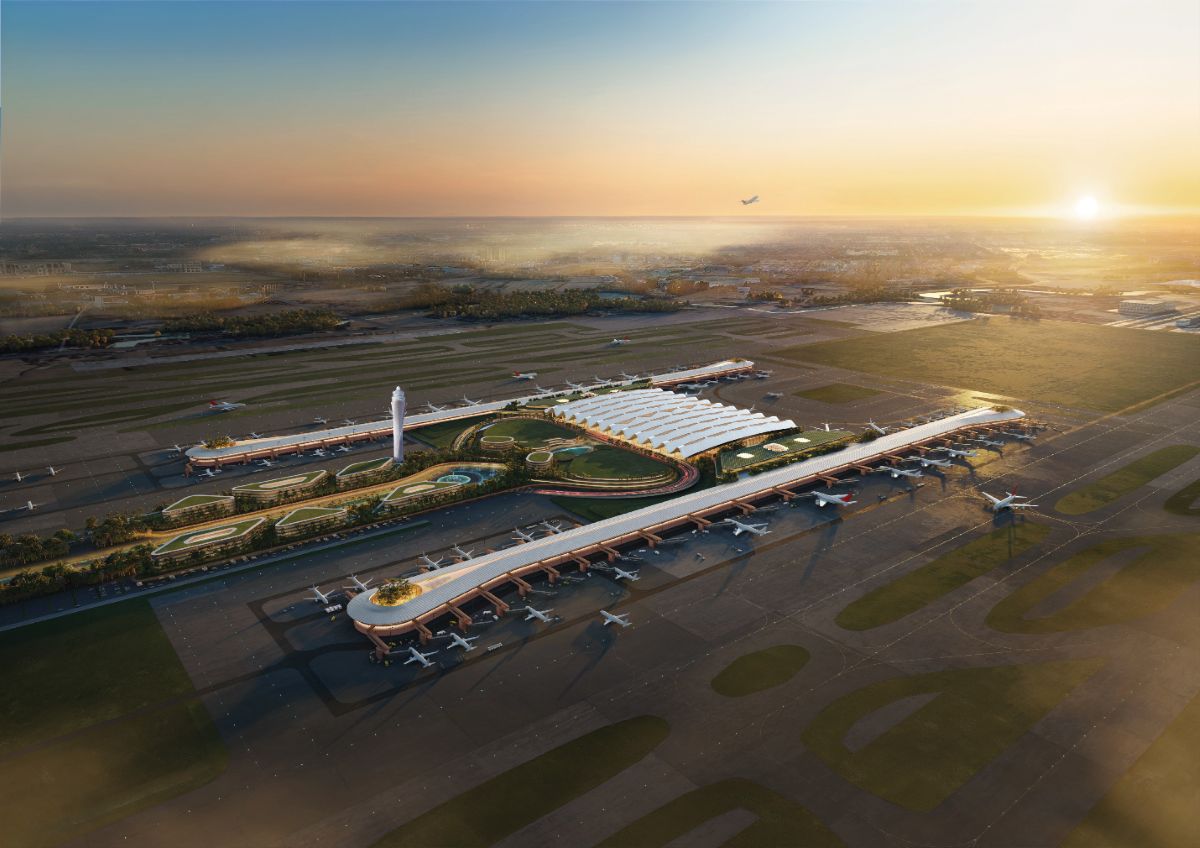
The emergence of models such as Gia Binh International Airport takes place in the context that Vietnam is strongly promoting its infrastructure development strategy. Resolution 68-NQ/TW, along with the direction of promoting public investment, developing synchronous infrastructure and encouraging the private sector to participate in dynamic fields, is creating an important corridor for large-scale integrated development models.
This reflects a new growth mindset: infrastructure no longer only serves development, but becomes a tool for creating development. In which, aviation is considered the type of infrastructure with the strongest spillover effect, because this is a field that simultaneously connects human flows, goods, investment, technology and knowledge.
The participation of Masterise Group, Masterise Aviation Infrastructure JSC, therefore not only carries the meaning of a project developer, but also demonstrates the role of accompanying the national development strategy - in the context of the private sector increasingly deeply involved in dynamic infrastructure sectors, contributing to creating a long-term growth platform and improving the competitiveness of the Vietnamese economy.


