Recently, tax policies for business households are entering a period of strong adjustment, with a series of changes in regulations such as eliminating the contract tax mechanism, switching to tax declaration, adjusting the tax-exempt revenue threshold, applying tax calculation methods for each business household group, along with new regulations on invoices and electronic invoices. These changes, along with the requirement for transparency of business operations, are directly affecting millions of business households across the country.
Along with that conversion roadmap, many issues are of particular concern to business households such as how to declare taxes, determine revenue - expenses, tax obligations calculated on revenue or profit, how to handle inventory when changing management methods, as well as the responsibility for declaring and paying taxes in the digital business environment.
Although many experts, tax consulting organizations and management agencies have increased guidance and support in the past, in reality, many businesses are still confused and confused when approaching the new regulations.
Ms. Nguyen Thu Huyen - owner of a grocery store in Cau Giay District (Hanoi) - said that what worries her most is how to determine revenue to declare. "Previously, we paid contract tax at a fixed rate, now I heard that we have to declare revenue, while retailers have many small amounts, both cash and bank transfers, I don't know how to record and summarize correctly," Ms. Huyen shared.
Meanwhile, Mr. Pham Van Minh, a food service business owner in Tay Ho district (Hanoi) is wondering how to calculate taxes when the input cost of the restaurant is quite large, from raw materials, labor to rental space. "If we only calculate on revenue without deducting expenses, it will be very stressful. But if calculated on profit, which costs are considered valid, what input invoices are, I still do not know, said Mr. Minh.
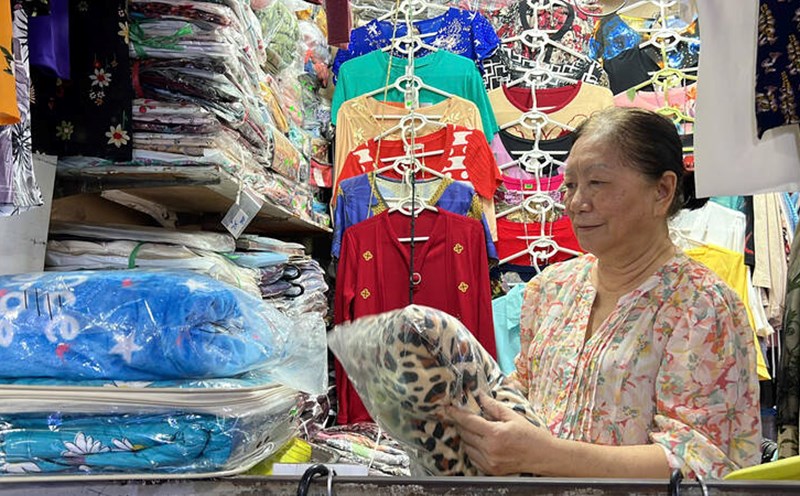
Another issue that many business households have mentioned is the handling of inventory when changing tax management methods. Ms. Le Thu Thuy, a clothing trader at a traditional market in Hanoi, said that the amount of imported goods was in large batches, with inventories from last year. "If I had to declare, I don't know if I would have to re-declare old inventories or not, how the capital price is calculated, if I would have to be collected back," Ms. Thuy wondered.
In fact, in recent times, many experts, tax consulting units and management agencies have increased support and explained the new regulations to business households. However, due to small-scale characteristics, diverse business methods and the first access to the new management mechanism, many households still face difficulties in the implementation process.
To support business households in conversion, from November to the end of December 2025, the tax sector will launch a 60-day peak campaign to support business households, focusing on propaganda, guidance and answers to new regulations related to tax declaration, payment, use of invoices and conversion of tax management methods.
During this time, tax authorities in localities have increased direct support at the grassroots level, received feedback and answered problems to help businesses get acquainted with the requirement of transparent declaration, limiting the risk of errors in implementation.
Up to now, the roadmap for changing tax policies for business households has entered a water retreat phase, when from January 1, 2026, the contract tax mechanism will be officially abolished, leading to the implementation of many new regulations.
During this transition period, the Dialogue Conference between the Ministry of Finance and taxpayers on tax and customs administrative policies and procedures in 2025, held on December 26, 2025 in a direct and online combination form, is an opportunity for business households to send questions, raise concerns and be directly discussed and guided by tax and customs authorities, helping taxpayers understand regulations and prepare for the effective date of the new policy.