
According to Mr. Nguyen The Diep - Vice President of Hanoi Real Estate Club, this trend is also a sustainable solution to the problem of planning and stabilizing the real estate market.
inevitable trend to solve planning problems
- It can be clearly seen that people are increasingly preferring to buy houses in large-scale supermarkets. What does this trend reflect in urban development and the real estate market, sir?
I think the trend of developing super urban areas is correct, because new super urban areas are qualified for synchronous planning and towards a hundred-year vision. For many years, our urban planning has not kept up with the speed of socio-economic development and the rapid urbanization process, leading to a series of consequences such as overloading schools, hospitals or lack of public space.
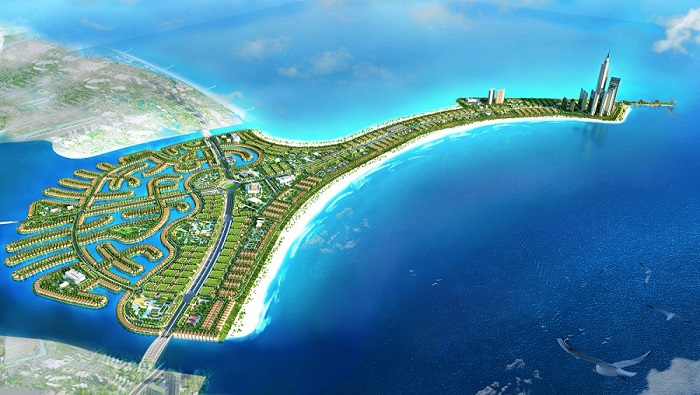
The appearance of supermarkets such as Vinhomes Green Paradise in Can Gio is currently receiving great attention, creating new development space instead of putting all the pressure on the core area. This is the way that many countries such as Korea, Singapore, and China have done to create a breakthrough in urban image and set new standards for people's quality of life. That will also be an inevitable direction in Vietnam.
- Along with that, in your opinion, how are the needs and standards for housing choice of people changing?
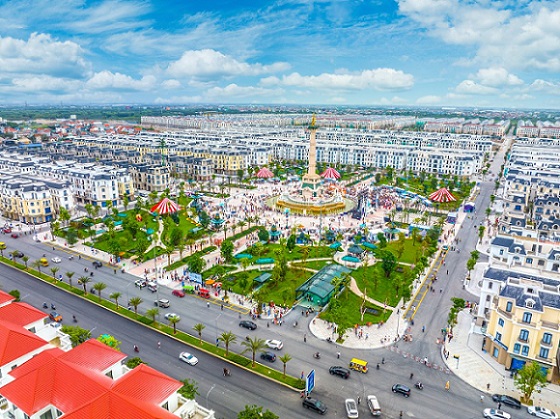
In fact, the needs of the people will become increasingly high and more strict. Previously, the need only stopped at having a basic, solid house. But now, home buyers are no longer only interested in ownership but also pay special attention to the quality of the surrounding living environment. They prioritize choosing supercities as you say because they want to be in a safe space, with many trees, with all kinds of schools, hospitals, shopping malls, entertainment areas, sports, residential care services... and they want all those utilities to be within a very close distance. On the contrary, when living in small housing areas lacking amenities, people are forced to move around a lot, spending a lot of time putting pressure on traffic and the environment.
When people have experienced the metropolis model, it will be difficult for them to return to the disjointed areas. The convenience, safety and quality of life created by the metropolis have become a new standard. In other words, it is the people themselves who are leading the market to shift towards supercities with full amenities, civilization and professional operations.
- In your opinion, from a macro perspective, will the development of supermarkets help stabilize the supply and housing prices - an issue that is currently of top concern?
That is for sure. When supply is supplemented by large-scale supermarkets, the market will be less in a local shortage, thereby reducing upward pressure on prices. What is more important is that the super urban area creates a source of high-quality supply, that is, products with synchronous infrastructure, utilities, and services.
In the medium and long term, reasonable population allocation through large urban areas will help house prices become more stable. The market will shift to a more balanced and sustainable state. I believe that model is an important "regulatory valve" for the Vietnamese real estate market in the coming time.
Need for investors of sufficient scale, with long-term thinking
- In your opinion, to develop such super urban areas, what capacity do investors need? Can domestic private enterprises meet the requirements?
It must be affirmed that developing large urban areas is not a game for small investors. Projects of several thousand hectares require huge financial resources, planning, design, construction, and operation capacity, along with the ability to ensure legality and strict risk management. If the enterprise does not have strong internal resources, the project will face a series of problems such as lack of amenities, slow progress, failure to attract residents to live or failure to ensure quality of life.
Only large real estate developers who have experience in implementing large-scale urban areas, which are guaranteed in both quality and progress, are capable of meeting all of those strict requirements. A real example is Vinhomes with the Vinhomes Can Gio super urban project. Perhaps only Vinhomes has the capacity to construct such a rapid sea encroachment after just over half a year of construction, in addition to the proposal of an ESG+ urban model that has never been seen before in Vietnam. They have the ability to mobilize capital, have a complete service chain and especially have a professional operating apparatus to ensure a long-term quality of life for residents.
Meanwhile, most small projects today have difficulty implementing utilities that reduce the quality of life of residents. Therefore, to have large cities that truly contribute to enhancing the face of Vietnamese urban areas, we need to select investors of sufficient scale, strength and long-term development thinking.
- Overall, in your opinion, what conditions have Vietnam currently gathered to be able to develop breakthrough urban projects, thereby creating new momentum for urban development and for the entire economy?
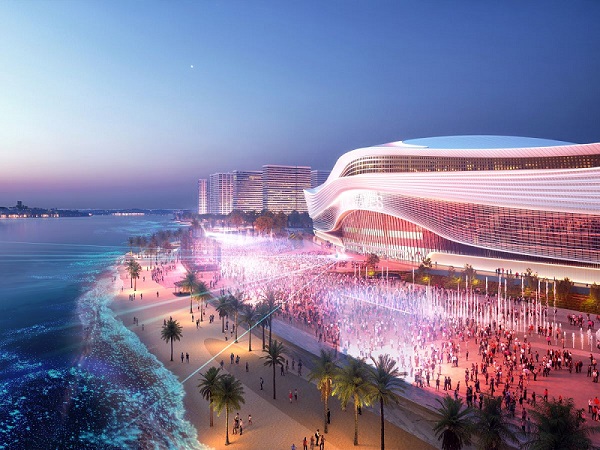
The face of the city must reflect the stature of development and the image of the country. I think this is both an opportunity and a development key for Vietnam, because businesses have grown strongly and have enough capacity to implement large-scale projects.
The most important thing now is to have a transparent, stable and open mechanism so that businesses can confidently implement long-term projects. I think, it is necessary to recognize that supermarkets are not ordinary real estate projects but are the foundation for Vietnamese cities to enter a new era of development with higher living standards for people.
- Thank you!


