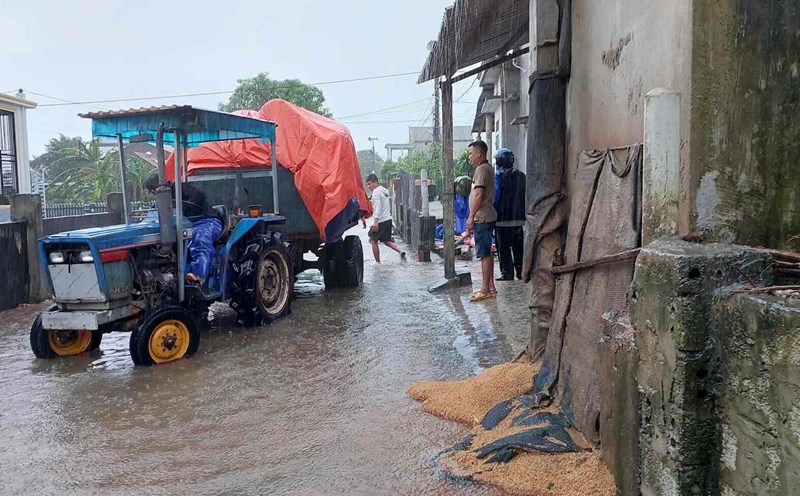
Rice trees transform
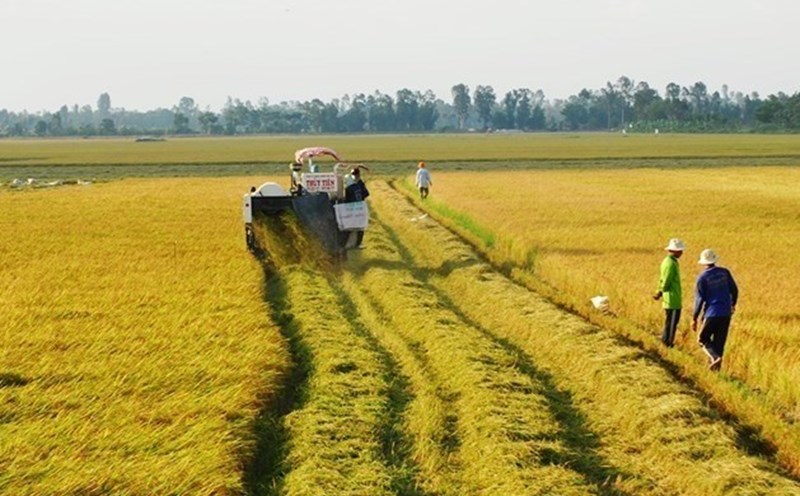
The Mekong Delta has about 4 million hectares of rice/year, with a production of 23.8-24 million tons/year, accounting for more than 50% of the total rice area and output in Vietnam.
Vice Chairman of Can Tho City People's Committee Tran Chi Hung commented: Over the past time, the city has proactively implemented advanced rice production models, applied science and technology, and expanded production and product consumption linkages. However, reality also shows that high output does not mean high income; small-scale production, high costs and environmental pollution are still major challenges for the Mekong Delta's rice industry.
The reality in Can Tho is the general picture of Mekong Delta rice. Therefore, the provinces have boldly switched production, minimizing low-quality rice and rice, and moving towards high-quality rice production. To do this, agricultural extension work is built synchronously and widely throughout the region.
Currently, the Mekong Delta has 1,000 community agricultural extension teams with 10,000 members. This force plays a key role in communication, raising awareness of farmers and cooperative members; participating in training, strengthening capacity for farmers and cooperatives; transferring high-quality, low-emission rice production processes through training and coaching.
Community agricultural extension always undertakes MRV activities (measuring, reporting, greenhouse gas emission assessment); consulting and supporting cooperatives to organize production and develop sustainable rice material areas; connecting businesses to supply input materials and supporting the consumption of output products.
Thanks to this network, technical advances and new farming processes can not only stop at seminars or demonstration models, but can be quickly replicated to each field, each farming household in the region. Mr. Nguyen Viet Cuong, Viet Cuong Cooperative, Ca Mau, commented: "Through community agricultural extension teams, it helps the cooperative a lot.
Labor Hero Ho Quang Cua, who has been honored 3 times as the world's best rice, emphasized that this is a arduous but proud journey, proving the strength of science and technology and innovation in Vietnamese agriculture.
He said that in any context, the rice growing industry still carries the hardship of farmers, and their lives are rarely improved, because the quality of rice produced does not meet the needs of the middle class, causing products to be mainly sold to low-income people.
Mr. Cua said that in terms of economy, ST25 rice reaches a price of 1,000 USD/ton, currently the highest in the world. The price of early-season rice is currently purchased at over 9,000 VND/kg, one and a half times higher than the common soft rice group, helping thousands of farming households make a profit of 35 to 50 million VND/ha, creating great motivation for farmers in rice - shrimp areas.
Mr. Nguyen Van Chien, Tuong 3A hamlet, Vinh Thanh commune, Ca Mau said: Rice cultivation by farmers is very favorable, rice yields reach high and stable levels thanks to the pumping station system, dyke dykes, rice fields no longer encounter flooding in the rainy season, water shortage in the dry season. When water sources are ensured, rice plants develop better, giving higher yields. In addition, centralized pumping helps farmers reduce pumping costs, saving significant production costs.
Innovation and creativity right at the shrimp pond
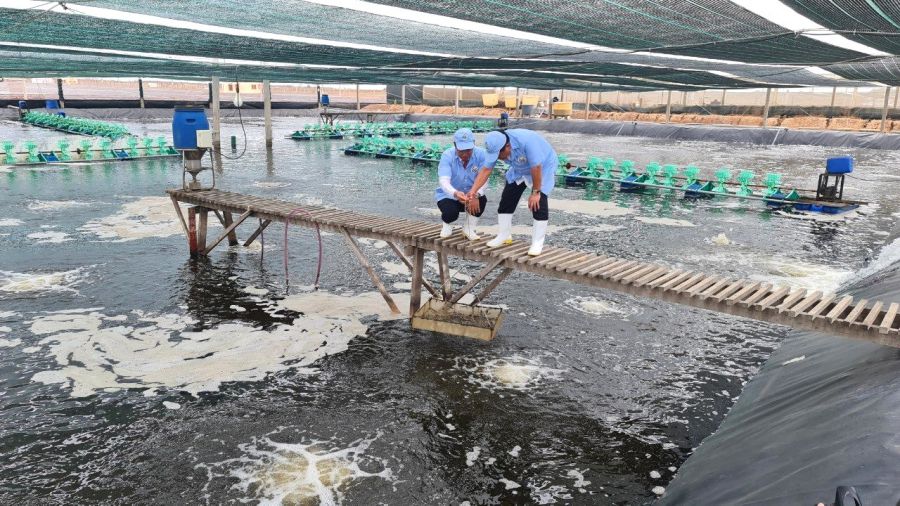
Ca Mau is the locality with the largest shrimp farming area in the country with more than 427,000 hectares, with a total annual output of over 900,000 tons. The province's shrimp export turnover is expected to reach about 2.5 billion USD in 2025, possibly exceeding 3 billion USD/year in the next few years.
The space for Ca Mau to develop strongly from shrimp is still there. To meet the increasing demands of domestic and foreign markets, commercial shrimp farming organizations and individuals are guided to comply with technical standards, apply farming procedures that meet international certifications (ASC, MSC, CoC, GlobalGAP, BMP, VietGAP...)
Dr. Quach Van An, Deputy Director of Ca Mau Department of Science and Technology, said: The important issue is low emissions, reducing the burden on the environment. At the same time, when applying science and technology, the model also reduces risks and yields higher.
In the current period, the development of agriculture applying science and technology is no longer an option, but an inevitable requirement if we want to adapt to climate change, protect the environment, improve income for people, and enhance the competitiveness of Vietnamese agricultural products integrated into the global value chain.
Mr. Pham Van Muoi - Deputy Director of the Department of Agriculture and Environment of Ca Mau province - said: "The Provincial People's Committee has issued a Plan for breakthrough production development of the Ca Mau shrimp industry in 2025 and the following years. The Department develops a specific plan to implement the growth target of region I (agriculture, forestry, fishery), and at the same time directs specialized units to coordinate with communes and wards to organize a widespread emulation movement, mobilize the participation of production organizations and individuals, contributing to creating breakthroughs for the shrimp industry in 2025".
To create sustainable and breakthrough development for the shrimp industry, the province focuses on synchronously implementing both construction and non-construction solutions. Key projects include a primary irrigation system of level I (works, dykes, embankments, water supply and drainage canals, pumping stations), roads, power grids and wastewater treatment areas... to ensure the best conditions for high-tech shrimp production and farming.
The Mekong Delta is the largest rice and shrimp granary in the country, but for many years it has not built a national brand for rice and shrimp. Hopefully, in the coming time, with the application of science and technology and production re-planning, this land will produce many strong agricultural brands, competitive enough in the international market.