
Global supply chain disrupted
On March 21, at the 87th Businessmen's Coffee Conference of the Ho Chi Minh City Business Association, Mr. Nguyen Khac Hieu - Deputy Head of the Energy Management Department, Ho Chi Minh City Department of Industry and Trade said that the city basically ensures sufficient gasoline and oil supply at least until the beginning of May. Thanks to learning from the experience from 2022, the management has been more proactive and timely, so there has been no shortage or queuing to buy gasoline.
However, the energy market still contains many uncertainties, affecting production and business activities. Although exports to the Middle East are insignificant, conflicts in this region still cause logistics costs to increase sharply, reducing the competitiveness of goods.
Increased input costs along with difficult access to capital are creating great pressure on businesses, especially in the electronics, textile - footwear, agricultural - aquaculture and wood - furniture industries. Rising fuel prices also make seafood exploitation and agricultural production difficult. Faced with this situation, businesses are recommended to carefully review international contracts, especially force majeure clauses, and proactively adapt. This is also an opportunity to switch to green energy, reducing dependence on gasoline and oil when the Ho Chi Minh City electricity system still has room until 2030.
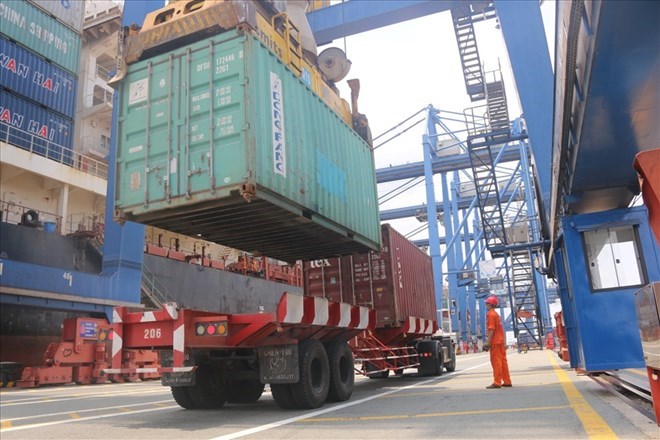
In that context, businesses are forced to adjust their operating strategies. Mr. Dao Trong Khoa - Chairman of the Vietnam Logistics Service Business Association said that the Middle East region is a strategic transport route, accounting for about 25% of the world's sea freight volume, including oil, gas, fertilizers and chemicals. When this route is disrupted, the global market is affected through three main channels: increased energy prices, increased logistics costs and unstable market sentiment.
In this context, businesses need to carefully review contract terms, especially force majeure clauses and itinerary changes; at the same time, monitor operations in real time, proactively inform customers, diversify transport routes and optimize costs. Accelerating digital transformation and green transformation is also considered an important solution to improve adaptability.
According to Mr. Khoa, conflict not only increases logistics costs but also contributes to reshaping the global supply chain, which is both a challenge and an opportunity for businesses to restructure and transform.
Businesses propose tax reduction and input price control
Mr. Dinh Van Hieu - Chairman of the Ho Chi Minh City Liquefied Gas Business Association said that gas freight rates from the Middle East have increased 5-6 times, along with high insurance costs and long delivery times, no longer as stable as before (previously about 20 days).
In this context, businesses need to proactively respond by diversifying supply sources, managing inventory reasonably, not allowing shortages but also avoiding excessive accumulation. At the same time, it is necessary to tightly control cash flow and increase information transparency to stabilize customer psychology. According to Mr. Hieu, in the current period, the key factor is not price but keeping customers, maintaining the market and ensuring stable business operations.
Mr. Nguyen Ngoc Hoa - Chairman of the Ho Chi Minh City Business Association said that the business community proposed that the State soon have solutions to control gasoline and oil prices and logistics costs. In the immediate future, it is necessary to flexibly use the Price Stabilization Fund to limit price increases, and at the same time consider reducing taxes such as import tax and special consumption tax to reduce input pressure.
Tax reduction may reduce budget revenue in the short term, but it will help businesses maintain production, maintain output and jobs, thereby creating a more sustainable source of income in the long term. In addition, it is necessary to speed up procedures, shorten project implementation time to reduce operating costs, and create a platform ready for businesses to recover and grow when the market stabilizes again.


