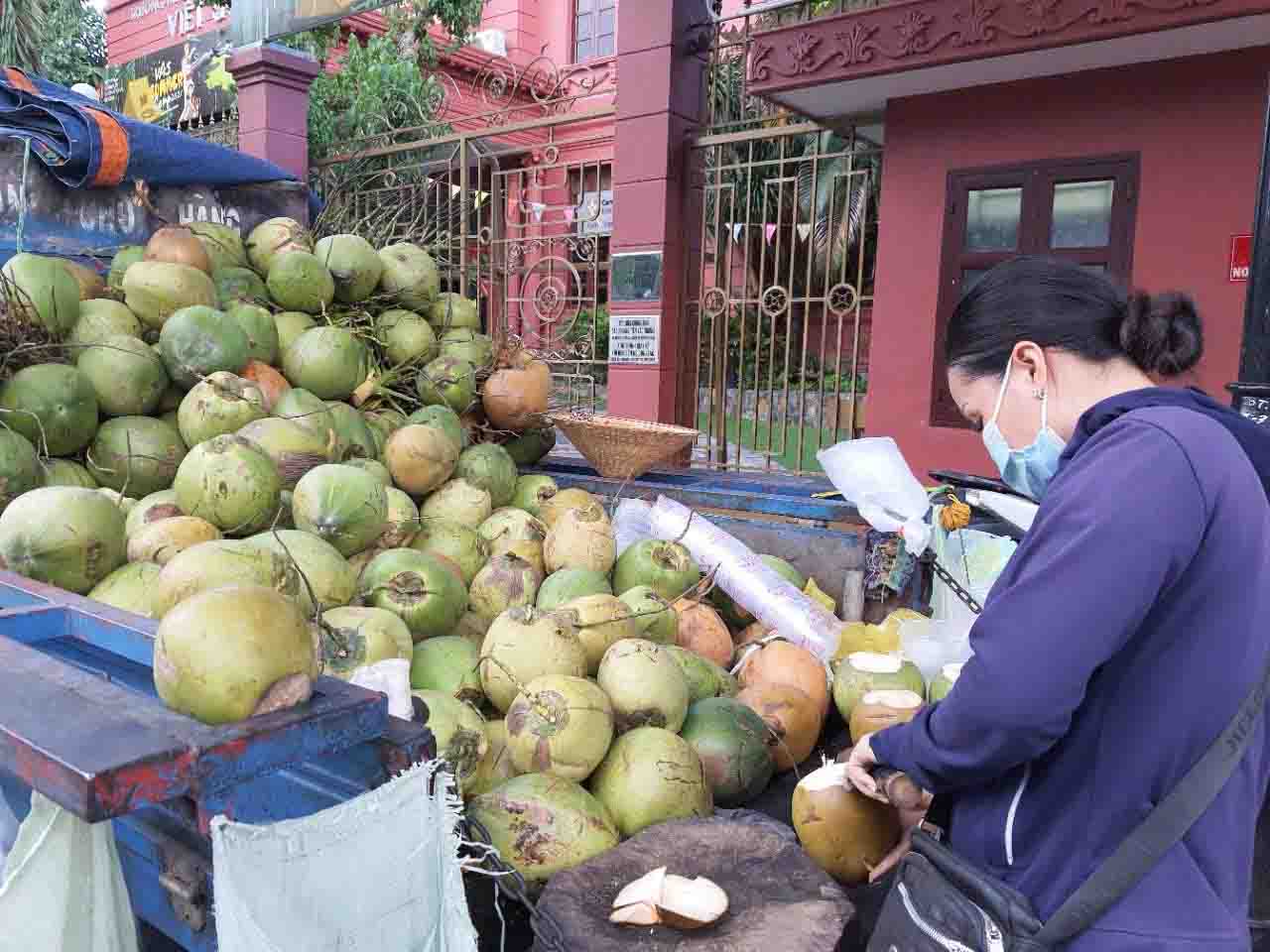
In Ho Chi Minh City, many fresh coconut selling points recorded a high increase in customers throughout the day, especially at noon and late afternoon when the hot weather lasts. According to small traders, strong demand for refreshments is the main reason pushing up coconut prices recently. In addition, rising transportation costs and labor costs also caused retail prices to increase significantly.
Mr. Quoc Bao - a coconut seller on Pham Van Dong street said that he used to only sell for about 20,000 VND/3 coconuts, now the price has increased to about 10,000 VND/coconut, but purchasing power is still stable. "Passing customers stop to buy continuously because it's hot, many days importing as much as possible is almost finished during the day" - Mr. Bao said.
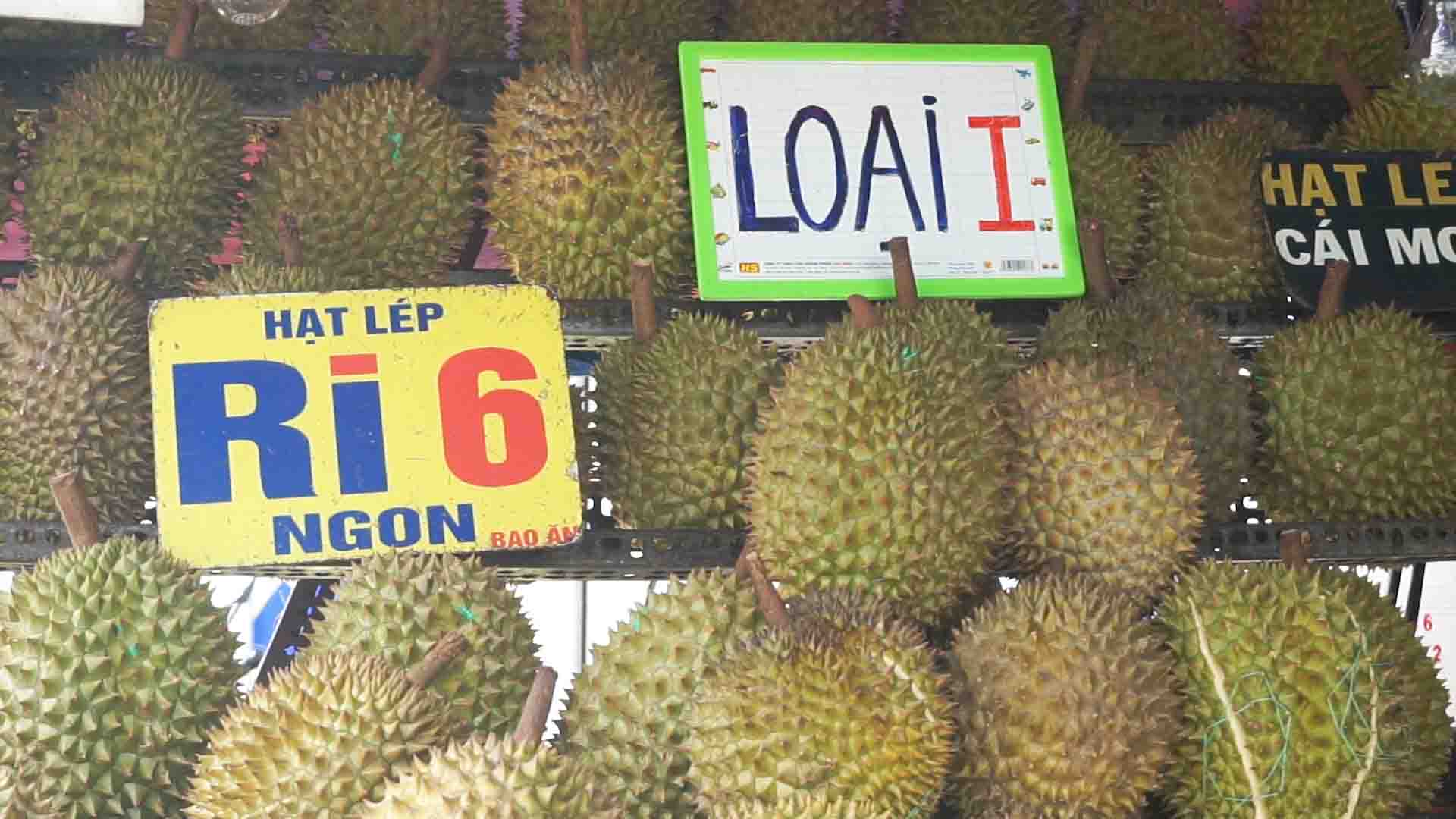
Not only fresh coconuts increase in price due to the need to cool down in the hot season, the durian market in Ho Chi Minh City also recorded high prices. Although retail prices fluctuate widely between segments, this fruit still attracts many consumers thanks to the peak season and abundant supply from the Mekong Delta and Southeast provinces.
Recorded on many roads in Ho Chi Minh City, Ri6 durian is currently commonly advertised for sale from 60,000-80,000 VND/kg, depending on the type. Some roadside selling points hang low price signs to attract customers. Meanwhile, at supermarkets or large fruit stores, durian prices are still hovering at a higher level because goods are carefully selected, traceable and well preserved.
Mr. Minh Tuan - a durian buyer in An Dong ward, said that the current price difference is quite large between selling places. "Some places sell very cheaply, but the rice is bland and stiff. I still choose to buy at familiar stores because the quality is more stable even though the price is a few tens of thousands of VND per kilogram higher," Mr. Tuan said.
According to Mr. Nguyen Van Muoi - Deputy Secretary General of the Vietnam Fruit and Vegetable Association, the coconut market in the Mekong Delta provinces is showing positive changes, not falling into a price reduction situation like some other fruits.
The reason is that in the summer, especially from April, the demand for coconut consumption increases sharply, leading to an increase in prices. At the same time, many businesses and northern distributors have also strengthened supply connections, showing that purchasing power in the market is increasing.
Explaining the reason why the price of coconuts in Ho Chi Minh City is higher than at the garden, Mr. Muoi said that transportation and gasoline costs have increased by about 30%, along with taxes, fees and other service costs. In addition, coconuts are often goods with good export growth, so when the export market faces difficulties, the amount of goods returning to domestic consumption can create supply pressure.
Regarding durian, Mr. Muoi said that the price difference between retail segments mainly comes from the quality selection process. Goods sold in supermarkets are usually standard types, carefully classified, have a high rice content ratio and ensure traceability. Meanwhile, many types sold along the road are smuggled export goods or bulk goods, so the quality is not uniform.
Goods that meet the requirements for quality, design, and standards are still being purchased at high prices, ranging from 80,000-90,000 VND/kg for Monthong variety or 55,000-60,000 VND/kg for Ri6 variety at the garden. Currently, the market has many price levels, including groups of products that meet standards, are strictly controlled for inputs for cultivation, and cheap groups from drifting durian varieties, purchased floating, without quality control.