
On January 2, Gia Lai Provincial People's Committee said that it had issued a document requesting functional agencies to comprehensively review and evaluate large-scale farming projects being implemented in the province. This is a move to strengthen state management, ensure that livestock investment complies with legal regulations and limit negative impacts on the environment and people's lives.
According to the direction of the Provincial People's Committee, the Department of Finance presides over and coordinates with relevant departments, branches and localities, in the process of preparing, appraising and proposing investment policies for livestock projects, it is necessary to fully review the legal basis. The focus is on regulations on investment, land, construction, environment, livestock, planning and related specialized legal regulations. Advisory agencies must be fully responsible for the proposed content.
In particular, livestock projects must apply advanced technology, deployed according to a closed circular process, ensuring environmental protection requirements. Land use must be carried out by the investor to receive legal transfer in accordance with the provisions of land law, absolutely not legalizing cases of illegal land use.
Along with that, the Provincial People's Committee requests departments, agencies, branches and localities to strengthen inter-sectoral coordination, regularly monitor, inspect, and supervise the project implementation process after the investment policy is approved. In case violations are detected or investment conditions that have been approved are not ensured, it is necessary to promptly advise the Provincial People's Committee to consider and handle strictly.
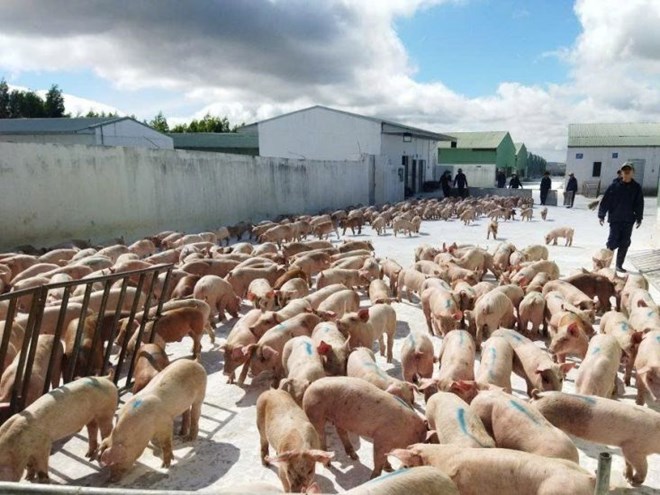
According to statistics from the Department of Agriculture and Environment of Gia Lai province, currently the western communes of the province have more than 200 large-scale pig farming projects. Over the past time, some farms have not fully complied with environmental protection regulations, especially in wastewater treatment, causing public outrage.
The current penalty level for small-scale farms causing pollution is from 10-15 million VND, while large-scale farms are from 15-20 million VND. Meanwhile, many projects have investment capital of up to hundreds of billions of VND, so this sanction is assessed as still light, not enough to deter.
In addition to environmental issues, concentrated livestock activities also pose a potential risk of affecting security and order, and rural security. Therefore, the livestock industry needs to be oriented and planned in the long term, ensuring sustainable development, compliance with the law and harmony of interests between businesses, people and localities.


