
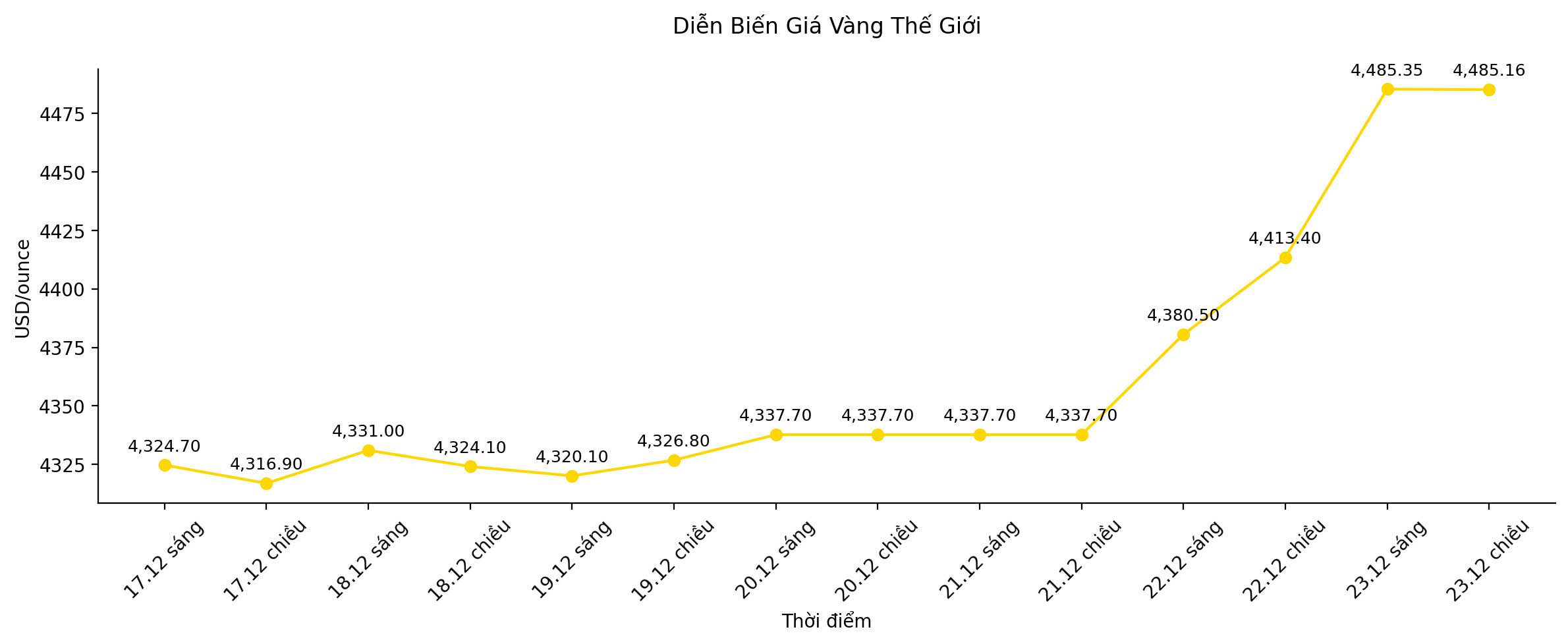
Gold prices continued to break out strongly in the trading session on Tuesday, approaching the 4,500 USD/ounce mark, while silver prices fluctuated just below the threshold of 70 USD/ounce.
Expectations of a US monetary policy easing and prolonged geopolitical tensions have brought the two precious metals closer to historical peaks.
In the session, spot gold prices reached 4,497.55 USD/ounce at one point. Silver prices also increased sharply, hitting a record high of 69.98 USD/ounce, continuing the impressive increase streak since the beginning of the year.
According to analysts, the fact that precious metals continuously hit new peaks at the end of the year - a period that often records profit-taking activities - shows that investor holding psychology is dominating.
Mitsubishi experts say that the holiday is no longer considered a "rest" time for the market, as cash flow remains positive and is ready to push prices higher.
Loose currency faces geopolitical waves, markets benefit
Gold's rally is clearly supported by a favorable macro environment. The US's continued interest rate cuts this year, along with expectations of the Federal Reserve continuing to ease policy next year, have reduced the attractiveness of yield-growing assets and increased the role of gold as a safe haven channel.
The USD is also an important factor. Since the beginning of 2025, the greenback has decreased by nearly 10%, towards the weakest year in eight years. Many investors believe that this trend could continue into 2026, as global growth recovers and US monetary policy continues to loosen.
At the same time, geopolitical risks are still present and increasingly complex. Tensions in the Middle East, uncertainties surrounding the prospect of Russia-Ukraine peace, along with new US moves against Venezuelan tankers, continue to strengthen the safe haven role of gold and silver.
Central banks, ETFs keep the gold market in rhythm
Since the beginning of the year, gold prices have increased by more than 70%, towards the strongest annual increase since 1979. This increase is not only due to speculative factors, but also supported by persistent buying efforts of central banks and large inflows into gold ETFs.
According to analysts, central bank demand for gold has remained high for four consecutive years and is likely to continue into 2026. Although the expected purchasing volume in 2025 is lower than last year, it is still considered very large in terms of absolute value.
Data from the World Gold Council (WGC) shows that ETFs backed by physical gold are heading for the year with the largest inflows since 2020. This reflects the increasingly clear trend of asset diversification by global investors in the context of increasing economic and geopolitical risks.
In terms of medium-term outlook, Goldman Sachs Group Inc. forecasts gold prices to reach $4,900/ounce by the end of 2026, saying that demand for investment and buying in the formal sector is still an important support for the market.


