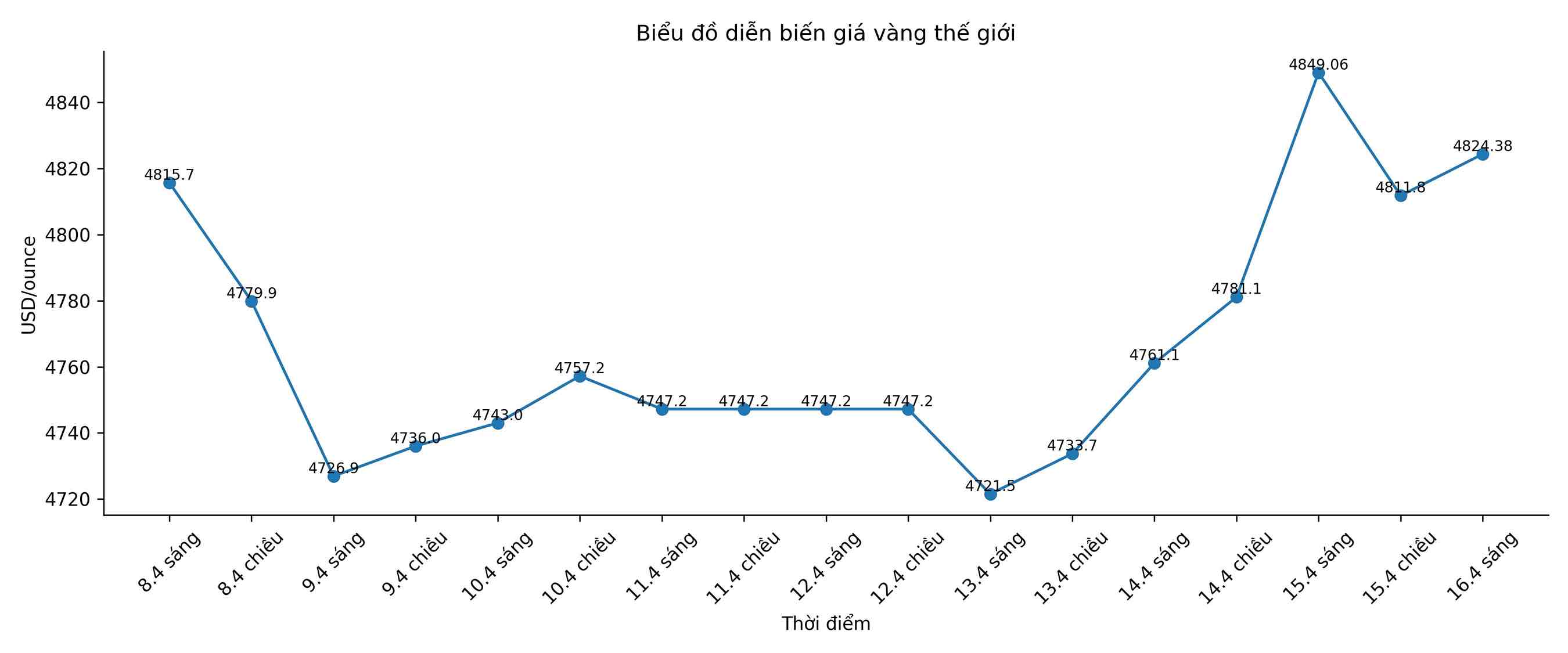
Gold prices rebounded as expectations of promoting a diplomatic solution to the Iran conflict help ease inflation concerns, although tensions around the Strait of Hormuz have not cooled down.
The precious metal at one point increased by nearly 1%, to about 4,838 USD per ounce, thereby erasing most of the previous session's decline. According to sources, the US and Iran are considering extending the ceasefire for another two weeks to create more time for negotiations to end the conflict that has disrupted global markets.
However, transportation through the Strait of Hormuz is still seriously restricted. The US continues to blockade Iranian ships, while Tehran maintains restrictions on the circulation of most ships through this strategic shipping route.
According to the Associated Press, the two sides reached a "principal agreement" to continue pursuing a diplomatic solution after the round of negotiations that did not yield clear results in Pakistan last weekend. US President Donald Trump also said that the nearly 7-week conflict "is approaching an end".
On the financial market, oil prices went sideways on Thursday, while US stocks previously hit a historical high and the USD weakened slightly. The cooling of oil prices in recent days has helped reduce inflationary pressure - a factor that once made central banks tend to maintain higher interest rates for longer, even considering raising interest rates.
The market still bets that the US Federal Reserve (Fed) will keep interest rates unchanged this year, a view reinforced by statements from Fed officials, in which the Chairman of the Fed's Cleveland branch said that interest rates could "maintain at the current level for a long time". The high borrowing cost environment continues to be detrimental to gold - a non-performing asset.
Ms. Suki Cooper - Global Commodity Research Director at Standard Chartered Plc said that with the still fragile ceasefire and the market shifting its focus to real yields, gold prices still face many risks. Liquidity demand may continue to put pressure on prices in the short term, while policy response to inflation risks and slow growth will be the deciding factor in the next trend.
Since the conflict broke out, gold prices have fallen by about 8%, as liquidity pressure in the early stages forced investors to sell to offset losses in other markets. However, cash flow is showing signs of returning as gold-based exchange-traded funds have net bought about 25 tons since the beginning of the month, after selling about 94 tons in March, according to data compiled by Bloomberg.
As of 10:55 am Vietnam time, spot gold prices increased by 0.8% to 4,824.38 USD per ounce. Silver prices increased by 1.7% to 80.31 USD per ounce, while platinum and palladium also simultaneously went up. The USD strength index slightly decreased by 0.1%.