
In the context of gold prices adjusting sharply from a historic peak in January, Union Bancaire Privée (UBP) of Switzerland still maintains its gold price forecast of 6,000 USD/ounce for the rest of 2026.
According to a report on April 13, UBP has not changed its views even though gold prices are currently about 15% lower than the nearly $5,600/ounce peak set at the end of January. Even, this bank is gradually increasing its gold holding after cutting back during a period of volatile markets due to the Iran-related conflict.
In the previous sell-off, UBP reduced the proportion of gold in its portfolio from about 10% to 3%. However, as the market gradually stabilized, this bank raised it back to about 6%.
A portfolio management representative of UBP in Asia said that the market is now more balanced between buying and selling positions. Structured demand still exists, including central banks continuing to reserve gold, concerns about budget deficits and prolonged geopolitical risks.
Not only UBP, many major financial institutions also maintain a positive view of gold, although the level of optimism varies. JPMorgan gave the highest forecast, around 6,300 USD/ounce by the end of 2026. Deutsche Bank and Societe Generale both set a target of around 6,000 USD, while Goldman Sachs was more cautious with 5,400 USD.
In the opposite direction, UBS warns that the market may be approaching the final stage of the upward cycle, although still offers a higher positive scenario if supporting factors continue to be maintained.
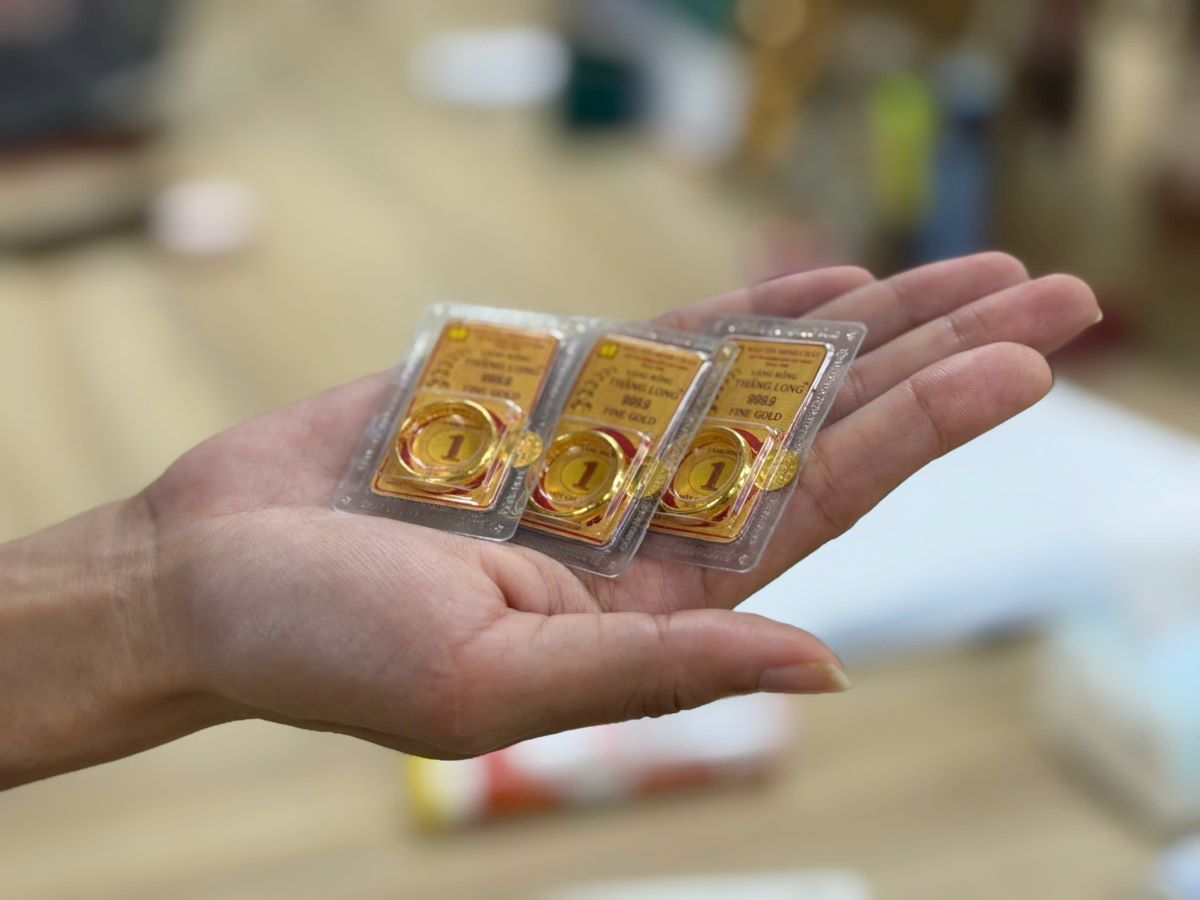
These forecasts are made in the context that global gold demand is still high. Data from the World Gold Council (WGC) shows that total demand in 2025 exceeded 5,000 tons for the first time, thanks to strong cash flow into ETFs, central bank buying activities and physical gold demand.
In 2026 alone, central banks are forecast to continue to buy about 950 tons of gold. Some countries even raised their reserve targets, reflecting the trend of asset diversification in the context of economic and geopolitical instability.
However, recent gold price movements show that the market is not going straight. After increasing sharply by more than 25% from the beginning of the year and extending the 64% increase of 2025, gold has adjusted significantly. This development is seen by many organizations as a more necessary "pause" than a sign of reversal.
Factors that once boosted gold prices such as geopolitical risks, low real interest rates or risk hedging demand have not disappeared. Tensions in the Middle East, especially related to Iran and the risk of oil and gas supply disruptions, continue to provide support for gold.
However, analysts emphasize that price forecasts are always accompanied by uncertainty. The fact that some organizations maintain optimistic views does not mean a definite upward trend. Gold prices may still fluctuate strongly in the short term before forming a clearer trend.
Spot world gold price at 2:52 PM on April 14 (Vietnam time) traded at 4, 777.26 USD/ounce, up 33.93 USD, equivalent to an increase of 0.72%.
Regarding domestic gold prices in the Vietnamese market, SJC gold bar prices are traded at 170-173 million VND/tael (buying - selling). Bao Tin Minh Chau 9999 gold ring prices are traded at 169.7 - 172.7 million VND/tael (buying - selling).


