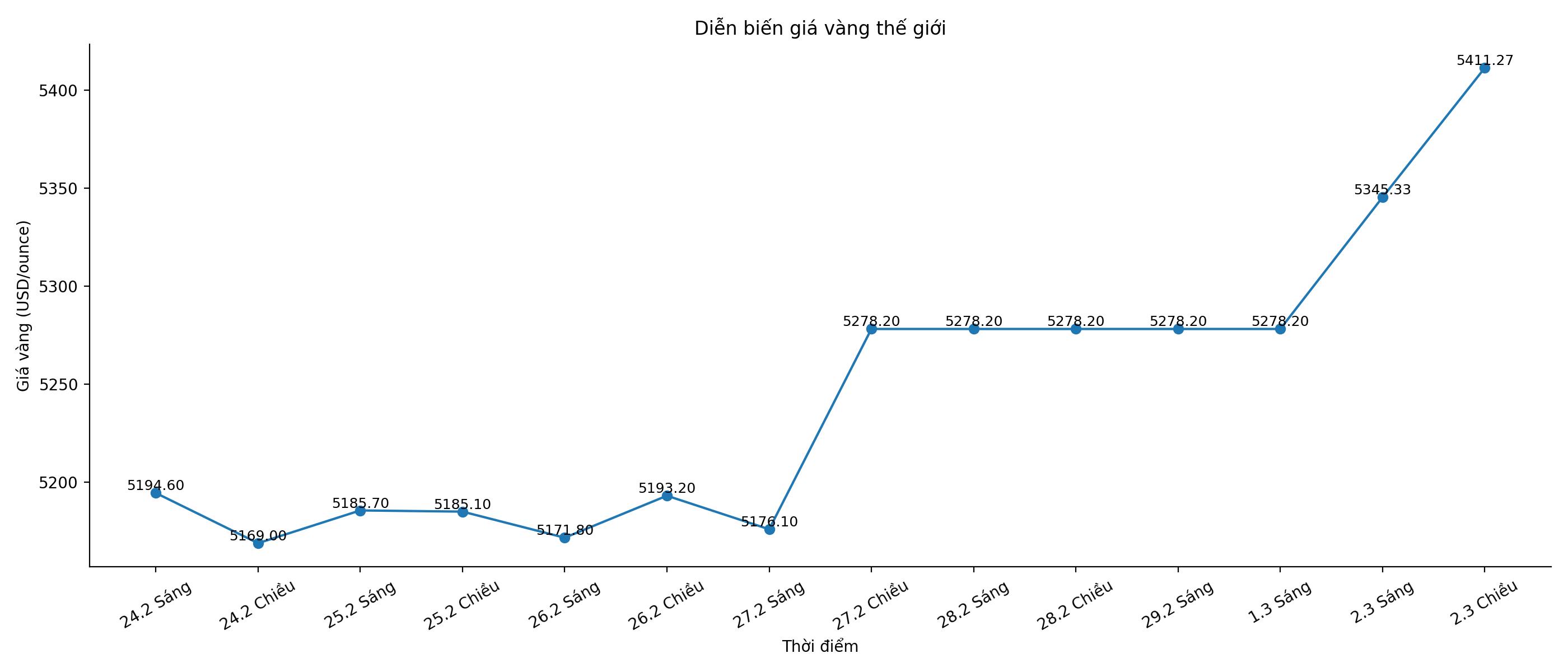
Gold prices rose again, erasing part of the decline of the previous session when bottom-fishing buying appeared in a risky market context as the conflict in the Middle East entered its fifth day.
The precious metal at one point increased by 2%, partially recovering after a four-session consecutive rally ended on Tuesday. Traders are weighing between gold's "risk compensation" and the strengthening of the USD, as the index measuring the strength of the greenback has increased by about 1.4% this week. Bond yields rose, while energy prices rose sharply, raising concerns about widespread inflation.
These factors caused investors to narrow expectations of monetary policy easing. At the same time, the sell-off in the global stock market on Tuesday also forced some investors to sell gold to supplement margins for other positions in the portfolio.
Mr. Peter Kinsella - Global Foreign Exchange Strategy Director at Swiss private bank Union Bancaire Privee (UBP SA) - said that the gold market is undergoing a typical "list risk reduction" move. According to him, this development is completely consistent with what has happened in previous conflicts.
Data from the US Commodity Futures Trading Commission (CFTC) shows that net buying positions of gold investment funds have decreased sharply since the end of January and are approaching their lowest level in nearly a decade. According to Mr. Kinsella, such a low position level could limit gold's deep decline in the near future.
Since the beginning of the year, gold has increased by nearly 20%, setting a historic record of over 5,595 USD/ounce at the end of January. This increase is supported by geopolitical tensions, trade instability and concerns related to the independence of the US Federal Reserve (Fed).
The market remains tense as conflict between the US and Israel with Iran continues to spread in the region.
Mr. Kinsella said that gold prices are likely to recover in the near future as long-term supporting factors remain. According to him, if the war ends without clear results, it will even highlight geopolitical risks and strengthen the role of gold as a safe haven asset.
However, the risk of inflation due to strong energy price increases may limit gold's rally if the Fed and major central banks are forced to maintain high interest rates for a longer period, and may even raise interest rates. The market is assessing about 80% of the possibility that the Fed will cut more than once by 0.25 percentage points this year, after just a few days ago there were still certain expectations of two cuts. High interest rates are often detrimental to gold because this precious metal does not yield yields.
In an effort to avoid a potential energy crisis, US President Donald Trump said that Washington will provide naval escort ships and insurance to ensure that oil tankers and commercial ships can pass through the Strait of Hormuz safely. This strategic route transports about one-fifth of global oil and gas supplies but is currently almost paralyzed due to conflict.
As of 10:42 am in Singapore, spot gold prices increased by 1.7% to $5,172.78/ounce. Silver prices increased by 3.3% to $84.73/ounce after falling more than 8% in the previous session. Platinum increased by nearly 3% and palladium increased by about 2%.