
Keeping the market pace amidst cost fluctuations
In the first days of April, records at many traditional markets and supermarkets in Ho Chi Minh City show that purchasing power is still stable, although the prices of some essential goods tend to increase slightly according to input costs. At Ba Chieu market, Ms. Hoang Linh - a food trader said that the prices of imported goods have increased slightly but not sharply.
“Some dried goods are priced slightly up to 2,000-3,000 VND/product, but I do not increase selling prices because I am afraid of losing customers. Current purchasing power is showing signs of stagnation, consumers prioritize essential and reasonably priced items” - Ms. Linh said.
From a consumer perspective, Ms. Le Minh Hang (resident of Thu Duc ward) said that her family has proactively adjusted spending, prioritizing promotional items. "At this time, I choose places that sell goods with many promotions and discounts such as supermarkets to save daily living expenses" - Ms. Hang shared.
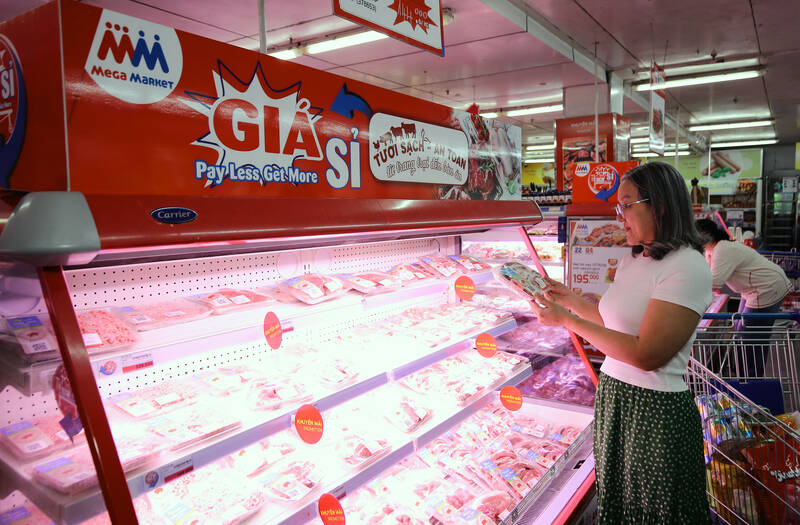
In that context, the regulatory role of market stabilization policies becomes even clearer. According to Mr. Ngo Hong Y - Deputy Head of the Trade Management Department, Ho Chi Minh City Department of Industry and Trade, the market stabilization program for 2026-2027 has been officially implemented from April 1 and lasts for 12 months. This is one of the important tools for the city to proactively respond to price fluctuations, especially in the context of unstable transportation costs, energy and input materials.
In the context that prices still have many potential fluctuations, the city will continue to closely monitor market developments, coordinate with businesses to proactively source goods, avoiding local scarcity or sudden price increases. The price stabilization program is not only a short-term solution but also a long-term market regulation tool, helping Ho Chi Minh City respond flexibly to economic fluctuations.
Synchronous solutions to promote growth
Data from Ho Chi Minh City Statistics shows that in the first quarter of 2026, the city's economy continued to maintain its growth momentum with an increase of 8.27%. However, the economy is still affected by world economic fluctuations, especially increased energy prices and input costs.
Total retail sales of goods and consumer service revenue in March 2026 are estimated at more than 160.406 billion VND, up 6.9% compared to the previous month and up 14.4% compared to the same period. This figure shows that domestic purchasing power is still an important foundation of the economy.
To maintain growth momentum in the second quarter, Ho Chi Minh City needs to synchronously implement many solutions. In which, close monitoring of domestic and international energy price movements is prioritized, in order to promptly propose appropriate management policies to support businesses to maintain production and business.
At the same time, the city will promote domestic consumption stimulus programs, improve the efficiency of market stabilization activities, organize concentrated promotional programs and large-scale trade and service events to attract people and tourists.
Another important pillar is to promote the disbursement of public investment capital, especially in key infrastructure projects, in order to create a spillover effect and lead social investment. At the same time, Ho Chi Minh City is also promoting the application of digital technology in industries and fields to improve labor productivity, gradually transforming the growth model towards modernity and flexibility.
In addition, improving the investment and business environment towards transparency and efficiency, along with practical support policies for small and medium-sized enterprises, is also considered a key factor to strengthen market confidence.


