
Shifting direction to exploit the domestic market
After many years of focusing on exports with large output, Mr. Pham Van Viet - General Director of Viet Thang Jean Company, said that his business is gradually changing its view of the domestic market. If the domestic market was not properly focused on before, then after recent fluctuations, especially the epidemic period, this business realized that this is an area that needs more attention. In fact, the domestic market is showing positive signs and is becoming increasingly important in its development strategy.
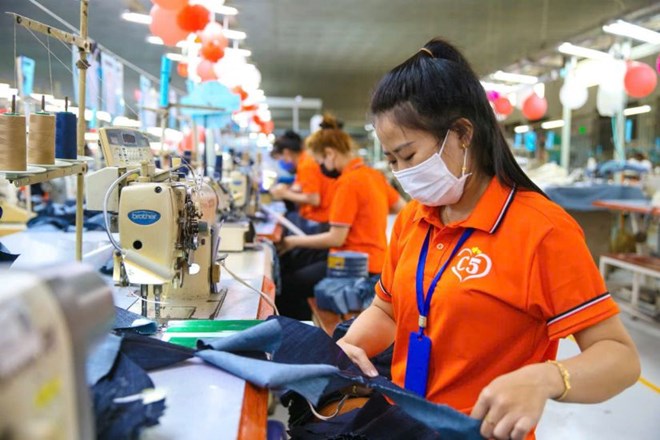
In the textile and garment industry, the proportion of production serving the domestic market has begun to increase, currently about 2-3%. For Mr. Viet's enterprise alone, domestic revenue reaches about 3-5% and the target this year is to increase to about 5%. To expand the market, businesses are oriented to promote the exploitation of e-commerce. However, for this channel to develop sustainably, there needs to be support from management and media agencies to ensure a transparent and healthy business environment, in the context of counterfeit goods, fake goods and inventory from abroad flooding in through online platforms, causing great pressure.
According to Mr. Viet, despite many difficulties, domestic enterprises still have the advantage of understanding the market, culture and geography. In parallel, enterprises are also gradually increasing the localization rate of raw and auxiliary materials.
The investment problem also poses a significant challenge. A textile line may require capital up to millions of USD, depending on technology and capacity. Faced with this pressure, businesses in the industry are tending to invest in key stages, focusing on technology to improve productivity and product quality.
However, according to Mr. Viet, for sustainable development, the textile and garment industry still needs to continue to improve technological capacity, while building a more transparent and stable domestic market.
Synchronous solutions for sustainable domestic market development
From the perspective of research and policy planning, Master Nguyen Truc Van - Director of the Ho Chi Minh City Center for Socio-Economic Simulation and Forecasting believes that the business community has made proactive steps, but to adapt better, it is necessary to implement many synchronous solutions.
First of all, businesses need to diversify raw material supply sources, prioritizing the ASEAN region to reduce dependence on traditional markets. At the same time, the use of financial tools such as exchange rate risk hedging or renegotiating delivery conditions will help protect profits in the context of fluctuations.
Regarding operation, the trend of switching to multimodal transport, combining technology investment and energy reduction, is considered an important solution when logistics costs and oil prices are still high. In parallel, exploiting the domestic market and choosing safer transport routes also helps businesses minimize risks.
From the management agency's side, it is necessary to promote consumer demand stimulus programs through fairs and large-scale shopping events to create momentum for the domestic market. At the same time, direct support policies for the logistics industry - a link under great pressure - is also a key factor.
According to the Ministry of Industry and Trade, with a scale of nearly 100 million people, the domestic market brings many advantages: convenient payment, less foreign currency risk, better quality control and limited trade disputes.
Over the past time, the Ministry of Industry and Trade has strengthened business connections in industries such as textiles, agricultural products, seafood, and footwear... to promote domestic consumption. Many businesses have also proactively utilized domestic raw materials, improving self-reliance in production.


