
Life in the forests
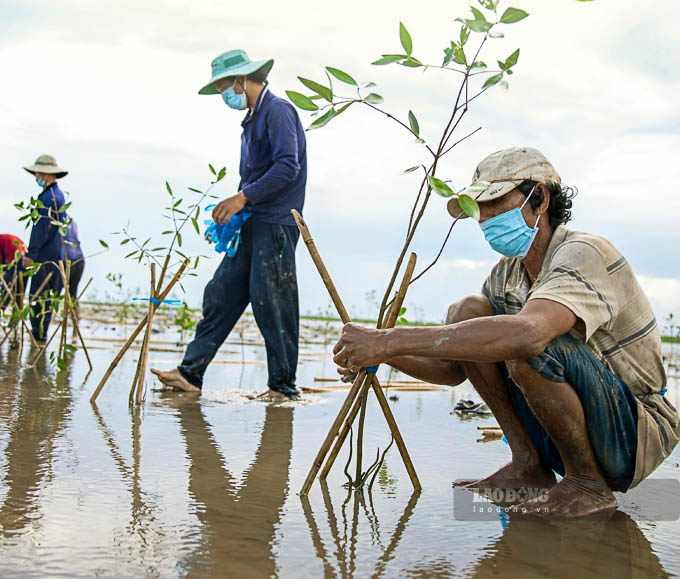
For 20 years attached to the forest, Mr. Son Tung in Lac Hoa commune (Vinh Chau town, old Soc Trang province) now Vinh Chau ward, Can Tho city cannot remember how many trees he has planted, only knows how many those green shoots have taken root, rising up through storms to become green, cool coastal mangrove forests.
He recalled that about 20 years ago, the alluvial area here was just a vast amount of mud stretching from the edge of the sea to thousands of kilometers deep. The forest trees are sparse, almost no living species can survive. When the locality implemented a coastal mangrove planting program, he was one of the first people to participate and stick with it to this day.
"When the forest is developed, shrimp, crab, and fish will soon return to live and breed a lot. If the forest is lost, the people here will have no source of life. People catch crabs, fish nets, crabs, and snails to make ends meet. When the firewood was cooked, they went into the forest to pick up the dead fish sauce and mangrove roots. Everyone who is attached to this place loves the forest as their own breath, Mr. Tup shared.
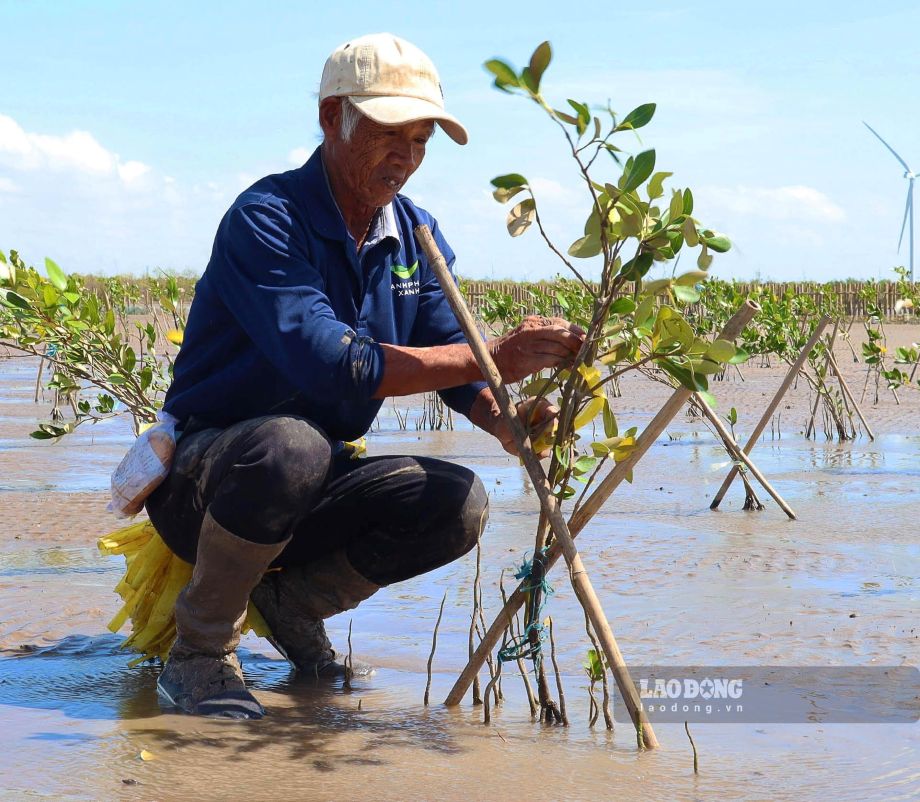
In the same locality, Mr. Kim Nam has been sowing green shoots on the coastal alluvial plain of Lac Hoa for more than 25 years. At the beginning of the Soc Trang coastal protection forest planting program, he was present on the alluvial plains from early morning to late afternoon, regardless of the harsh sun or heavy rain.
At first, he took on planting forests individually, then gathered the people into teams, and made a forest planting contract. For decades, he and his group have contributed to expanding many protective forests, helping to protect the livelihoods and living environment of coastal people.
"Growing forests is to leave for future generations. Only with forests can the land be stable, and natural resources are abundant. The forest blocks the waves, protects the soil, and protects the interior so that people can feel secure in their production, said Mr. Nam.
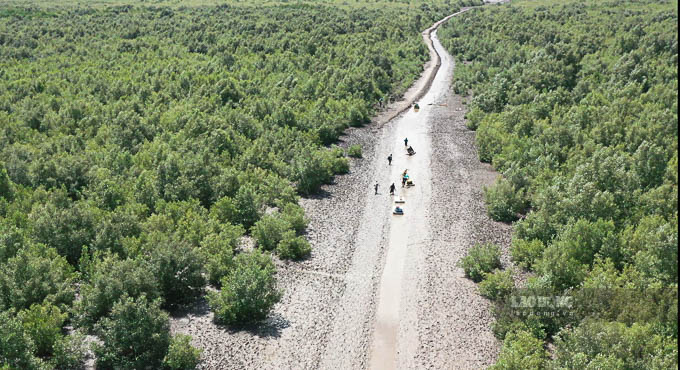
According to statistics, in the period of 2021 - 2025, Can Tho City has newly planted 261 hectares of mangrove forests. Currently, the whole city has nearly 14,000 hectares of forest, with an coverage rate of 1.74%, including more than 1,700 hectares of special-use forests, about 6,800 hectares of protective forests and more than 5,300 hectares of production forests. In the period of 2025 - 2030, the mountainside will plant 250 hectares of mangrove forests.
"Living healthy" in the forest
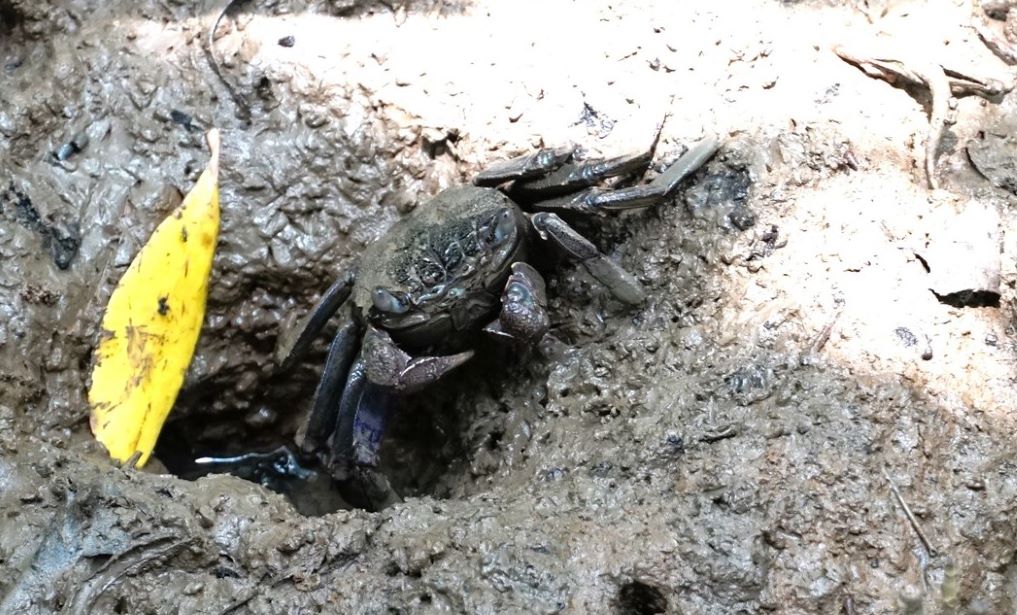
Under the mangrove forest canopy in An Thanh 3 commune (formerly Cu Lao Dung district, Soc Trang province - now Cu Lao Dung commune, Can Tho city), three-season, three-hour, three-hour, three-hour, three-hour, three-hour, three-hour, three-hour snails are contributing to reducing difficulties for people's livelihoods. No longer having to go to sea to make a living unstable, now people know how to take advantage of forest canopy to raise aquatic products in a natural, efficient and sustainable way.
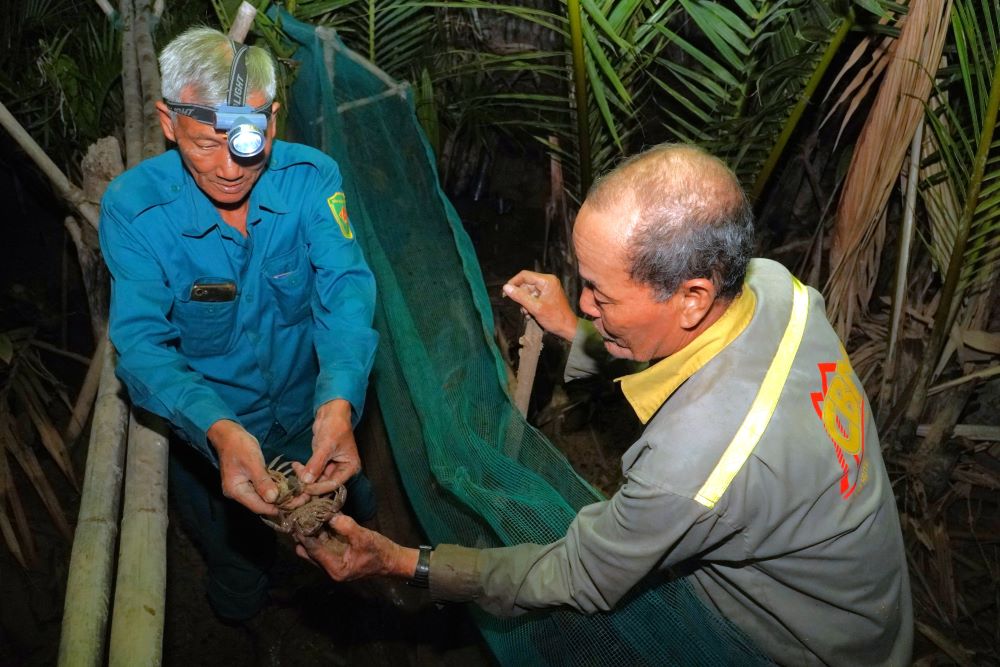
Mr. Lam Van Hon said that the model of raising three crabs under the forest canopy is gradually changing people's lives: "The three crabs breed well, each one lays thousands of eggs. Under the forest canopy there is shade, abundant natural food sources so farming is very healthy. Without much investment cost, after 5 - 6 months, they can be harvested and sold at a price of 60,000 - 100,000 VND/kg, if there is salt, it can be up to 150,000 VND/kg".
Mr. Tran Van Duc - Head of the Aquaculture Team under the forest canopy - said that the team has nearly 20 participating households. On average, each member earns about 10 million VND/month from this model. In particular, three saline regions have achieved 3-star OCOP certification, opening a new direction for local agricultural products.
In An Thanh Nam commune, now Cu Lao Dung commune, Mr. Truong Van Dung has also boldly left the marine industry after 40 years of working to switch to the aquaculture model combined with forestry tourism.
In 2016, he was assigned to contract 5 hectares of protective forests and participate in training courses on forest husbandry techniques, forest protection and law. Taking advantage of the assigned forest area, he raised enough tops, snakehead worms, schools of fish, and crab in a natural way, so he took less care and food costs. Thanks to that, his family earns hundreds of millions of VND each year, earning a stable and sustainable livelihood.
Previously, working at sea had an unstable income. Since living under the forest canopy, I have had a stable income and also kept nature, Mr. Dung shared.
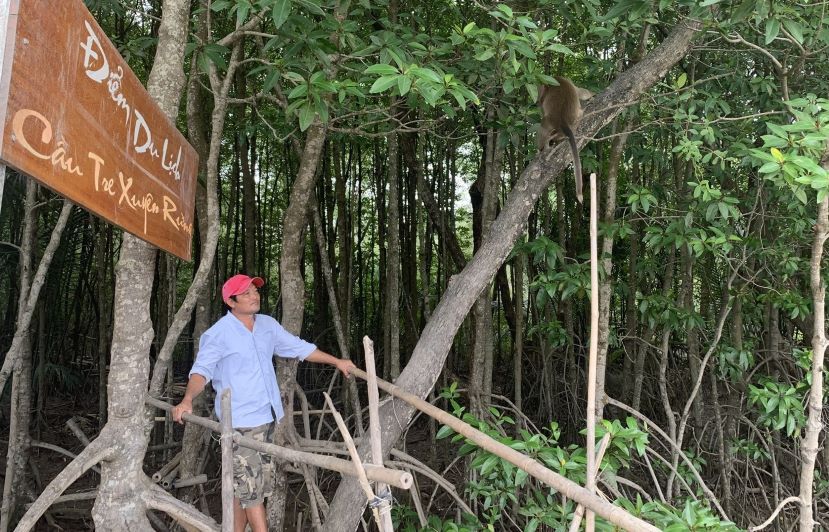
Recognizing the potential, Mr. Dung cooperated with many surrounding households to form a community tourism cluster, providing unique experiences such as traveling on a bamboo bridge through the forest to see monkeys, watching snakehead fish, Predatory fish, rowing a boat in the coastal mangrove forest or participating in exploiting aquatic products in the pond.
" Tourists not only have fun but also see how we live with the forest, raise trees without destroying nature but also contribute to conservation," he said.
The eco-tourism destination invested by him quickly attracted tourists, becoming a typical coastal forest management model of the locality. Being assigned forest contracts also helps him raise awareness of sustainable exploitation both for farming and protection for regenerative resources. He actively participated in the forest protection team, and was trained in legal knowledge and forest management skills.
Taking visitors through the banyan forest to the gate of the sea, he pointed to the forest and said - every year the banyan forest thickens, reaching out to the sea, creating a natural shield to protect the residents of Cu Lao Dung. This is also a haven for monkeys, wild birds and many aquatic species, contributing to biodiversity conservation.
Forests encroach on the sea, people settle
In the context of increasingly narrowing production land funds inside mangrove forests, coastal mangrove forests are still being degraded and constantly under pressure from rising sea levels and waves. Community-based forest development and protection has been a motto that Soc Trang province (old) has implemented for many years. Because the community is the people who directly live, are attached and understand the benefits from the forest.
On that basis, the forestry sector and local authorities have coordinated to establish many groups and groups for forest co-management. In the 2021 - 2025 period, forest protection contracts have been assigned for 6,806 hectares, and it is expected that in the 2025 - 2030 period, it will be 5,524 hectares.
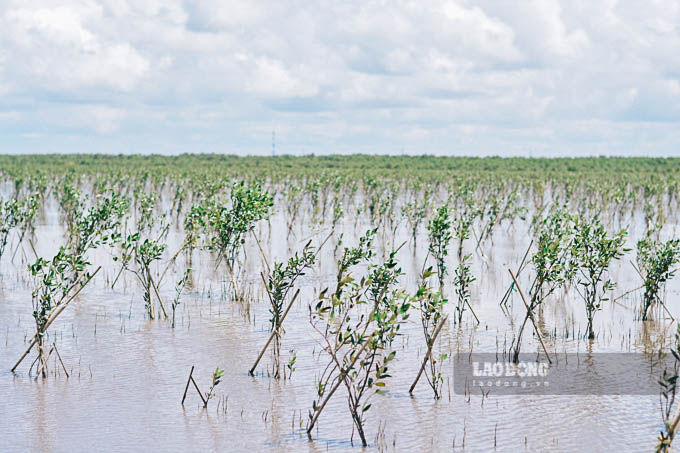
According to statistics, there are currently about 1,800 hectares of coastal protection forests and more than 200 hectares of riverside forests in An Thanh and Cu Lao Dung communes. Thanks to the policy of assigning forest contracts to people for proper management, protection and exploitation, many forests are not only maintained but also developed strongly, gradually encroaching on the sea each year, playing an important role in minimizing salinity intrusion and preventing landslides. "Every year, the forest encroaches a few more meters. Large trees cover the waves and block the wind, and people in the suburbs like us are much more secure, said Mr. Dung.
Mr. Dung said that the mangrove forest ecosystem here still retains the rare wildness: monkeys, storks, butterflies, wild birds and thousands of natural beehives. This is not only a valuable resource but also a foundation for sustainable tourism development, creating a value chain closely linked between people's livelihoods and conservation work.
In October 2025, the People's Committee of Can Tho City approved the Technical Support Project Document aimed at building capacity to implement the plan to minimize the impact of climate change and mobilize sustainable financial resources to protect and develop forests, including a high-quality forest carbon market for Soc Trang province (now Can Tho City) - abbreviated as the C4G Project.
The project is funded by the Government of Canada and CARE, Canada through CARE, USA. The total non-refundable aid capital is more than 16.43 billion VND (about 896,667 CAD). The implementation period is until March 31, 2028 in communes and wards of Can Tho city, including Cu Lao Dung, Lai Hoa, Vinh Hai, Vinh Phuoc and Vinh Chau.
The project's goal is to improve the capacity of 30 officials of departments, branches, 250 people and 3 enterprises to adapt to climate change, protect forests and participate in the carbon market. The project also provides scientific reports, supports experience sharing and mobilizes resources for sustainable forest development.


