
Aviation opens up routes, connecting passenger flows; tourism creates demand and growth momentum for air transport. The development of tourism also creates room to open more air routes, increase exploitation frequency and promote infrastructure investment.
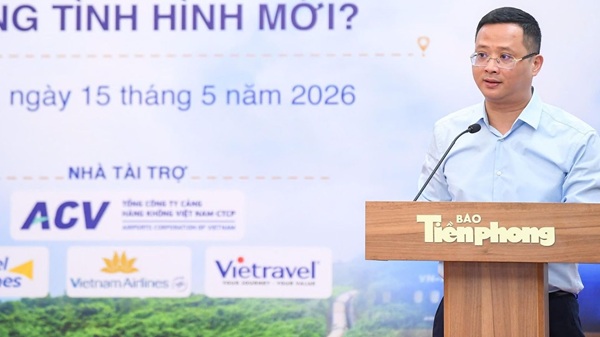
At the seminar "What solutions to stimulate aviation - tourism demand in the new situation", organized by Tien Phong Newspaper on the morning of May 15, Director of the Civil Aviation Authority of Vietnam - Mr. Uong Viet Dung said that the air transport and tourism market in Vietnam has recovered strongly after the COVID-19 pandemic.
The domestic and international air route network continues to expand, contributing to making Vietnam an attractive destination in the region. Many localities such as Phu Quoc, Da Nang, Nha Trang, Da Lat or Ha Long recorded clear tourism growth thanks to the driving force from aviation.
Along with that, many aviation infrastructure projects have been put into operation such as Tan Son Nhat T3 Terminal, Noi Bai T2 Terminal and new runways. Key projects such as Long Thanh, Gia Binh and Phu Quoc International Airports are also being implemented.
According to statistics, about 80% of international visitors come to Vietnam by air, while tourists account for 70% of the total transportation volume of airlines.
In 2025, Vietnam's air transport market reached more than 83.6 million passengers, an increase of 10.8% compared to the previous year. Of which, international visitors reached 46.9 million. Vietnam also welcomed about 21 - 21.5 million international visitors, the highest level ever.
The growth momentum continued to be maintained in Q1/2026 when the entire market transported more than 24.1 million passengers, an increase of 16.4% compared to the same period last year.
Currently, there are 6 Vietnamese airlines operating 49 domestic routes connecting Hanoi, Ho Chi Minh City with 20 airports nationwide. In the international market, 4 Vietnamese airlines and 77 foreign airlines are operating 155 regular routes to Vietnam from 30 countries and territories.
However, according to Mr. Uong Viet Dung, the aviation and tourism industries still face many challenges. Infrastructure at major airports such as Noi Bai, Tan Son Nhat, Da Nang, Cam Ranh or Phu Quoc is overloaded, affecting service quality and passenger experience.
The link between aviation and tourism is not really synchronized, many cooperation programs are still seasonal, lacking unique tourism products associated with a stable flight network.
Aviation operating costs are also under great pressure from fuel prices, exchange rates, aircraft shortages and global geopolitical fluctuations. According to Mr. Dung, the conflict in the Middle East once caused air fuel prices to increase sharply, forcing Vietnamese airlines to cut flights in April 2026.
To promote sustainable development, the Director of the Civil Aviation Authority of Vietnam proposed to continue to improve mechanisms and policies; accelerate investment in key aviation infrastructure; strengthen links between aviation - tourism - localities; expand international promotion and develop more routes to potential markets.
He also emphasized the requirement to promote digital transformation and green transformation to optimize exploitation, reduce emissions and improve the quality of passenger services.


