
In that context, the organization of training and human resource use of the aviation industry is suggesting some valuable experiences for the problem of developing high-quality human resources in the Capital.
Pressure on human resource standards in the new era
At many scientific forums on Hanoi development recently, the issue of "skills gap" has been frequently mentioned. As service, logistics and digital economy industries develop rapidly, requirements for workers also change in an increasingly specialized and internationalized direction.
Assoc. Prof. Dr. Tran Kim Chung (Central Theoretical Council) said that Hanoi needs key areas capable of leading the process of improving human resource quality. According to him, industries such as logistics or high-quality services not only require specialized knowledge but also require a complex skill system on management, operation and safety standards.
Reality shows that the aviation industry is a typical example. With high technical characteristics and strict operating procedures, this field sets clear standards for discipline, foreign languages and professional competence - factors that are increasingly important in the globalized labor environment.
According to the Logistics Service Development Project of the Hanoi People's Committee, this industry is growing by 15-20% per year. However, in more than 25,000 logistics enterprises in the area, only about 10-15% of personnel are well-trained in expertise. It is forecast that by 2030, the Capital may lack about 200,000 highly skilled workers to meet the requirements of the global supply chain.
In that context, the aviation activity cluster around Noi Bai port, which creates jobs for tens of thousands of direct and indirect workers, is showing a noteworthy approach in standardizing human resources. Through Vietnam Airlines' recent recruitment programs and job fairs, recruitment standards for young workers are becoming clearer: foreign language skills, digital skills and professional working style.
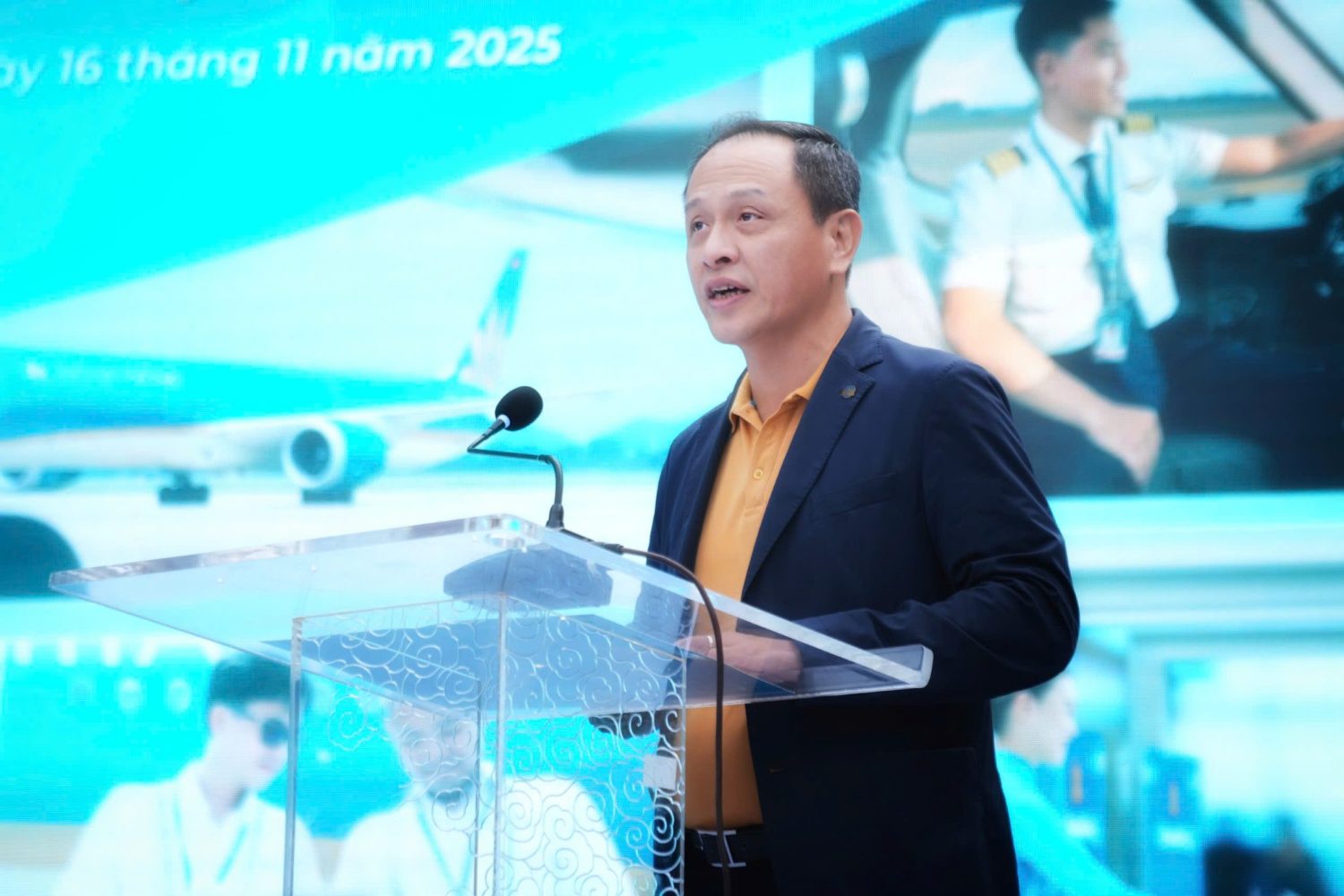
Sharing his views on developing high-quality human resources for Hanoi Capital, from a business perspective, Mr. Le Hong Ha - General Director of Vietnam Airlines Corporation (Vietnam Airlines) - said that developing high-quality human resources needs to be linked to three basic factors: stable employment, skills suitable for new trends and a professional working environment.
According to Mr. Ha, creating high value-added job positions must go hand in hand with the modernization of service industries such as tourism, logistics or air transport - areas that are expected to contribute increasingly to the GRDP of the Capital in the next decade.
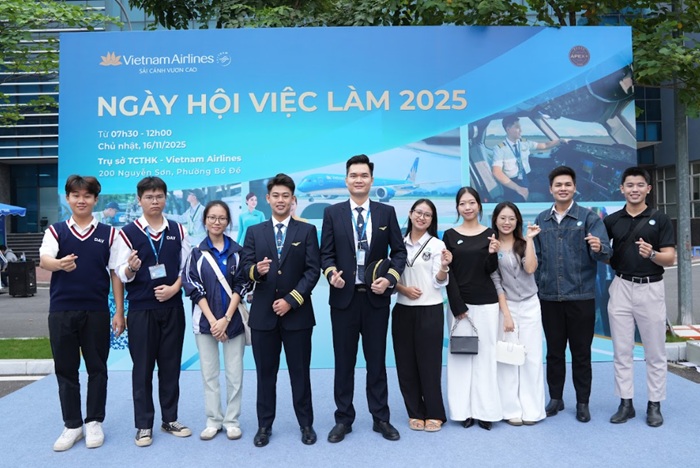
In addition, investing in the skills of the young generation, especially digital and foreign language skills, is an important condition for the labor force to adapt to the international working environment while supporting young people in accessing innovative startup models. This is the most sustainable way for young people not to be left behind in the knowledge economy. In addition, it is necessary to standardize "soft skills" through discipline or in other words, build a culture of discipline and standards of service in the working environment.
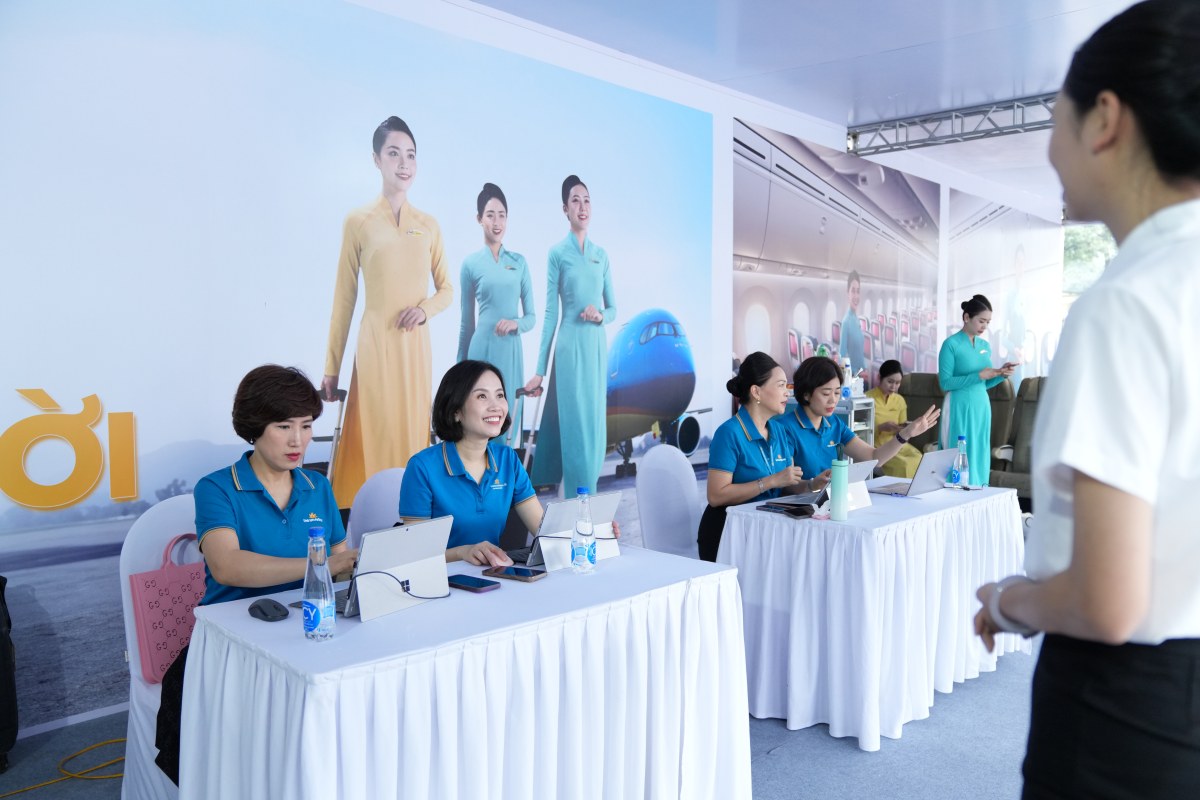
Operating discipline, safety awareness and service spirit are the foundation of the aviation industry. If these standards are spread more widely in other fields, they will contribute to improving the quality of the city's human resources," Mr. Ha said.
Connecting training with practical needs
In fact, the ecosystem of the aviation industry not only creates jobs for pilots, flight attendants or maintenance engineers. The operation of an airline, typically Vietnam Airlines, also entails human resource demand in many other fields such as ground services, commerce, information technology, logistics, finance and legal affairs.
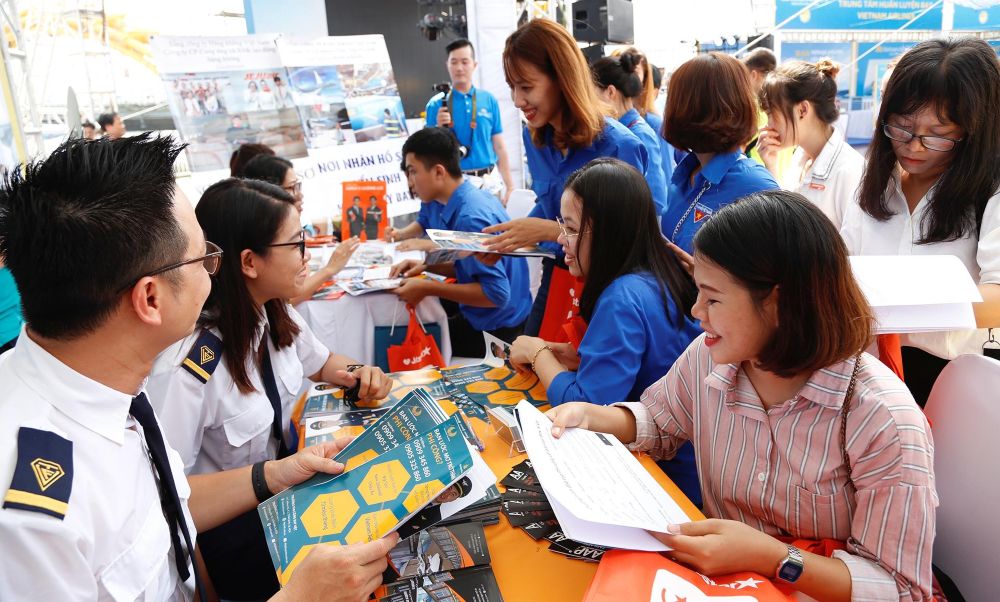
Every year, Vietnam Airlines organizes job fairs and flight attendant recruitment programs on a large scale, creating opportunities for students and young workers to directly access the industry's professional environment. At Vietnam Airlines' Job Fairs, through experiential activities, career counseling and exchanges with pilots, engineers or flight attendants, young people can better visualize job requirements as well as professional standards in this field.
In parallel with that, Vietnam Airlines' continuous expansion of its flight network and introduction of new generation aircraft into operation also leads to the need to recruit personnel with foreign language proficiency and technology skills. This contributes to promoting the shift of labor structure towards modernity.
Another important factor is the cooperation between businesses and training institutions. Linkage programs between Vietnam Airlines and some universities in Hanoi help students access the actual professional environment early, thereby narrowing the gap between training and the needs of the labor market.
It can be said that improving the quality of human resources is a long-term process and requires coordination between many stakeholders, from management agencies, training institutions to the business community. From the reality of the aviation industry, it can be seen that building professional, disciplined working environments associated with international standards will play an important role in raising the "level" of labor quality.
If these experiences are appropriately applied to other service and knowledge economy sectors, Hanoi will have more conditions to form a skilled workforce, contributing to improving the competitiveness and quality of development of the Capital in the coming years.


