
Within the framework of the 58th Conference of the ESCAP/WMO Typhoon Committee taking place in Jeju, South Korea, member countries have discussed and agreed to replace some typhoon names in the list of use for the Northwest Pacific region.
According to the operating mechanism of the Typhoon Committee, since 2000, the WMO Regional Specialized Meteorological Center Tokyo - Typhoon Center - is responsible for assigning names and four-digit codes to tropical cyclones reaching tropical storm level or higher in the region. The storm name list is built from proposals from 14 member countries and territories of the Typhoon Committee and is used alternately in storm monitoring and forecasting activities.
In case a storm causes particularly serious damage or for other special reasons, the member state may propose removing the storm name from the list. After being approved, the country that contributed the original name will propose three alternative names for the Committee for Storms to consider and select at annual meetings.
At the discussion session of this conference, delegates considered 9 storm names that need to be replaced and proceeded to select according to the principle of consensus. As a result, the Storm Committee agreed on the replacement names.
Accordingly, Typhoon Yagi changed to Tomo, Typhoon Toraji changed to Gaeguri, Kong-rey changed to Koki, Man-yi changed to Dim-sum, Usagi changed to Hebi, Jebi changed to Narae, Krathon changed to Burapha, Trami changed to Hoaban and Ewiniar changed to Tirou.
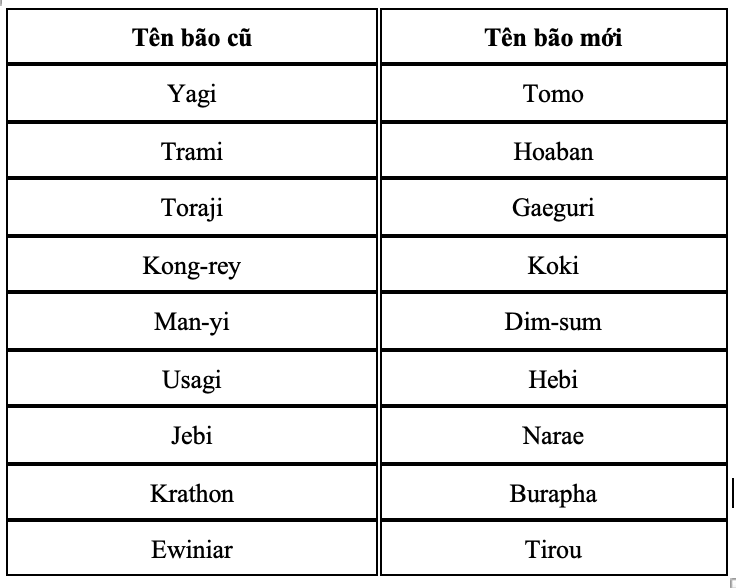
Notably, the name "Hoaban" (Ban Flower) proposed by Vietnam has been approved to replace the name Typhoon Trami in the current list. Ban Flower is a typical flower of the Northwest mountainous region of Vietnam, carrying cultural significance and symbolizing the beauty of the highlands.
In addition, the conference also recorded the Philippines' proposal to stop using some other typhoon names due to the serious damage caused by these storms, including: Wipha, Co-May, Mitag, Ragasa, Bualoi, Kalmaegi and Fung-Wong. Countries that contributed these typhoon names will continue to propose replacement names for the Committee on Storms to consider in subsequent sessions.
According to the regulations of the Storm Committee, new storm names must meet a number of criteria such as not exceeding 9 characters, being easy to pronounce in the media, not having negative meanings in the languages of member countries, not being commercial names and not causing confusion with tropical cyclone names in other regions.
Maintaining and updating the list of storm names is a regular activity of the Committee for Storms, contributing to standardizing information in tropical storm monitoring and forecasting, while facilitating communication, disaster warning and strengthening international cooperation in the region.


