
Bottleneck of the global supply chain
The past decade has marked an unprecedented period of volatility when the world's logistics system has continuously suffered systemic shocks. From the COVID-19 pandemic, trade conflicts to geopolitical hotspots in the Middle East, each event exposes the fatal loopholes of the global operating network.
Key transport routes such as the Strait of Hormuz or the Suez Canal currently not only play a transshipment role but have become strategic bottlenecks. Any instability here also creates a fierce chain reaction: extended delivery times, sky-high transportation costs and the risk of breakage becomes uncontrollable. This situation stems from the old model that prioritized cost optimization by focusing production in large centers, making the system fragile. Therefore, businesses have now shifted their priority to resilience and flexibility.
Trends in restructuring and integrated infrastructure development
Under the pressure of fluctuations, multinational corporations are actively reshaping their supply networks towards multi-center and risk diversification. Strategies such as China +1, friend-shoring or near-shoring are gradually becoming the main choices. In that context, Vietnam has emerged as an attractive destination thanks to its strategic geographical location and convenient international maritime connectivity.
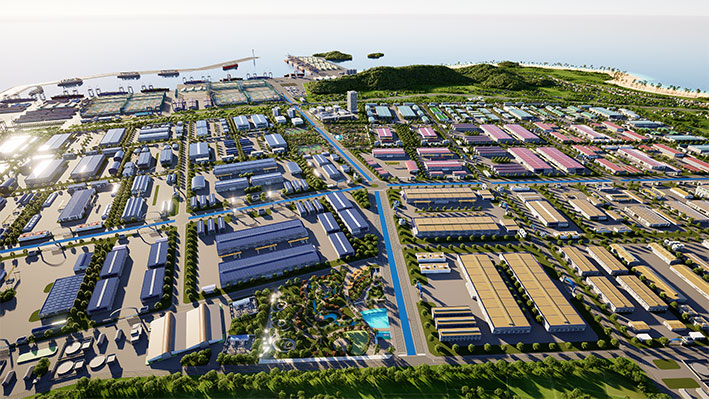
However, to transform from a simple manufacturing workshop to a regional logistics center, Vietnam needs a breakthrough: developing infrastructure in an integrated direction instead of fragmented. The Port - Industrial Park - Logistics complex model brings a breakthrough closed ecosystem:
- Goods are produced right in the internal industrial park.
- Processing and storage procedures are carried out at centralized logistics centers.
- Products are exported directly through the adjacent seaport system.
This approach helps minimize domestic transport routes, eliminate intermediate costs and limit arising risks. Good control of the domestic segment of the supply chain is the key factor determining the competitiveness of businesses in the future.
Phu My's advantage in building an integrated ecosystem
In the wave of strategic infrastructure transformation in Vietnam, Phu My region is affirming its position as a key economic coordinate thanks to converging core values in geographical location and development potential. Located on the coastal trade axis of the Central region and possessing the ability to connect directly with the rich raw material area of the Central Highlands, Phu My plays the role of a strategic export gateway, helping to relieve logistics pressure and optimize goods flow for the whole region.
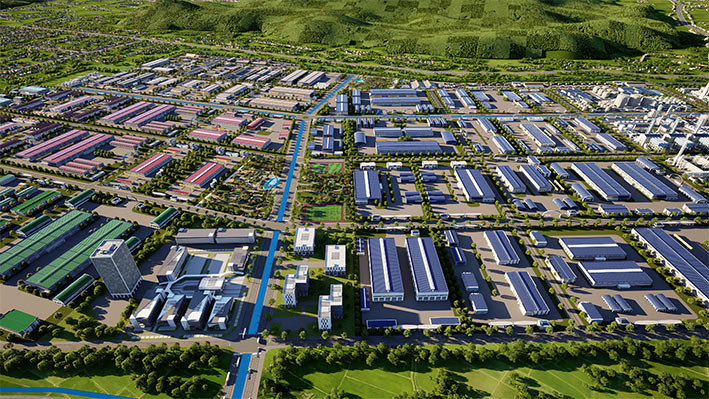
The breakthrough difference in the development orientation here is not in individual infrastructure projects, but in the complete integrated ecosystem model. The synchronization of deep-water seaports, concentrated industrial parks and modern logistics systems - a strategy that pioneering units such as PMG are focusing on implementing - creates strong synergy, helping businesses achieve outstanding competitive advantages:
- Optimizing the operating value chain: This model allows for the maximum shortening of the distance from the production line to the wharf, helping businesses reduce direct logistics costs, reduce warehousing time and improve capital turnover speed.
- Building a shield against external fluctuations: Strictly controlling links in the domestic supply chain helps businesses proactively respond to breakdowns from the international market. The stability of on-site infrastructure is the foundation for maintaining continuous production operations even in the most volatile periods of the global transportation market.
- Elevating the position of Vietnamese goods: With the ability to receive large tonnage ships in the deep-water port system, this area opens up opportunities to connect directly to large consumption markets without having to go through international transshipment ports. This not only reduces sea transport costs but also directly improves the price and time competitiveness for agricultural products as well as exported industrial goods.
The shift to an integrated infrastructure model is no longer a time-sensitive option, but an inevitable requirement to establish a position in a volatile era. Creating symbiotic ecosystems such as the seaport and industrial complex complex in Phu My is the strategic solution to the problem of self-reliance and supply chain optimization. With methodical investment and long-term vision from pioneering infrastructure developers, Vietnam is not only stopping at the role of a manufacturing factory, but is also rising to become a sustainable link, a modern logistics center playing a core role in the global value network. This is a solid foundation for domestic businesses to confidently integrate and affirm fair competitiveness in the international arena.


