
Flexible operation, maximizing power sources
In the last days of June 2026, the Northern region and many localities across the country entered a widespread heat wave with prolonged high temperatures, causing electricity demand to increase sharply.
According to information from the National Power System and Electricity Market Operation Co., Ltd. (NSMO), on June 24, 2026, the maximum capacity of the national power system reached about 58,456 MW, of which the Northern load reached 30,209 MW, exceeding the peak set at the end of May 2026 and becoming the highest level ever.
To ensure the safe and stable operation of the power system, implementing the direction of the Ministry of Industry and Trade, right from before the hot season of 2026, NSMO has developed many operating scenarios according to different load levels, and at the same time fully prepared response plans for prolonged hot weather or sudden load increases.
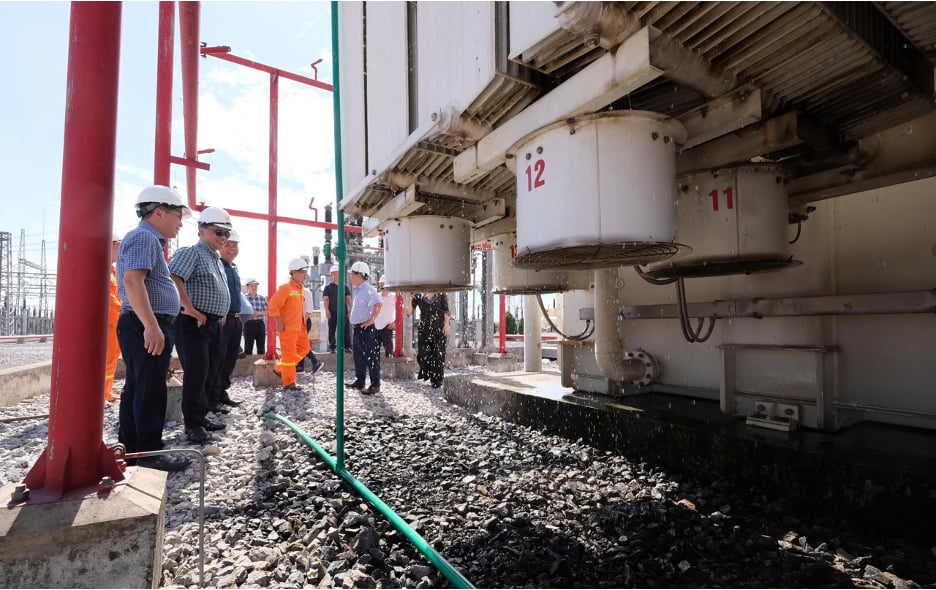
During operation, load developments are continuously monitored in real time. Power mobilization methods are updated regularly based on load forecasts, availability of power generating units, transmission capacity of the power grid system and fuel supply to ensure the system always operates in a safe state.
At the same time, the coordination between the power system dispatcher unit and the power generation, power transmission, power distribution, coal, gas and fuel supply units for power generation is maintained closely to promptly handle situations arising in conditions of increased load.
Maximizing the capacity of the power transmission system, strengthening backup sources
In parallel with mobilizing power sources, the operation of the transmission grid is particularly focused on ensuring the capacity to transmit power from power source centers to load areas.
Power grid management units have coordinated to deploy repairs and maintenance of equipment, improve the availability of power lines and substations, especially for power transmission projects supplying electricity to the North.
The 500kV North-South power line system continues to be maximized for power transmission from the Central and Southern regions to the North. During many peak periods, the transmission capacity of this power line is almost maximized, making an important contribution to ensuring the balance of electricity supply and demand between regions.
In the process of operation, the electricity industry also coordinates with investors to bring some new power sources to participate in trial operation at high capacity right during peak load hours.
This solution not only brings economic efficiency to the entire system but also helps save water at strategic hydropower reservoirs to be ready to respond to the next heat waves in the dry season.
To suit the characteristics of summer load, the electricity industry has also proposed adjusting the peak hours from 5:30 PM to 10:30 PM, thereby creating conditions to improve the efficiency of load regulation and more rational electricity use.
Continue to synchronously implement solutions in the coming time
According to forecasts from the meteorological agency, hot weather is still likely to continue to develop complicatedly in the coming time and the load on the power system, especially in the North, may continue to increase.
To ensure power supply in the next heat waves, the electricity industry will continue to synchronously implement many solutions. In which, continue to closely monitor weather and load developments in real time to promptly update operating methods; mobilize maximum available power sources; maintain the highest transmission capacity of the power grid system; closely coordinate with coal, gas and fuel supply units to ensure sufficient fuel for power generation.
At the same time, accelerate the progress of putting new power sources into operation; continue to effectively exploit imported power sources and renewable energy; strengthen the inspection and maintenance of equipment, improve the availability of power generating units and transmission systems.
Along with technical solutions, the electricity industry will continue to coordinate with ministries, branches, localities, EVN and power corporations to promote electricity saving programs, adjust loads, encourage customers to shift electricity demand away from peak hours; strengthen propaganda on economical and efficient electricity use for households, production and business establishments and electric vehicle charging station operators.
In the long term, the electricity industry continues to encourage the development of self-producing and self-consuming rooftop solar power combined with energy storage systems, contributing to reducing pressure on the national power system and improving customer energy self-sufficiency.


