
Climate change is putting the seafood industry under increasingly clear pressure. At the end of 2025 alone, 3 major storms and prolonged floods caused widespread damage to aquaculture in the Central - Central Highlands region. Storm No. 13 alone damaged about 1,848ha of farming area, more than 23,000 cages and rafts, with a total value of 1,258 billion VND. The following floods caused Khanh Hoa, Dak Lak and Gia Lai to suffer additional damage of about 4,032 billion VND.
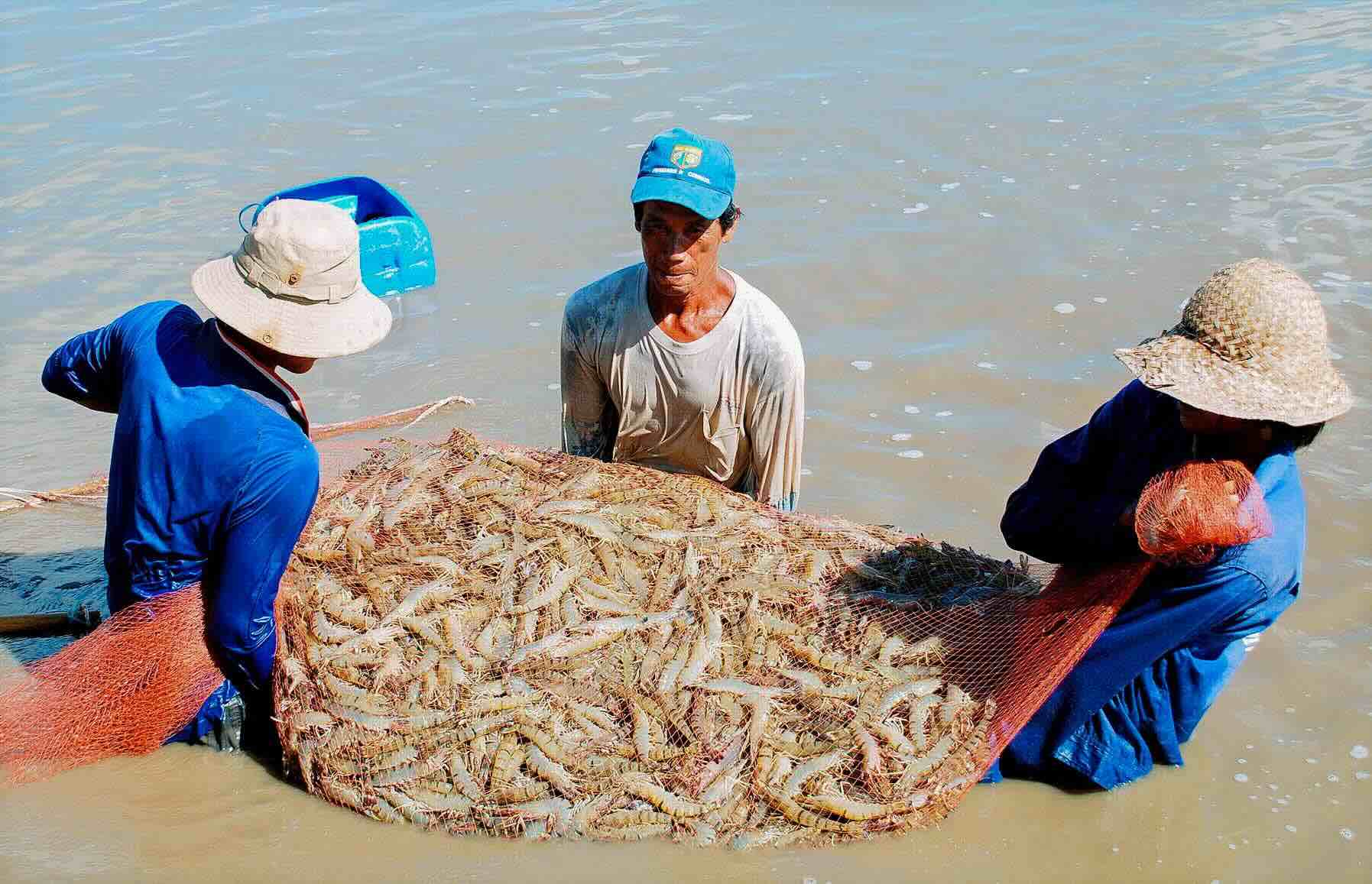
Faced with increasingly severe natural disasters, the Department of Fisheries and Fisheries Resources Surveillance has issued directives and guidelines on disaster prevention and control, strengthened management of aquaculture in extreme weather conditions, environmental monitoring and disease prevention.
The Department of Fisheries and Fisheries Surveillance also identified one of the main tasks of the fisheries and fisheries surveillance sector to move towards sustainable development as diversifying farming methods according to each region's conditions and adapting to the impacts of climate change.
Recently, the Department coordinated with the Department of Science and Technology (Ministry of Agriculture and Environment) to organize the National Conference on Fisheries Science and Technology and Fisheries Surveillance. In which, proactively adapting to climate change is an important content of the conference.
At the Conference, representatives of the Department of Science and Technology (Ministry of Agriculture and Environment) said that in the period 2021 - 2025, 113 S&T tasks managed by the Ministry have been implemented and widely applied in production practice. "Effective farming models, technology solutions in preservation, processing and exploitation have created positive changes, towards developing the seafood industry in a modern, sustainable and climate change-adapted direction," said the representative of this Department.
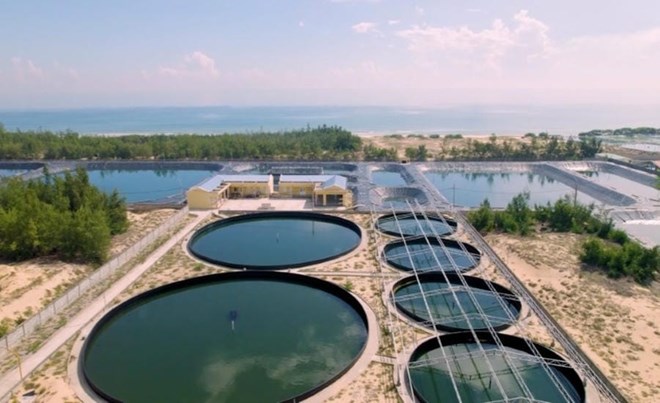
MSc Nguyen Huu Thanh - Vietnam Institute of Fisheries Science affirmed that climate change is no longer a prediction but a reality that is happening with manifestations such as sea level rise, saltwater intrusion, ocean acidification and extremely strong storms. According to MSc Nguyen Huu Thanh, there are currently some units developing submersible cages when there are major storms.
New materials (composites, copper alloys) are being researched to increase resistance and reduce biological dirt adhesion. In addition, units are also researching strains and varieties that are heat-resistant and salt-resistant, for example, selecting oyster varieties that can form shells well in acidified seawater conditions. At the same time, applying IoT (Internet of Things) to monitor parameters such as temperature, salinity, dissolved oxygen, pH in real time, helping farmers make decisions to respond promptly to extreme weather phenomena.
In the coming time, the Vietnam Fisheries Science Institute also proposes to establish an automatic marine environmental monitoring network in key farming areas. Develop a disaster risk map and emergency response procedures for industrial marine farms.
Previously, on March 11, 2021, the Prime Minister issued Decision No. 339/QD-TTg approving the Strategy for Vietnam's Aquaculture Development to 2030, with a vision to 2045. In which, it is required to continue to develop effective farming of key species and aquatic species with economic value associated with ecological environmental protection, proactively adapting to climate change.
Take advantage of water surface potential, develop aquaculture on reservoirs, new saline intrusion areas formed by climate change that cannot continue agricultural production. At the same time, encourage the development of aquaculture models applying new and advanced technologies, reducing production costs, being environmentally friendly, and adapting to climate change.


