
According to Ms. Nguyen Hoang Lan, Director of Customer Experience at Viettel Customer Services Company (Viettel Customer Services), the gap between "businesses are done" and "customers have solved problems" is becoming one of the biggest challenges of experience management in the era of artificial intelligence.
The sharing was given at the workshop "Building Trusted Digital Infrastructure for the AI Era" in Phnom Penh, Cambodia, with the participation of delegates from telecommunications, banking and technology businesses in the region.
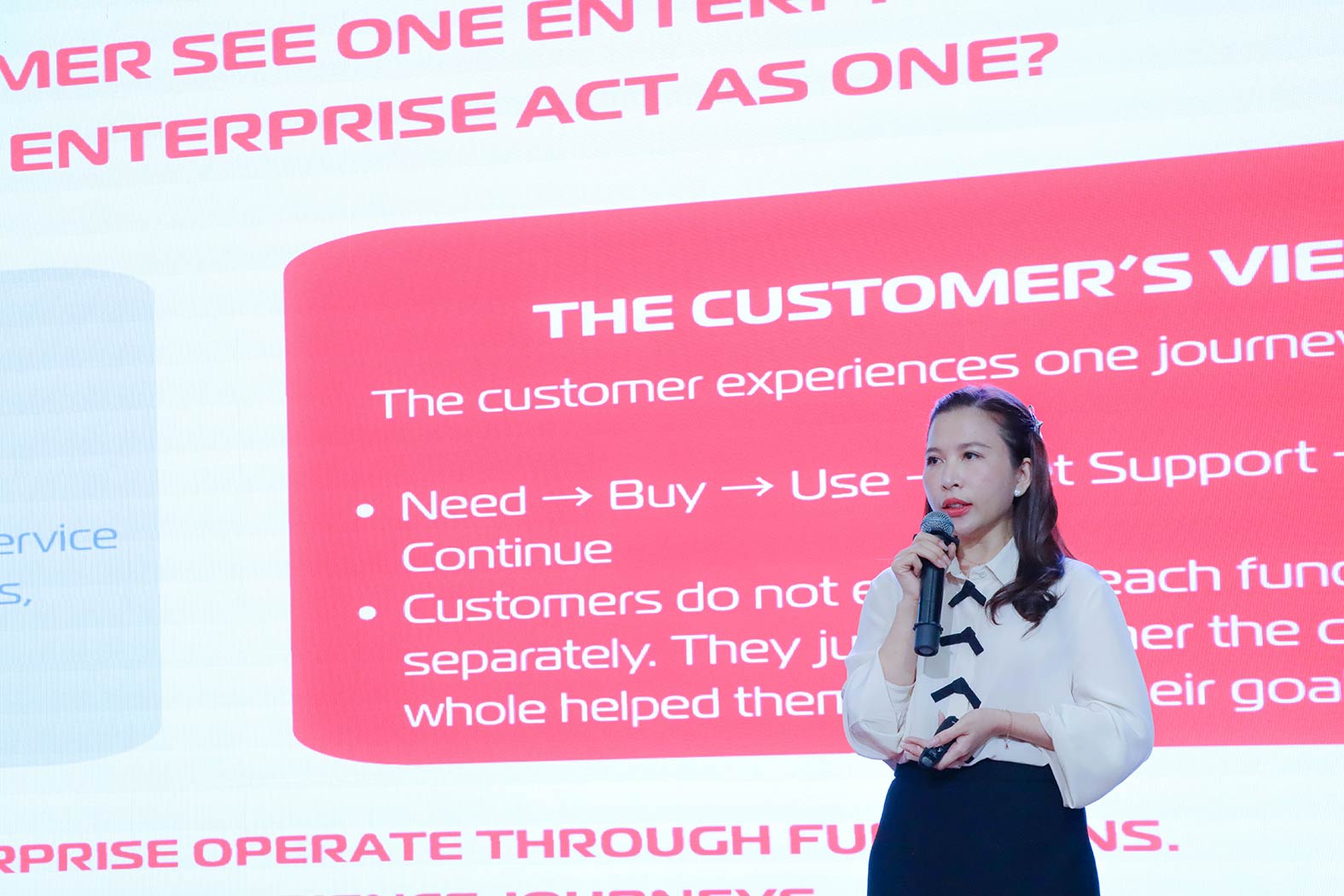
The event takes place in the context of Cambodia accelerating digital transformation and becoming one of the fastest growing digital infrastructure markets in Southeast Asia. This is also a market that Viettel has been present in for more than 20 years through the Metfone brand, and has recently been chosen by member units as a starting point for its international outreach strategy.
With Viettel Customer Service Company, the sharing in Cambodia marks the next step in orienting the "Make in Vietnam" customer experience capability to the regional market.
'Green' paradox
According to Ms. Nguyen Hoang Lan, many businesses are facing a familiar paradox: operating reports are all green, all indicators and service level commitments are guaranteed, but customer satisfaction does not improve. The reason lies in the fact that the two sides are defining the word "completed" differently.
An incident may be confirmed by the technical department as being resolved, but if customers still cannot continue their work, then for them, the problem is not over," Ms. Lan said.
Businesses are organized according to functions, each department has its own targets and processes, while customers experience the business as a continuous journey. They do not care what department their requirements are in, but only care whether the problem has really been solved or not.

As a result, when customers have to call back many times, retell the same story to different departments or track the processing progress themselves, businesses have unintentionally pushed internal coordination costs to customers.
At that time, customers unintentionally become connectors of things that businesses cannot yet connect," Ms. Lan said. This is also the time when businesses need to change their management methods: instead of optimizing each touch point or each department, it is necessary to manage the entire journey and direct all activities to the final result that customers desire.
Difference does not come from AI
According to Ms. Lan, many businesses are investing heavily in artificial intelligence with the expectation that technology can solve customer experience problems itself. In fact, AI only promotes value when placed in a suitable operating model.
That is the core thinking of the ACT AS ONE model that Viettel Customer Service Company introduced at the conference. Instead of managing according to individual requirements or each department, the model directs the entire organization towards a common goal: to help customers complete their work. This requires businesses to have the ability to coordinate - connect data, processes, people and technology so that all decisions and actions aim for the same final result.
This is also the approach that Viettel Customer Service Company is implementing in customer experience transformation projects. Not only providing a technology platform, the company also accompanies businesses from strategic consulting, customer journey design, operating model building to deployment and optimization.
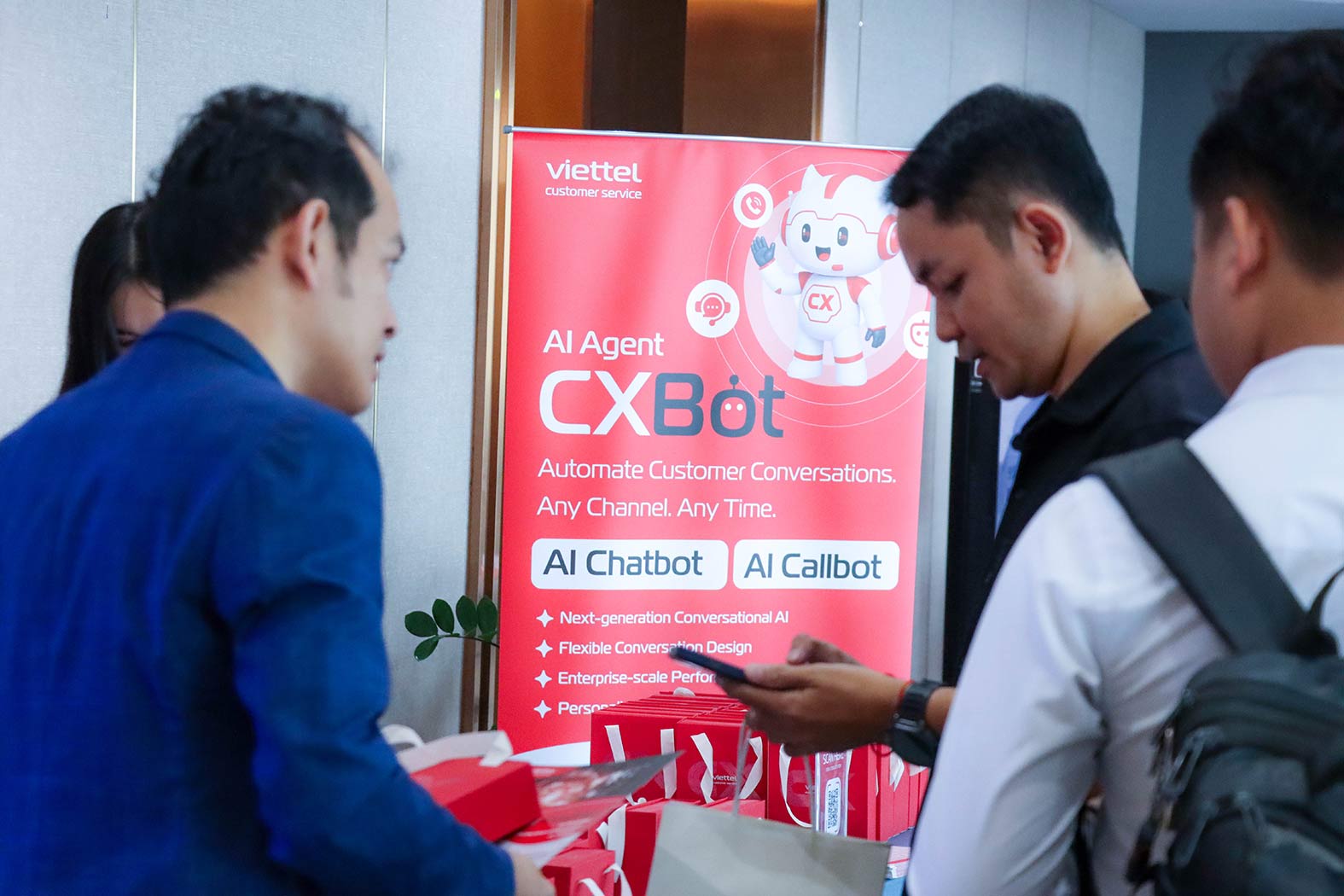
As a technology company in customer experience, Viettel Customer Service Company builds a service ecosystem that covers the entire customer journey - from the KnowX hub knowledge management platform, OmniX multi-channel interaction coordination switchboard, AI assistants supporting employees to analytics and operation optimization tools. These platforms are designed to operate as a unified ecosystem, helping businesses connect data, processes and people instead of optimizing each individual system.
A business can own many technologies, but if data is still scattered, knowledge is not shared, and responsibility is interrupted between departments, customers will still feel that it is many different businesses," Ms. Lan said.
With more than 20 years of experience in the field of customer service, serving about 120 million customers in 10 markets and operating nearly 4,000 multi-channel personnel, Viettel Customer Service Company said that it has built a capacity to advise, deploy and operate customer experience on a large scale.
Closing the sharing, Ms. Nguyen Hoang Lan said that the biggest change that business leaders need to implement is not in investing more in AI, but in changing the management question. Instead of just asking "Have the departments completed their work yet?", businesses need to start with the question: "Have customers completed their work yet?
According to her, as AI becomes increasingly popular and technology gradually becomes a common standard of the market, the competitive advantage will no longer lie in owning more technology, but in the ability to coordinate the entire organization to act together for a common goal of customers.
Sharing in Cambodia also shows the direction that Viettel Customer Service Company is pursuing: not only exporting technology platforms, but also accompanying foreign organizations in consulting, deploying and operating customer experience - a field expected to become one of Vietnam's high value-added technology capabilities in the coming time.


