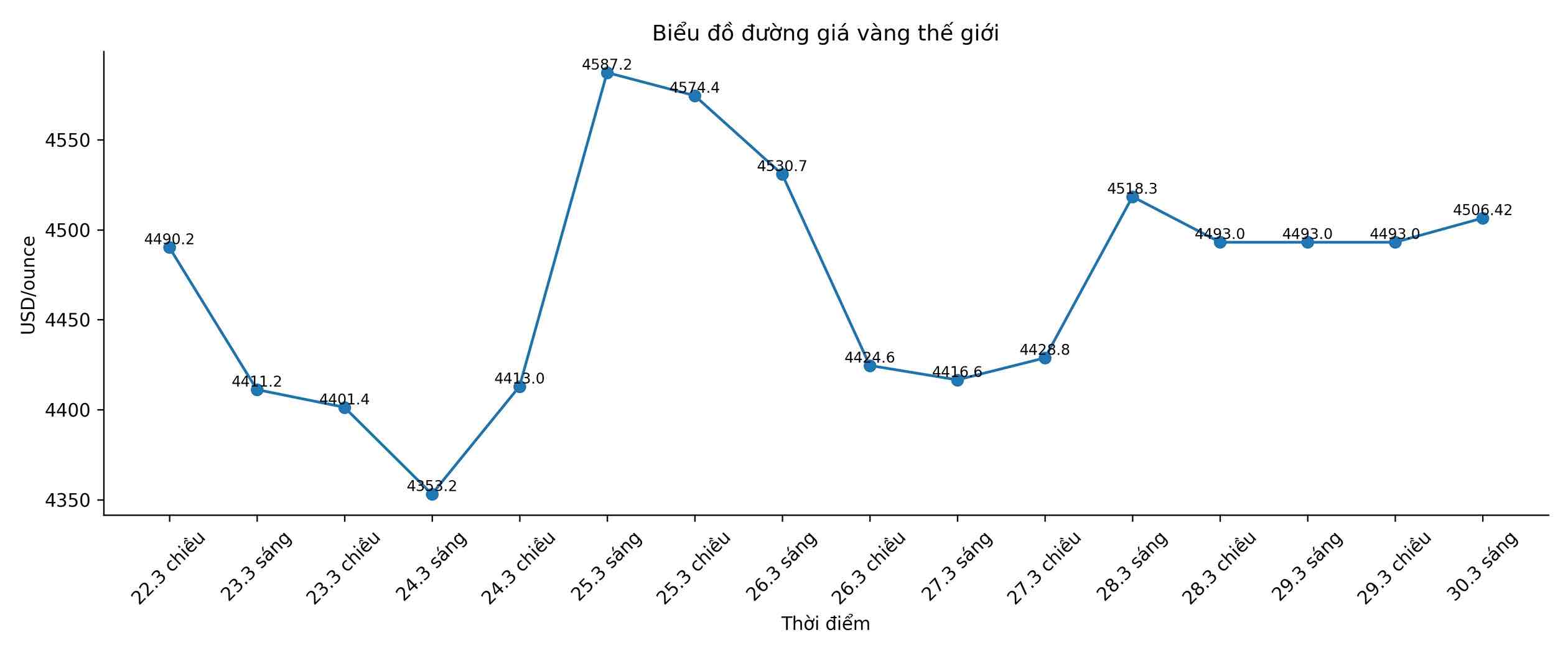
Gold prices fell, eliminating the first weekly increase since the conflict in the Middle East broke out, amid Iranian-backed Houthi forces engaged in fighting and the US continuing to increase its military presence in the region.
The precious metal at one point fell by 1.7% in the first session of the week, after only slightly increasing in the previous week thanks to temporary bottom-fishing buying to help the market stabilize after a previous series of declines. Attacks continued at the end of the week as the conflict entered its second month, increasing concerns about the possibility of prolonged tensions.
While Pakistan, Egypt, Saudi Arabia and Turkey are conducting exchanges to find solutions to de-escalate tensions, Iran has attacked aluminum smelting facilities in Bahrain and the United Arab Emirates (UAE), and some areas in Tehran have lost power after airstrikes with missiles. The participation of Houthi forces in Yemen in the fighting also raises concerns about transportation through the Red Sea. US President Donald Trump said Iran has accepted most of the conditions set by the US aimed at ending the fighting.
Since the conflict began, gold prices have fallen more than 15% and most of the fluctuations are in the same direction as the stock market, and at the same time in the opposite direction to oil prices. Crude oil prices continued to rise in the first session of the week as the scope of the conflict expanded, increasing the risk to the energy market, which has been affected by the fact that the Strait of Hormuz is almost interrupted in transportation operations.
Mr. Alexandre Carrier - Portfolio Manager at DNCA Invest Strategic Resources Fund - said that gold prices may continue to face risks in the short term, in the context of the possibility of some central banks adjusting reserves and investors narrowing their positions.
Gold purchases by central banks have been an important factor supporting the upward momentum of precious metals in recent years. However, the central bank of Turkey has gone against this trend in the first two weeks since the conflict broke out when it sold and made swap transactions of about 60 tons of gold, equivalent to more than 8 billion USD. Many countries accumulating gold are also energy importers, causing resources for increasing precious metal reserves to possibly shrink.
Monetary policy developments in major economies, especially the US Federal Reserve (Fed), continue to be a factor closely monitored by the market in the context of prolonged conflict.
Spot gold prices rose slightly by 0.26% to 4,506.42 USD/ounce at 10:15 am Vietnam time. Silver prices fell 1.9% to 68.43 USD/ounce. Platinum and palladium prices also fell, while the Bloomberg Dollar Spot Index - a measure of the strength of the USD - remained almost flat after increasing by 0.7% last week.