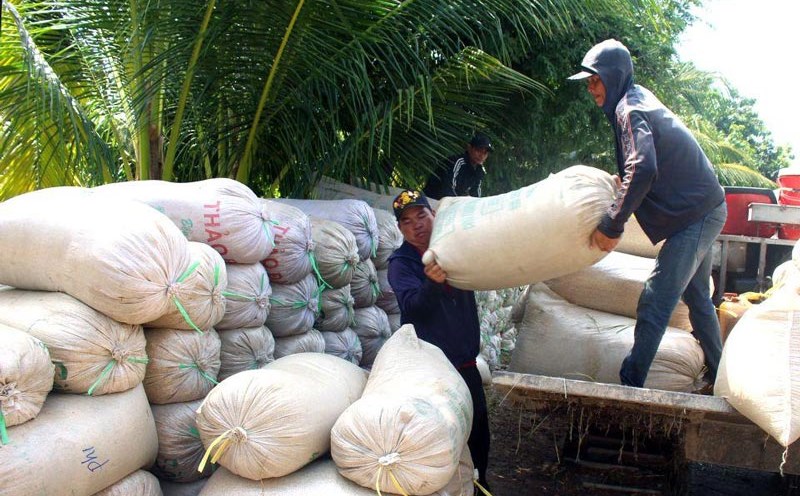
Soil degradation, water pollution and increased costs
Rice production in the Mekong Delta (Mekong Delta) is facing many challenges as the intensive farming model increasing crops reveals limitations in resources, environment and economic efficiency. In the context of increasingly clear climate change, switching to sustainable production is no longer an option, but an urgent requirement.

Sharing with Lao Dong, Assoc. Prof. Dr. Le Anh Tuan - senior lecturer of the Faculty of Environment and Natural Resources, Can Tho University - said: "The current rice production model has made a great contribution to national food security and exports. However, in the long term, there are still concerns about sustainability.
Mr. Tuan analyzed that cultivating 3 rice crops/year creates great pressure on the soil and water source. The soil has no rest time, fertility declines, while the natural ecosystem is shrinking.
Dependence on a closed dyke system also changes the natural law of flooding, causing alluvium to no longer be deposited as before. This is one of the factors that makes rice production increasingly dependent on chemical fertilizers.
This forces farmers to use more and more fertilizers and pesticides to maintain yields, leading to rapid soil degradation, chemical residues accumulating in the soil and washed away into canals, causing water source pollution.
The obvious consequences are the decline in biodiversity, natural enemies are destroyed, pests and diseases are increasingly resistant to drugs, production costs increase but efficiency decreases. In addition, the instability of water sources from upstream, the impact of hydropower and climate change, along with rising temperatures and extreme weather, make many areas no longer suitable for growing rice year-round, especially in coastal provinces.
Optimize efficiency, reduce risk
Faced with this situation, Mr. Tuan emphasized the need to shift from "increasing output at all costs" to "optimizing efficiency and sustainability". "The important thing is to apply the'1 must, 5 reduce' technique, reduce the amount of sown seeds, fertilizers and pesticides; increase organic fertilizer, improve soil. Promote adaptive farming models such as rice - shrimp, rice - fish and use drought-tolerant and salt-tolerant rice varieties," he said.
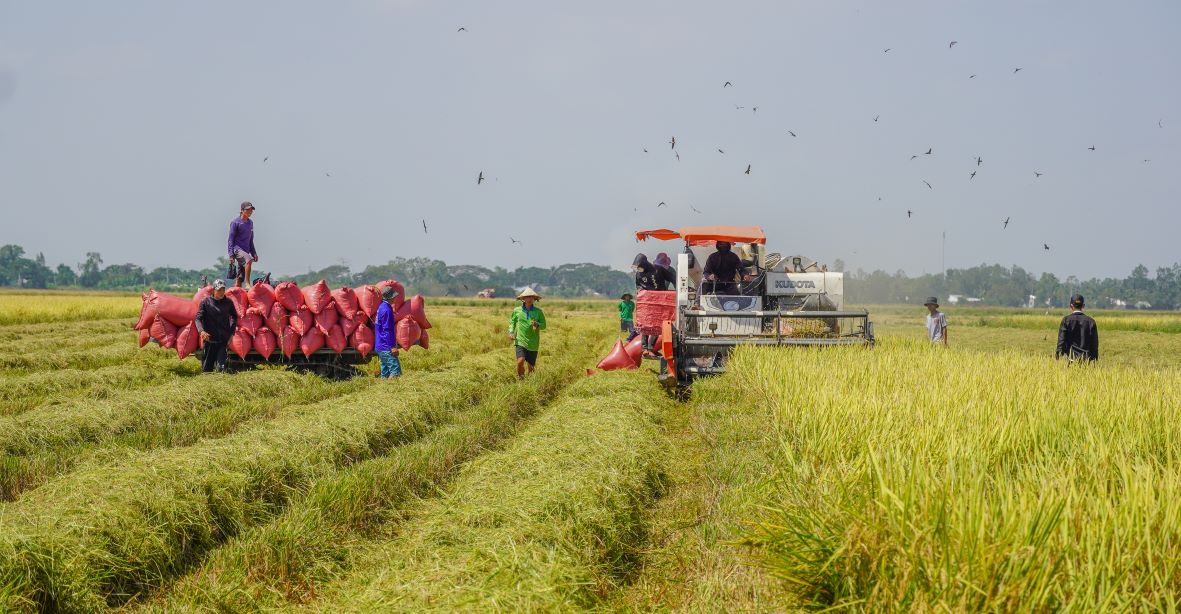
According to him, these models help reduce input costs, improve the value of rice grains, and meet the export market requirements for clean and sustainable agricultural products. In the long term, Mr. Tuan believes that the agricultural sector needs to re-plan production areas suitable to ecological conditions, reduce rice area in areas that no longer have advantages, and strengthen value chain links between farmers - businesses - markets.
The most important thing is to put farmers at the center of the transformation process. When they clearly see the economic benefits of sustainable farming, they will actively change," Mr. Tuan emphasized.
He also believes that investing in science and technology and technology transfer is a key factor to improve productivity, reduce risks and adapt to climate change.