
Durian kingdom in the middle of the Tien River island
In recent years, durian has become a crop that brings high economic value, and many localities have expanded its area. In Dong Thap alone, by the end of 2025, the whole province will have nearly 35,000 hectares of durian. In that general picture, Ngu Hiep commune emerges as a "durian kingdom", where people and families are attached to this specialty crop.
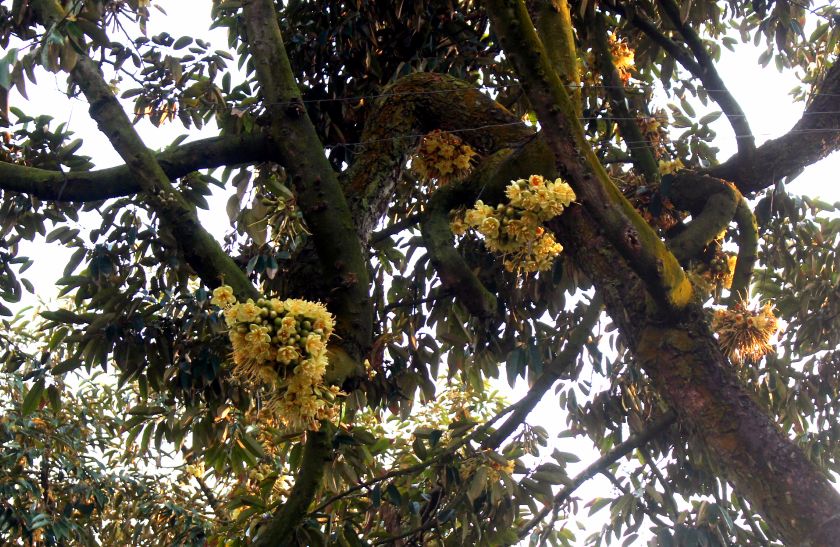
Mr. Nguyen Van Thuy - Chief of Office of Ngu Hiep Commune People's Committee - said that the whole commune has about 3,200ha of agricultural land, of which the durian growing area has reached 3,000ha. In 2025, Ngu Hiep is estimated to supply nearly 90,000 tons of fresh durian to the market.
Not only is there a lot of output, Ngu Hiep durian also has built its own position in terms of quality. Key varieties such as Ri6, Monthong, Chuong Bo are all grown centrally. According to traders specializing in purchasing, Ngu Hiep durian usually has a thin skin, small seeds, thick flesh, dark yellow color, dry flesh, especially a sweet, fatty taste that stands out compared to many other growing areas.
The natural advantage of the end of the Tien River islet with fertile water and alluvium is part of it. But according to local people, the decisive factor is still the diligence, learning spirit and responsibility for the products of gardeners - those who quickly approach scientific and technical advances to improve the quality of durian fruit.
Key" to helping Vietnamese durian surpass Thailand
In 2025, for the first time, Vietnam surpassed Thailand in durian exports to the Chinese market, reaching 941,004 tons, accounting for 50.37% of market share. According to Mr. Nguyen Phuoc Tuyen - former Director of Dong Thap Provincial Agricultural Extension Center - this achievement comes from many factors such as: production according to safety standards, building planting area codes, packaging facility codes...
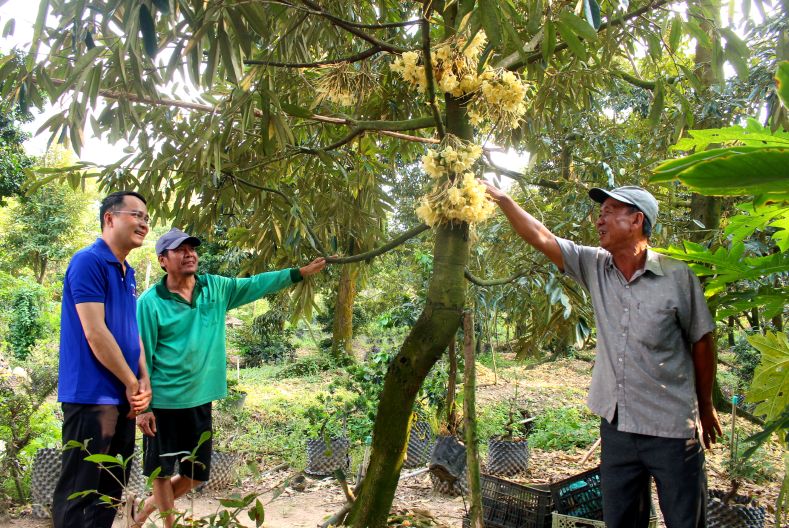
However, the "turning point" factor is controlling durian for off-season fruits, right at the time when Thailand has finished harvesting.
In that process, Ngu Hiep is considered one of the leading and most successful localities. Mr. Ho Ba Hung - Deputy Head of the People's Committee of Hoa An hamlet, one of the pioneers in handling off-season durian - said that currently most gardeners in the commune master the technique and achieve high efficiency.
According to statistics from Ngu Hiep Commune People's Committee, the whole commune currently has nearly 2,000ha of durian treated for off-season fruit, with a strong flowering rate of over 92% of the treated area.
Profit increases, opportunities expand
Giving fruit at a time of less "dumping" not only helps reduce domestic consumption pressure, but also opens the door to export. Thanks to off-season, durian prices in Ngu Hiep are often high, sometimes up to 200,000 VND/kg of fresh fruit.
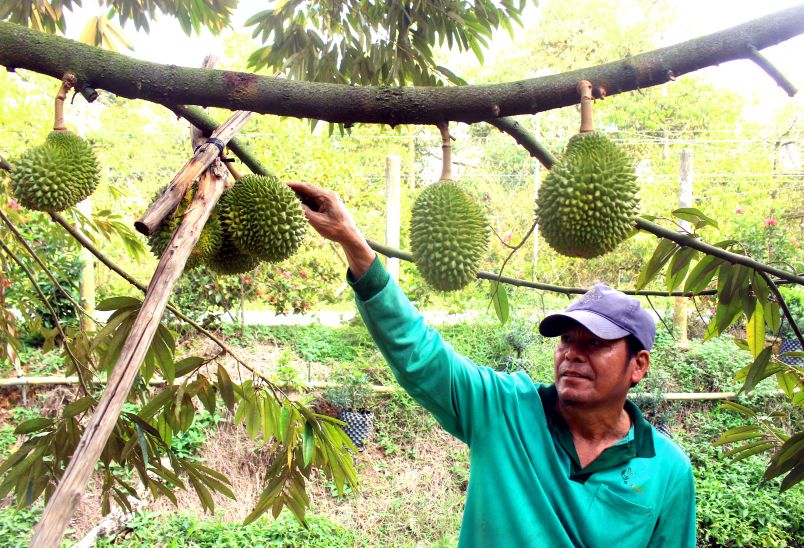
Mr. Nguyen Van Thuy said that many households, although not with large areas, have risen to become well-off thanks to off-season durian. Typically, Mr. Phan Van Nhiem (Hoa An hamlet), with only 5,000m2 of land, after applying off-season treatment techniques, has a stable income, takes care of his children's university studies in Ho Chi Minh City and builds a spacious cơ ngơi.
Not only getting rich for themselves, the precious point of Ngu Hiep is the spirit of sharing techniques. Gardeners are willing to guide and support each other, thereby spreading experience to many growing areas inside and outside the province.
That spread has contributed to forming a "outside product" competitive advantage - not only delicious durian, but also the ability to master off-season techniques, helping Vietnamese durian stand firm and expand market share in the international market.


