
This plan has marked an important step in quality management, food safety and sustainable development of the durian industry - one of the main export products of Vietnam's agriculture.
Accordingly, the pilot phase will be implemented from January 1, 2026 to June 30, 2026, focusing on building and operating a unified durian traceability system, connecting from the production, purchasing, preliminary processing, packaging to transportation and distribution stages.
The system allows real-time data recording, tracing product information through QR codes or other electronic authentication technologies, directly attached to each durian fruit or shipment.
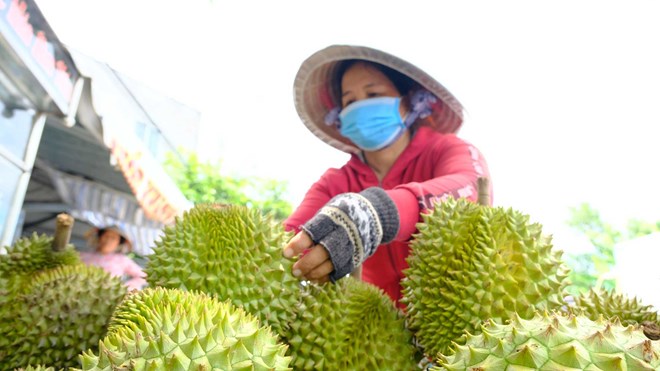
For consumers, the system makes it easy to check the origin, quality and safety of durian circulating on the market. For farmers, cooperatives and businesses, this is a more effective supply chain management tool, contributing to enhancing the commercial value and reputation of products. As for state management agencies, the traceability system creates a data platform to monitor quality, detect risks early and handle violations throughout the chain.
The Ministry of Agriculture and Environment sets a target of at least 5 enterprises participating in the pilot, and at the same time organizes the issuance and installation of electronic authentication stamps for eligible durian batches. Authentication stamps issued by authorities, integrated with QR, NFC or RFID technology.
In addition, the Ministry of Agriculture and Environment also identified the completion of the legal framework and professional processes as a key task. Regulations, technical standards and guiding documents on traceability will be reviewed, updated, and ensured to comply with the requirements of the import market.
In addition, the Ministry also emphasized the role of digital transformation and the application of new technologies. Solutions such as blockchain, Big Data, artificial intelligence (AI) and the Internet of Things (IoT) will be gradually researched and integrated.
In parallel with the implementation of techniques, propaganda, training and coaching work has been set up to raise awareness among farmers and businesses about the benefits of traceability.
At the end of the pilot phase, the authorities will organize a comprehensive assessment of the system's effectiveness, from data accuracy, convenience for users to costs and benefits. On that basis, the Ministry will consider adjusting, perfecting and moving towards replicating the traceability model for other key agricultural products, aiming to officially deploy nationwide by the end of 2026.


