
6 main reasons why durian flowers fall off
According to MSc Nguyen Phuoc Tuyen - former Director of the Dong Thap Provincial Agricultural Extension Center, the flowering stage is considered the "decisive" time for the entire durian crop. However, in the context of erratic weather, the phenomenon of falling flowers may occur due to 6 main reasons.
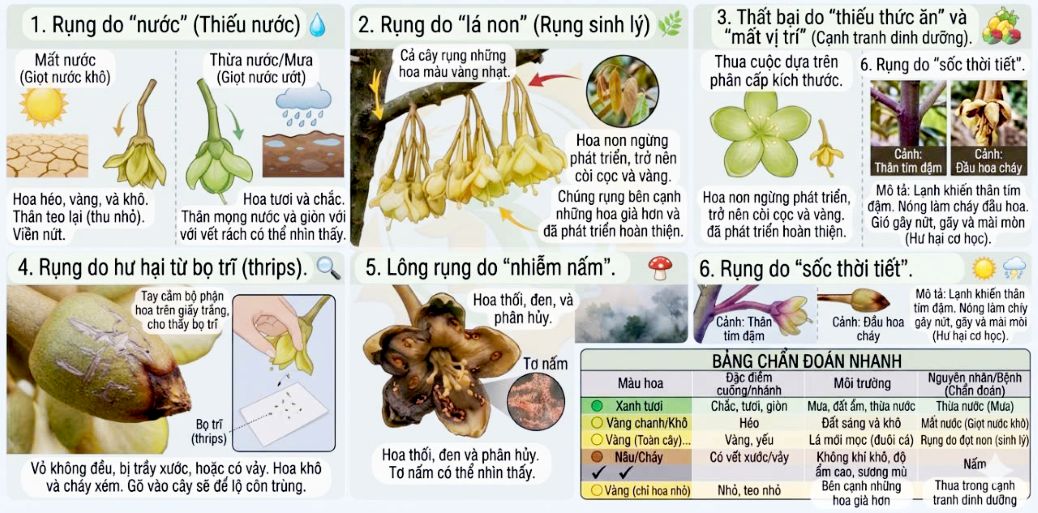
First of all, the cause is irrigation water. Both lack of water and excess water cause flowers to fall. When the plant is deficient in water, the flowers often wither, turn yellow and then gradually dry out, the stem shrinks, and the bark may crack. Conversely, when there is excess water or heavy rain, the flowers are still fresh and firm, but the stem is juicy, brittle and easily broken, sometimes tearing marks appear. These two extreme conditions can cause mass flower drops if not adjusted in time.
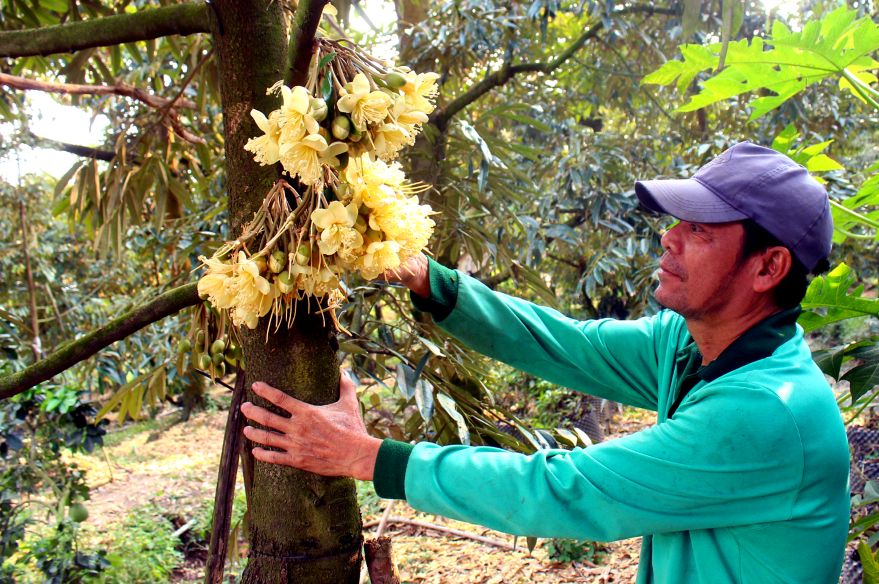
The second is physiological shedding due to young leaves. When the plant produces strong young shoots, physiological flower shedding often occurs. At this time, many flower clusters turn pale yellow. Young flowers stop growing, become stunted, turn yellow and fall alongside those that have fully developed flowers. The main reason is that nutrients are dispersed to nourish young shoots.
Third is nutritional competition. On the same flower cluster or branch, small, slow-growing flowers are often "eliminated" during the size classification process. These flowers will stop growing, become stunted and yellow, while healthier flowers continue to grow. This is a natural drop but can increase sharply if the plant lacks overall nutrients.
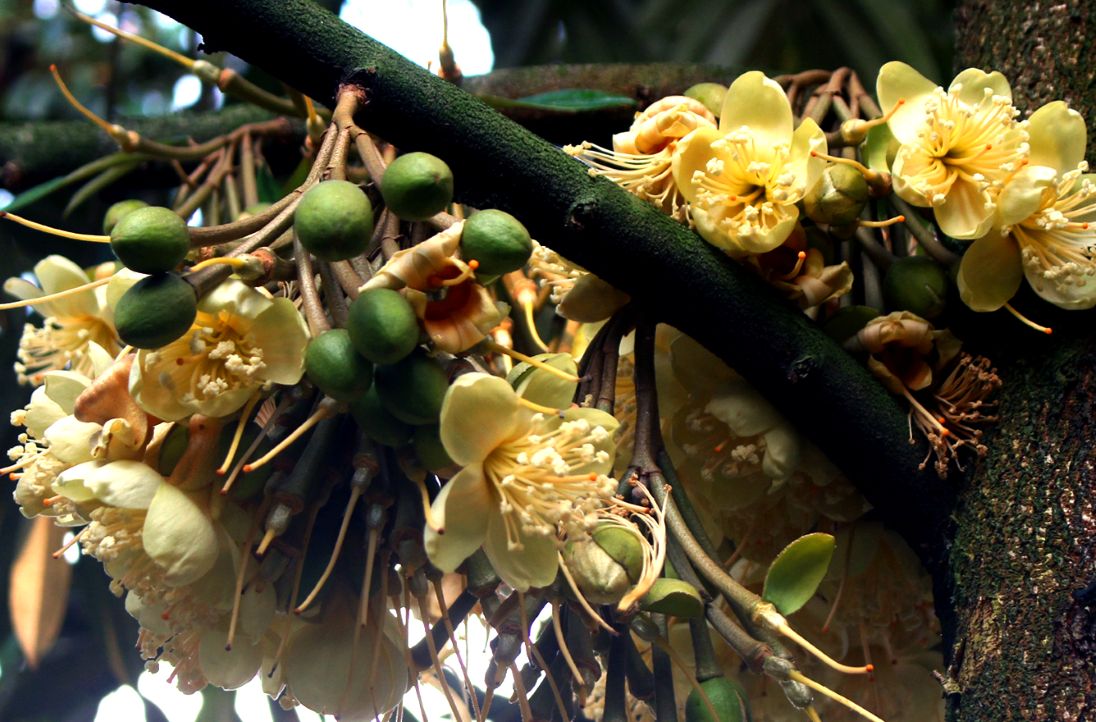
Fourth is harmful thrips. This small insect usually attacks during the flowering stage. Damaged flowers often have uneven shells, scratches or scales, flowers are dry and charred. When gently tapping the flower branch, you can see tiny insects falling down. Gardeners can check by tapping the flowers on white paper to observe thrips. If the density is high and not treated early, the fruit setting rate will decrease sharply.
Fifth is fungal infection. When infected, flowers rot, turn black and decompose, and fungal silk or mold may appear on the surface. High humidity, fog and dense, poorly ventilated gardens are favorable environments for fungal growth.
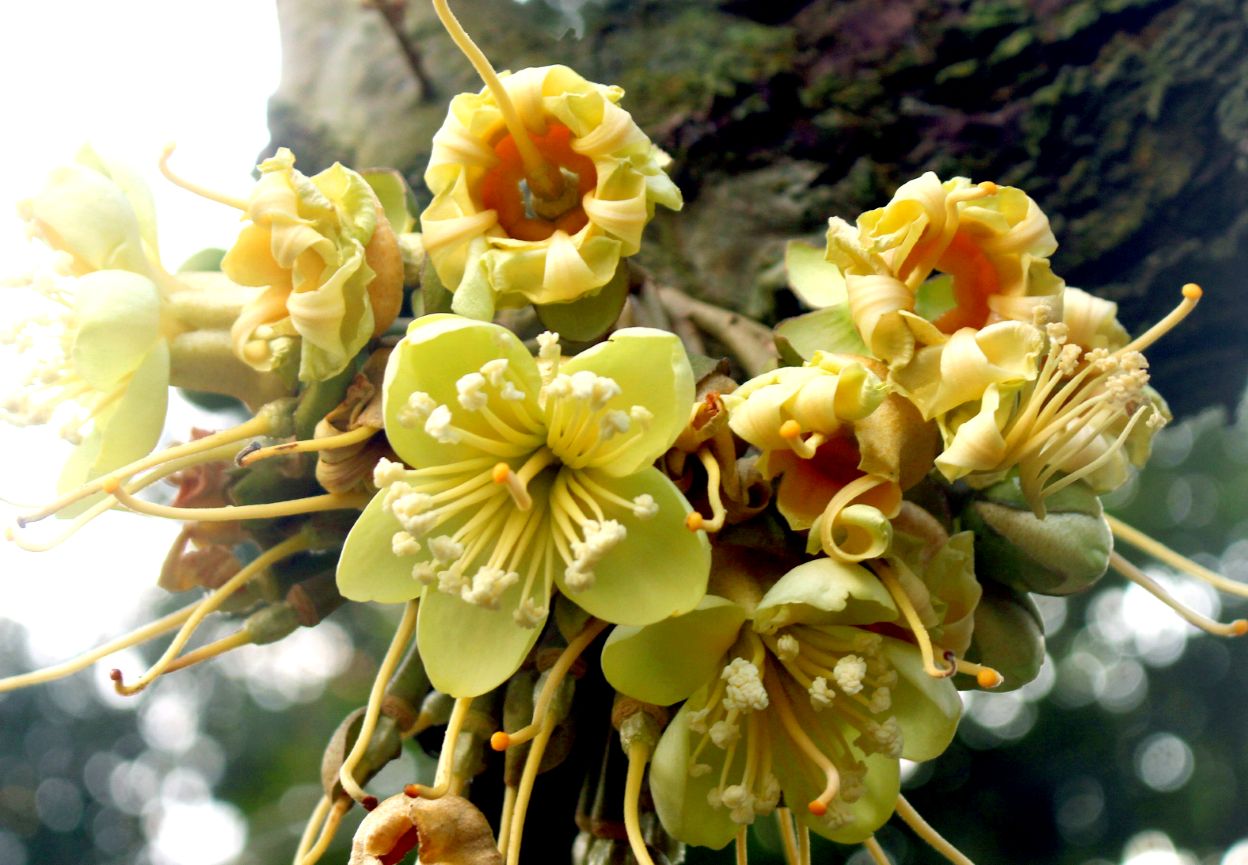
And finally, weather shock. Sudden weather fluctuations such as deep cold, intense heat, or strong winds can cause mechanical damage to flowers. Cold weather makes the flower stems dark purple; harsh sunshine causes flower heads to burn; strong winds can break flower buttons. These damages often lead to falling later.
Rapid diagnosis through flower color and environment
According to Master Nguyen Phuoc Tuyen, gardeners can completely quickly identify the cause of falling flowers through the color of the flowers and surrounding environmental conditions.
If the flowers are bright green but the stems are brittle, it is likely that the plant is overwatered due to heavy rain or too moist soil. In case the flowers are lemon yellow, the stems are usually withered due to lack of water when the soil is dry for a long time. If the flowers are yellow, the stems are weak and the plant is giving off many young leaves, it is a sign of physiological shedding. Meanwhile, brown flowers, stems with scratches in high humidity and fog conditions may be signs of fungal infection.
In addition, small, shrunken flowers lying next to larger flowers are often a sign of losing out in nutrient competition. Identifying the correct cause will help gardeners avoid handling incorrectly, such as increasing irrigation when the plant is overwatered or fertilizing when the real cause is harmful insects.
According to MSc Nguyen Phuoc Tuyen, to limit flower falling, gardeners need to regulate water reasonably according to each growth stage; prune branches to create ventilation to reduce humidity; manage young shoots reasonably during flowering; and closely monitor the density of harmful insects. In addition, supplementing balanced nutrients helps the plant maintain stable growth, limiting the state of depletion leading to flower falling. The flowering stage of durian takes place in a short time but is decisive for the yield of the whole crop. Correct diagnosis and timely treatment will help gardeners protect the fruit setting rate well, avoid losses and increase the possibility of achieving "double profit": bumper crop, good price.


