
From building transparent supply chains to expanding consumption markets, the "Responsible Green Pick" program is being accompanied and strongly promoted to spread the sustainable agricultural model.
Mr. Nguyen Duc Toan - CEO of MM Mega Market Vietnam & Big C Cambodia, and Head of Business Division of BJC in Vietnam, said that the unit determines that sustainable development must be realized through specific actions.
Therefore, the business has cooperated with Unilever Food Solutions and Fresco to implement the "Responsible Green Pick" program, while promoting digital payment solutions. According to him, this is a step to connect a modern retail - wholesale ecosystem, taking responsibility to society and the environment as a development orientation.
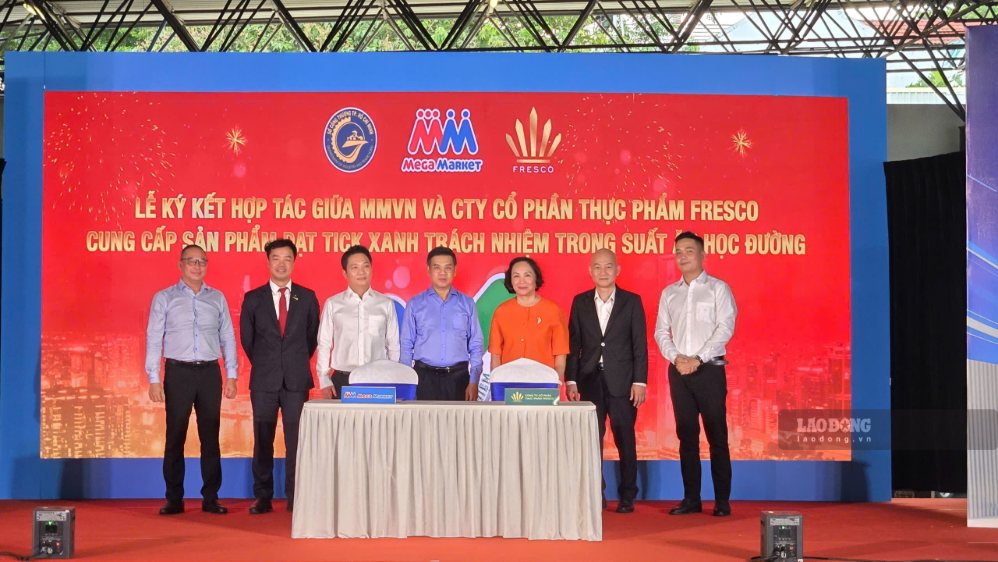
Assessing these cooperations, Mr. Nguyen Nguyen Phuong - Deputy Director of Ho Chi Minh City Department of Industry and Trade - said that this is a timely step in the context that the distribution industry is shifting towards green growth and digital economy. The fact that businesses proactively expand cooperation with manufacturers and partners providing school meals to implement the "Responsible Green Stick" program, along with digital payment solutions, not only contributes to improving food safety standards but also promotes the building of sustainable supply chains, modernizing distribution activities and consumption habits. He affirmed that the Department will continue to accompany and create favorable conditions for pioneering businesses to develop and contribute more to the economy.
On the same day, a ceremony was also held in Binh Dong ward to announce the implementation of the "Responsibility Green Stick" model in school kitchens. According to Ms. Vu Yen Oanh - Vice Chairwoman of Binh Dong Ward People's Committee, the initial implementation process shows that the model brings practical efficiency, contributing to improving the efficiency of state management of food safety, and at the same time enhancing transparency in controlling the origin of food serving school meals.
Ms. Oanh emphasized that attaching the "Responsibility Green Label" is not simply a recognition, but also shows the commitment of local authorities and schools to ensuring the quality of each meal, contributing to protecting the health and development of students.
The reality of implementation in schools shows that this model is not only effective in controlling the origin of food but also strengthens the connection between schools and parents through publicizing information about daily meals.


