
Sir, how do you assess the overall picture of SMEs today, especially after recent economic fluctuations?
- By the end of 2025, the whole country has about more than 1 million operating enterprises, an increase of more than 25% compared to 2020. In the first quarter of 2026, the whole country has more than 57,400 newly registered enterprises with a total registered capital of nearly 538.6 trillion VND. SMEs are still a large force of the economy. The overall picture of SMEs today can be summarized by two aspects: Recovery but not really sustainable, large in quantity but not strong in quality. Nearly 98% of enterprises are micro, small and medium-sized; competitiveness, operating efficiency, and management skills are still limited; labor productivity is still lower than the FDI sector and state-owned enterprises. This shows a reality that the increase in the number of enterprises does not mean that the economy has formed a strong enough SME class to rise to become medium-sized enterprises, large enterprises or deeply participate in the global value chain.

The most noteworthy point today is the very strong differentiation within the SME sector. The very positive thing is that a part of businesses has adapted quickly, taking advantage of e-commerce, sales digitization, streamlined management, and actively participating in new market niches, so they are still growing well. But the remaining part is still operating in a "short-term resilience" style: thin capital, weak reserves, management based on experience, dependence on a few customers or a few markets, so when the business environment fluctuates, it immediately encounters difficulties. This is an important time to shift from the "rescue of businesses" mindset to the "upgrading of businesses" mindset, which is not only to help businesses survive, but also to help businesses grow, standardize and compete in an increasingly strict environment.
According to you, what are the biggest barriers hindering the development of the SME sector, making it difficult for many businesses to "grow"?
- The biggest barrier today is not in a single factor, but the resonance of three major bottlenecks: institutions, resources and internal capacity.
First of all, there is the institutional bottleneck and the enforcement environment. Many policy forums in 2025 all recorded reflections from businesses on document overlap, instability, difficulty forecasting, complicated administrative procedures, inconsistent enforcement, especially with investment, land, and land-using projects. Resolution 68-NQ/TW also focuses on completing laws, removing barriers to entry and exit from the market, digitizing and transparentizing procedures, because this is a very big bottleneck that increases compliance costs and erodes business confidence. For SMEs, institutional costs are sometimes heavier than financial costs, because small businesses do not have enough legal apparatus, not enough time and resources to "tolerate" delays or policy uncertainties.
The second is the bottleneck in accessing capital and development resources. Many SMEs do not lack business will, but lack suitable capital flows to invest in machinery, technology, and expand markets.
Third, and also a root bottleneck, is the internal capacity of the business itself. Many SMEs currently still manage in a family style, operate based on experience, lack medium-term strategies, lack financial transparency, lack technological human resources, lack the ability to build brands and standardize processes.
SME is difficult to "grow up" not only because of lack of capital, but also because it is stuck in a vicious circle: institutions increase costs, lack of capital reduces investment capacity, and weak internal strength makes businesses not strong enough to overcome the growth threshold. To remove obstacles, it is necessary to handle all three levels simultaneously, not just relying on a credit package or a single support policy.
So what are the key solutions for SMEs to "grow up" and develop sustainably, sir?
- For SMEs to grow stronger, it is necessary to strongly shift from widespread support to support according to growth capacity, meaning to focus on creating conditions for businesses with potential to expand their scale, innovate technology and participate in the value chain.
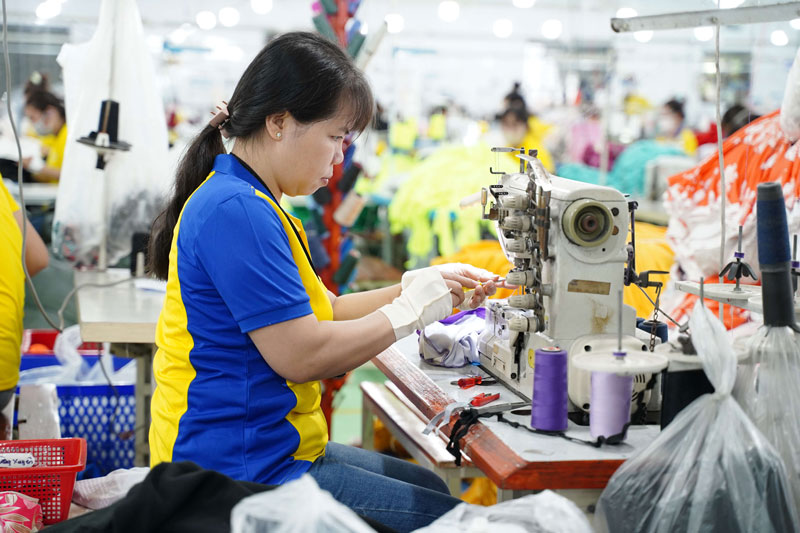
First, it is necessary to reform institutions more substantively, considering this as "the lever of all levers". To make SMEs grow, first of all, it is necessary to help them avoid being eroded by unofficial costs, prolonged procedures and fear of errors in implementation.
Second, it is necessary to reopen the door to capital in a way suitable for SMEs, and not to use the credit thinking of large enterprises to apply to small enterprises. It is necessary to strongly develop lending models based on cash flow, invoices, orders, tax data and digital data; promote credit guarantee funds, SMEs development funds, supply chain finance, insurance, green credit and fintech solutions.
Third, SMEs must be supported to upgrade management and core competitiveness. A business that wants to grow sustainably must go through three standards: financial standards, management standards and market standards. Resolution 68 has clearly stated the requirement to support businesses in investing in machinery, technology innovation, digital transformation, green transformation and sustainable development; this must be concretized into training, consulting, and industry-based and chain-based companion programs.
Fourth, it is necessary to create mechanisms for SMEs to link and escalate in the value chain, instead of developing individually. The problem for Vietnamese SMEs is not only "more businesses", but "more businesses qualified to be level 1 and level 2 vendors for large enterprises, for FDI, for public projects and for the international market". This spirit has also been set out in the Government's orientations: large enterprises must lead, SMEs must have the mindset to develop into medium and large enterprises. In other words, if SMEs want to grow, they must create an enterprise upgrade ecosystem, in which the State builds, associations connect, banks provide capital, schools provide knowledge, and enterprises actively innovate.
Thank you, sir!


