
According to Mr. Pham Dai Duong, Deputy Head of the Central Policy and Strategy Commission, the Vietnamese economy is facing the need to create a breakthrough in innovating the growth model to realize the strategic goals set by the Party. Accordingly, by 2030, Vietnam strives to become a developing country with modern industry and high average income, and by 2045, become a developed country with high income. To achieve these goals, economic growth in the period of 2026-2030 and the following years needs to reach double digits.
The new growth model not only focuses on speed, but must simultaneously ensure sustainable, comprehensive and inclusive factors; emphasizing the quality, efficiency and long-term competitiveness of the economy. This model is shaped by the synchronous implementation of four revolutionary transformations, including: digital transformation; green transformation; energy transformation; and restructuring and quality of human resources.
In Vietnam, agriculture is recognized as an important driving force of the economy, contributing over 15% of the country's GDP but also contributing nearly 30% of the total national greenhouse gas emissions. Therefore, building a low-emission agriculture, applying science and technology is an important solution to move towards Vietnam's green and sustainable growth goals.
From the perspective of state management, Deputy Minister of Agriculture and Environment Le Cong Thanh emphasized that the past has recorded many positive signals, as the trend of greening production and consumption is increasingly spreading. In the agricultural sector alone, many ecological agricultural and low-emission agricultural models have been implemented, with the active participation of enterprises and cooperatives in applying high technology, controlling the production environment, thereby contributing to improving productivity and quality of agricultural products. Previously, in September 2025, the Ministry also approved the Agricultural Project on emission reduction for the 2025-2035 period to aim at bringing the agricultural sector into a low-emission trajectory, ensuring national food security, while improving the competitiveness of Vietnamese agricultural products in the international market.
Sharing the view on prioritizing the promotion of the circular economy in agricultural production, Mr. Khuat Quang Hung, Deputy General Director in charge of External Affairs and Communications of Nestle Vietnam, said: Nestle Group identifies the development of regenerative food systems as a global strategic focus. In Vietnam, green transformation is implemented by businesses throughout the coffee value chain, from cultivation, processing to sustainable consumption. Nestle's initiatives and programs to transform coffee farming methods towards regeneration not only help improve farmers' livelihoods but also contribute to building a sustainable, low-emission agriculture".
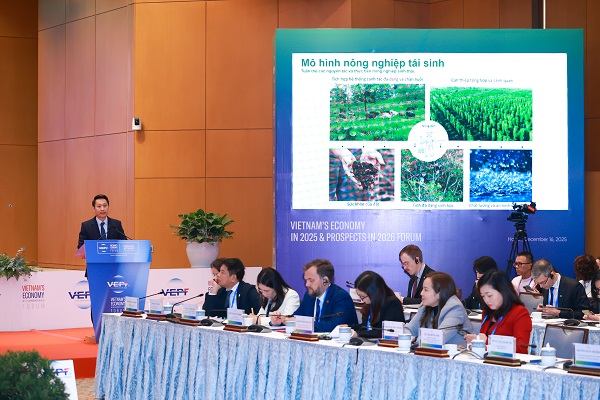
With the belief that sustainable development is a journey of cooperation, Nestle Vietnam is always active and proactive in multilateral cooperation models, spreading good practices on sustainable development in the business community to be able to contribute to the common goals of the country together. As co-chair of the Quarter of the Vietnam Sustainable Agricultural Development Partnership, Nestle Vietnam has actively contributed to sustainable development, improving the quality and value of Vietnamese coffee beans to promote sustainable agriculture in Vietnam.
Vietnam is entering a new growth period with green and sustainable goals. When the State, businesses and the community join hands, green transformation and a circular economy will be the foundation for a prosperous and competitive Vietnam in the long term. Nestle is committed to continuing to accompany and share experiences to build a low-emission, inclusive and sustainable agriculture.


