Unlabeled noodles and vermicelli are rampant
Recently, the Economic Police Department of Ho Chi Minh City Police dismantled a line of production and trading of noodles using banned substances in Phu Thanh ward. At the time of inspection, functional forces caught many subjects red-handed mixing borax ( borax), soda and silicate solution to increase the softness and eye-catching color of noodles. These are all chemicals banned from being used in food processing.
At the investigating agency, the ringleader confessed to using banned substances to produce noodles for about 10 years. In the last 3 years alone, this establishment has put about 800 tons of fresh noodles containing chemicals on the market.
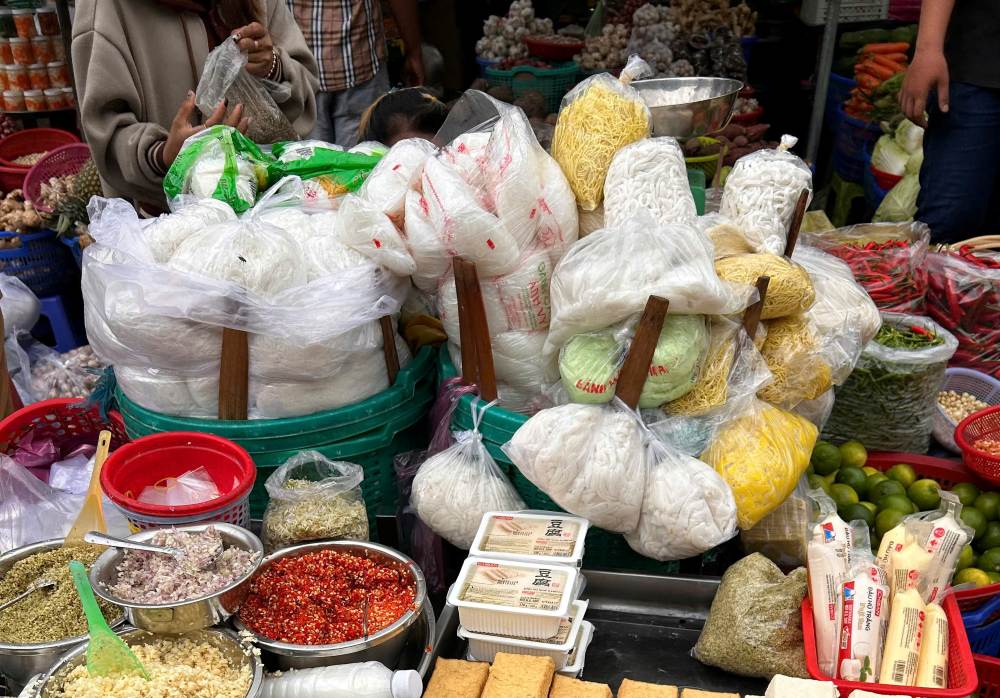
Notably, this type of noodles is mainly consumed in markets and eateries in Ho Chi Minh City. On January 13, reporters' records at many traditional markets showed that non-branded noodles and vermicelli are still sold quite commonly. The price of fresh noodles ranges from 30,000 - 35,000 VND/kg, vermicelli about 20,000 - 30,000 VND/kg.
At a vermicelli and noodle selling point on Nguyen Lam street, when asked to buy fresh noodles, the seller quickly brought out bags that had been divided by 1 kg to offer. "The noodles just arrived this morning, sold during the day, so they are guaranteed to be fresh, there are no goods to spend the night" - this person said and said that regular customers are mainly small-scale eateries in the area.
However, when asked about the origin of the product, production facility or raw material ingredients, the seller said that they only take goods from familiar sources, without packaging, labels or accompanying papers. The bags of noodles and vermicelli are rudimentarily packaged in transparent nylon bags, without recording the production date, expiration date or information of the responsible unit.
A similar situation also occurs at many other points of sale in Ho Chi Minh City. Most consumers choose products based on long-standing buying and selling habits or perceptions such as the color and toughness of noodles and vermicelli noodles, instead of based on information about origin and food safety.
Need identification signs
In the context of unlabeled food still being sold at traditional markets, the risk of food insecurity is always present, especially at the time near Tet when consumption demand increases. Controlling the origin and quality of essential goods poses an urgent requirement for functional agencies.
From now until March 20, the inter-sectoral Steering Committee for Food Safety of Ho Chi Minh City will deploy a peak period to ensure food safety throughout the area, in order to serve people celebrating the Binh Ngo Lunar New Year and participating in the 2026 Spring festivals. The inspection work focuses on goods that are consumed a lot during Tet and festivals.

Functional forces pay special attention to controlling the stages of production, import, slaughtering, and transportation of food. At the same time, strengthen inspections at wholesale markets, traditional markets, commercial centers, supermarkets and food service business establishments in the city.
Talking to Lao Dong Newspaper about food safety issues in Ho Chi Minh City, especially after the case of fresh noodles soaked in borax, Dr. Dao Ha Trung - Chairman of Ho Chi Minh City High-Tech Association - said that food safety management is the responsibility of management agencies and supply chains. Consumers cannot self-check the quality or safety level of products on the market.
According to Mr. Trung, to make consumers more secure when choosing food, there needs to be clear identification signs. At the same time, implement specific solutions to prevent recurrence of violations.
From a professional perspective, the unit is approaching the issue in the direction of quality management. On that basis, Ho Chi Minh City is implementing the Green Accountability program, helping to minimize violations and protect community health more effectively.