These days, in addition to the familiar shopping atmosphere in Ho Chi Minh City, the story of electronic invoices, tax declarations or sales via digital applications is also mentioned more by traders. For many people, this is a big change after many years of traditional trading.
Ms. Nguyen Thanh Hang - a trader at Ben Thanh market, said: "At first, I was very scared, because I was old and didn't know how to use a smartphone. But with the support of the Management Board and some friends and step-by-step guidance, I now know how to issue invoices to customers".
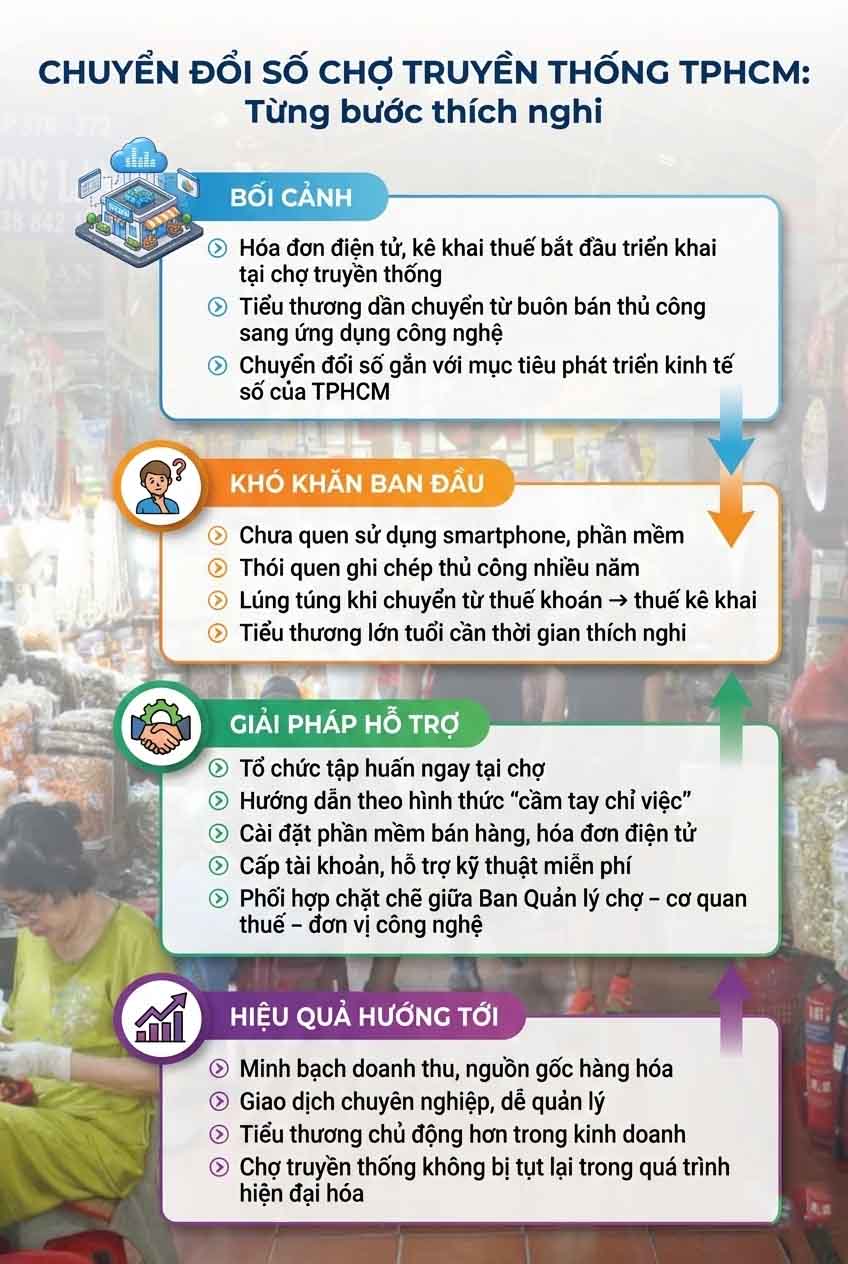
In reality, the process of converting from traditional business methods to forms of declaration and electronic invoices is posing many challenges at traditional markets. These difficulties are also clearly recognized by market management boards in the process of implementing the new policy.
Mr. Hoang Van Dat - representative of Tan Dinh Market Management Board, said that the implementation of Decree 70 on converting from contract tax to declaration tax has caused many difficulties for traders, especially in the early stages. Most traders are used to manual recording, now they have to get used to software and electronic invoices, so it is inevitable that they will be confused, said Mr. Dat.
However, according to Mr. Dat, the Market Management Board is closely coordinating with tax authorities and technology solutions providers to support traders in step by step. "Declaration tax takes time to get used to, but in the long run it will bring clear benefits. Goods are more transparent in their origin and source; traders are also able to manage their revenue and revenue sources more easily and fulfill their tax obligations more conveniently" - Mr. Dat shared.
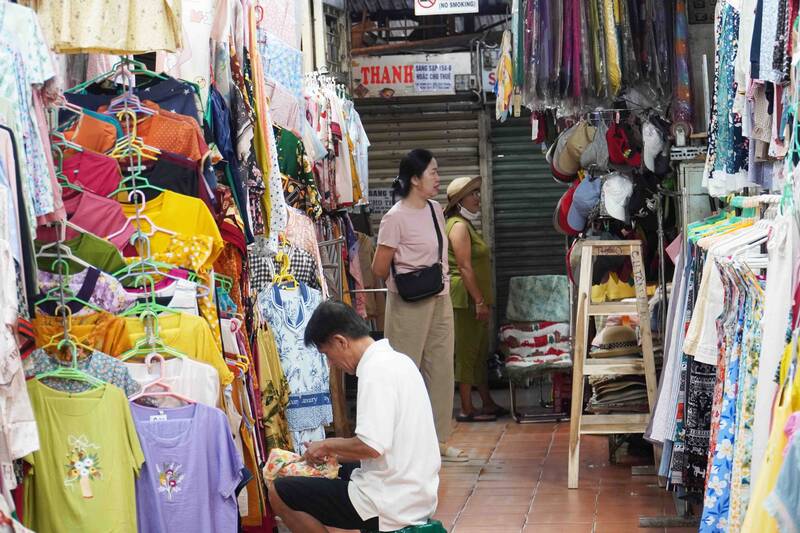
Not only at Tan Dinh market, the digital transformation process is also being promoted at many other markets in Ho Chi Minh City. Ms. Tran Thi Tham - Head of Phu Lam Ward Market Management Board, emphasized that digital transformation is not simply the application of technology, but also aims to build a civilized and modern shopping environment, contributing to enhancing the image of traditional markets.
We hope that digital transformation will help traders make business more convenient, while creating transparency and professionalism in transactions, so that traditional markets do not fall behind. We cannot rush, we have to do it step by step, creating a gradual habit for traders, especially for the elderly" - Ms. Tham said.
To support traders, the Market Management Board has coordinated to organize many training courses, instruct on how to install applications, use sales software and provide free accounts. These training sessions are held right at the market, in the form of "hand-carried instructions", making it easier for traders to access. This is an important step to modernize commercial activities at the facility, while contributing to the implementation of Ho Chi Minh City's digital economic development goals.
Previously, the program "Digital transformation of traditional grocery store systems" with the support of the Ho Chi Minh City Department of Industry and Trade was implemented, focusing on supporting small traders in the city, closely following the policy of developing the private economy. Based on the achieved results, this model is expected to be expanded nationwide, with the goal of supporting about 1 million traders to participate in the digitalization journey.
Although there are many challenges, in reality, at the markets, it can be seen that when properly supported and implemented according to the appropriate roadmap, traditional market traders can gradually adapt to digital transformation, opening up opportunities for sustainable development in the context of increasingly modern trade.