
From the Nui Phao multi-metal mine in Thai Nguyen, Masan High-Tech Materials (UPCoM: MSR) has invested for more than a decade to build an integrated tungsten chain from mining to processing. With long-term resources, large-scale production capacity and increasingly diverse raw material sources, MSR is possessing a foundation suitable for the new direction of Vietnam's mineral industry.
Vietnam places deep processing at the strategic focus of materials
Vietnam's orientation to improve resource value is entering a new phase, when the focus is not only on exploitation but is increasingly shifting to processing and developing higher-value material products. According to Conclusion 83 of the Politburo on the development of Vietnam's material industry, the material industry is identified as a national strategic task, contributing to building an independent, self-reliant and self-strengthening economy.
Accordingly, strategic minerals are considered on the entire journey of creating value, from exploration, exploitation to refining, production of application materials, recycling and strategic reserves. In parallel with minimizing exports of crude minerals, Vietnam aims to form closed material industry chains.
By 2030, Vietnam aims to master some deep-scale rare earth processing technologies, semiconductor materials and battery materials, and strive to increase the localization rate of some strategic materials to 50%. The private sector and foreign investment are also identified as important resources for accessing technology and developing domestic production capacity.
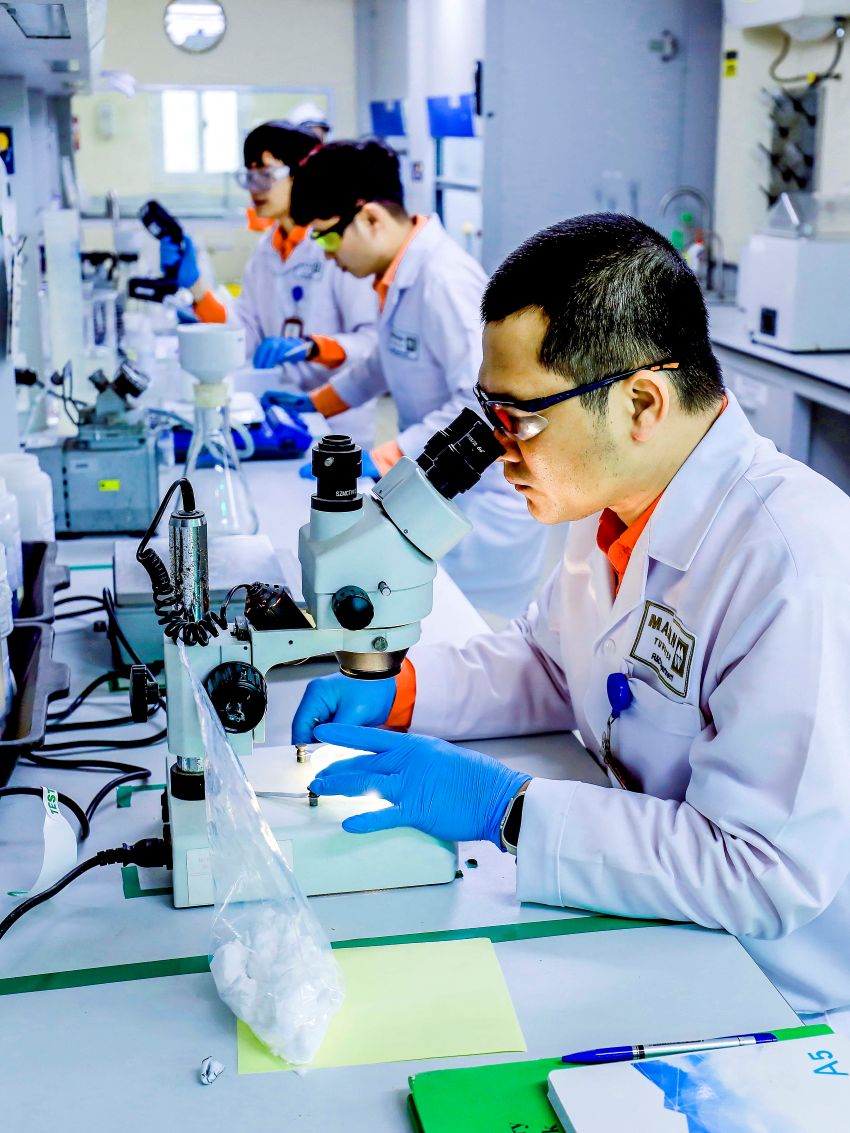
This shows that Vietnam's mineral advantage in the coming period is not only in resources, but also in the ability to create more value from those resources. This is also a context to look at the processing capacity that has been built domestically, including Masan High-Tech Materials' tungsten platform.
Where is MSR standing in the new value chain?
Masan High-Tech Materials (UPCoM: MSR) is a noteworthy case because the business not only exploits tungsten but has built processing capacity to turn this resource into products serving the global industrial market.
The first platform is the Nui Phao polymetallic mine, one of the largest tungsten mines operating outside of China. Besides existing resources, Nui Phao Oc Rong and Nui Chiem have the potential to supplement about 115 million tons of tungsten polymetallic resources. If the necessary procedures are completed, this resource can extend mining and processing operations for another 20-30 years.
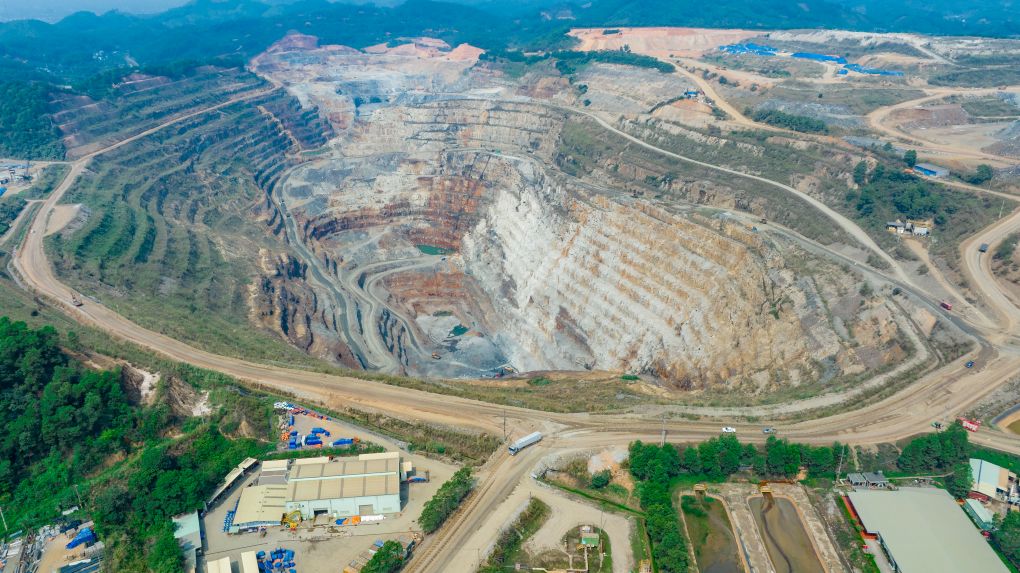
More importantly, MSR has invested for more than a decade to build processing capacity right in Vietnam. Through Masan Tungsten Chemicals (MTC), the enterprise produces tungsten products such as APT, YTO and BTO to supply to many industries around the world. MSR is also aiming to increase tungsten oxide capacity to 8,000 tons per year by 2027.
The raw material source for this system is also being expanded beyond Nui Phao. After being licensed for processing, MSR can receive more refined ore from outside to better utilize the factory's capacity. Cooperation with GB Innovation (GBI) of Korea is an example, when tungsten sources from Korea can be brought to Vietnam for MSR to process. In the long term, recycling can add another source of raw material to the system.
This capacity has begun to be more clearly shown in business results. In the second quarter of 2026, MSR's refined tungsten production reached 1,430 tons, an increase of 91% over the same period. Net revenue reached a record 8,138 billion VND, more than 5 times higher than the same period; EBITDA reached 2,492 billion VND, an increase of 337%; profit after tax before minority shareholder benefits reached 1,666 billion VND, the highest level in a quarter since the enterprise went into operation.
Improved business results and the ability to create cash flow are also opening up a new step in MSR's shareholder story. On August 28, 2026, the enterprise consulted shareholders on the advance payment of 2026 cash dividends at a rate of 10%, equivalent to 1,000 VND/share. MSR also revealed its orientation towards regular dividends in the future, as cash flow is increasingly supported by output under long-term contracts.
Previously, MSR said that the net debt/EBITDA ratio had decreased to 2.1 times by the end of Q2/2026. If the tungsten price level remains favorable and the debt reduction process continues as expected, the business sees the possibility of moving towards a net cash position in the period 2027–2028, thereby supporting the ability to pay dividends in the future.
These movements show that MSR's deep processing story is not only in expanding the scale of operations, but also in the ability to transform the foundation invested into cash flow and gradually create value for shareholders.


