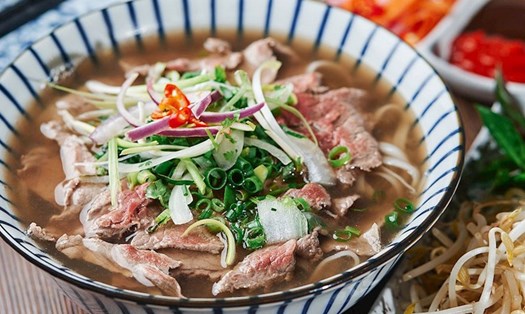
With chef Oliver Mette - Culinary Director at Hotel de la Coupole Sapa - MGallery Collection (Lao Cai), Vietnamese cuisine is not only a source of creative inspiration, but also a story of simplicity, balance and cultural depth enough to conquer global diners.
Vietnamese cuisine in the feeling of Michelin chefs
After more than 25 years of traveling through prestigious kitchens in Europe and Asia, Oliver Mette did not come to Vietnam as a short-term experiment. For him, it was a choice to fulfill his dream. "I have always wanted to work in Asia and had the opportunity to start this journey in 2023. It was a lifelong dream and became a reality when I officially set foot here," the German chef shared.
Originating from a cuisine that values discipline and standards, Oliver Mette has worked at a series of high-class hotels and resorts in Germany, Switzerland, and the Maldives; managed Michelin-selected kitchens and served many heads of state and politicians at major international events. But contrary to his imagination of a chef familiar with the lights of fame, his initial impression of Vietnam was very ordinary: "Vietnam is a wonderful country and I feel like I'm at home.
That feeling of "being at home" comes from many layers of experience: People, culture and even the working environment. Mette loves his team, loves the culture of the Northwest region and loves the hotels where he works. For him, Sa Pa is not only a career destination, but also a place to create a rare balance between life and culinary creation.
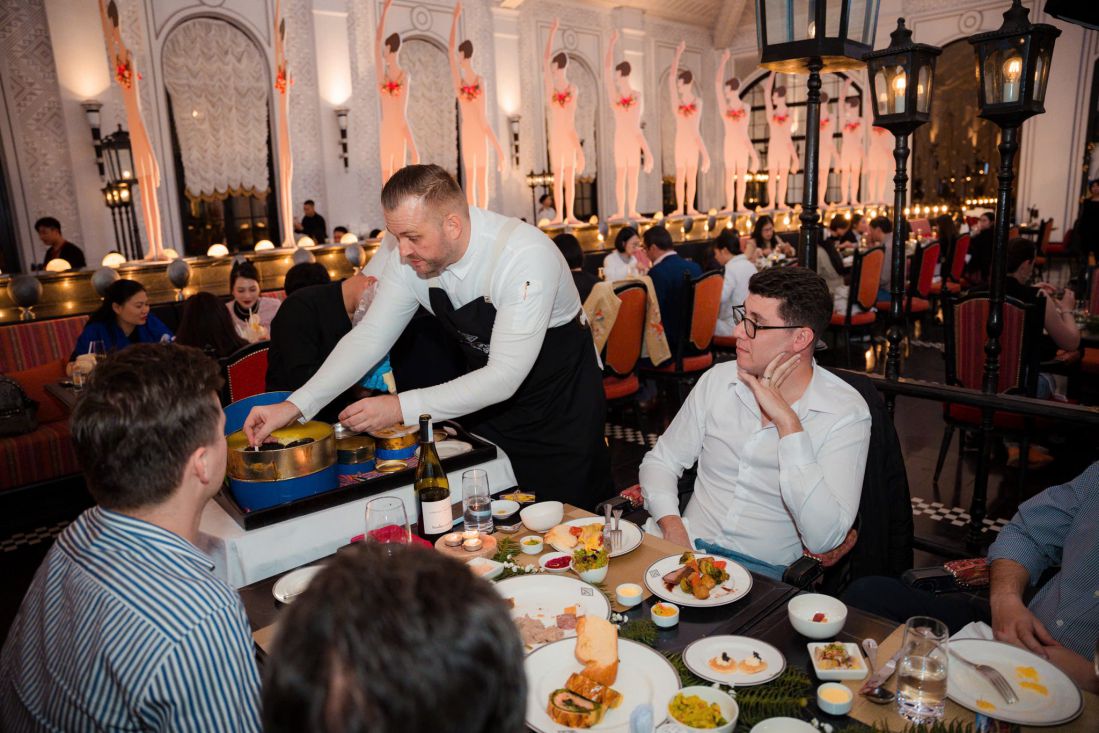
The early days of getting acquainted with Vietnamese cuisine were also an interesting adaptive journey. “Initially, I found Vietnamese cuisine very different from what I was used to. A lot of soups, rice, vegetables and lean meats. I even lost 15 kg in the first year!”, he recounted. But behind that funny story is a real surprise at the way Vietnamese people build meals: Simple, harmonious and towards balance.
According to chef Oliver Mette's assessment, Vietnamese cuisine stands out for its rich flavor and freshness. Each soup and broth has many layers of complex flavors, in which herbs and green vegetables play a central role. At the same time, the processing method is also much simpler than Western cuisine - which made him realize that sometimes, simplicity is the most wonderful thing.
French-Vietnamese culinary exchange at Sa Pa kitchen
After working in Vietnam, Oliver Mette admitted that local cuisine has clearly influenced his cooking thinking. For the German chef, this is not a formal mix, but a slow-moving process, associated with local life and ingredients.
At Serpa restaurant, we cook in French style, but use a lot of local ingredients from Northern Vietnam, especially the mountains. This helps me develop a new style, combining French techniques with Vietnamese flavors," he said.
Indigenous ingredients therefore became the creative axis in Oliver Mette's kitchen. Black pork, black chicken, spices, chili peppers and the rich herb system of the North were not only included in the menu, but also shaped his approach to the dish: Respecting the essence, limiting technical display and letting the flavor tell its own story. Each product, according to him, carries the imprint of climate, soil and farming habits - factors that create depth for the culinary experience.
However, bringing Vietnamese ingredients into high-end European dishes also poses many challenges. In the North, where traditional dishes still hold a central position in daily life, new interpretations require moderation and understanding. Mette spends a lot of time researching spices, eating habits and values that Vietnamese people cherish to find a balance between innovation and preservation.
The "key" dishes in the menu that chefs create are the result of that research process. Wagyu beef pho still retains the structure and spirit of a familiar dish, but is elevated by the quality of ingredients and sophisticated processing techniques. Black chicken tartlet is a clear intersection between the West and Asia, where French technology plays a supporting role, while local products are central.
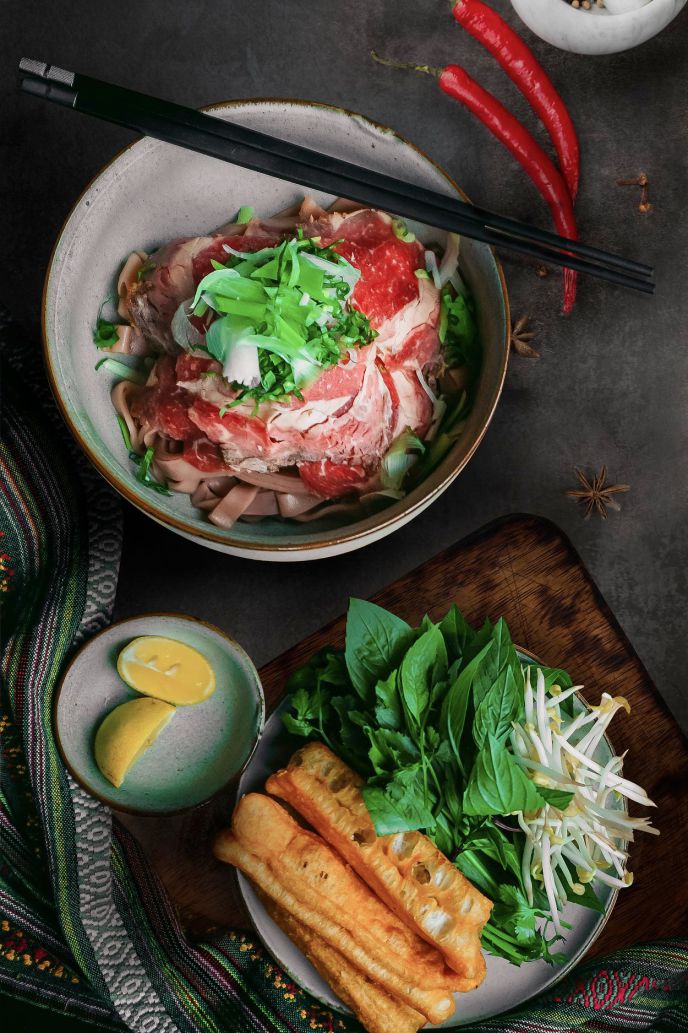
Looking to the future, Oliver Mette highly appreciates the potential of Vietnamese cuisine, especially the Northern region, in reaching out to the world culinary map. He believes that success will come from daring to experiment, harmoniously combining classic and modern elements, while focusing on the overall experience of diners - from the dish to the story behind each ingredient.
Besides the quality of ingredients and flavor, service plays an equally important role. Staff need to explain to international guests how to prepare the dish, the reasons for choosing local ingredients such as black chicken or black pork, as well as their differences from imported ingredients. When understanding and conveying these things, the culinary experience will be significantly enhanced," Oliver Mette said.
For the German chef, the journey with Vietnamese cuisine is still very long. In the future, he wants to explore more deeply the history of Vietnamese cuisine, especially mountain cuisine, forest herbs and local dishes that bring him great inspiration.
There is still a lot to learn and create - success is never the end, and I am excited about what is waiting ahead," the chef said.