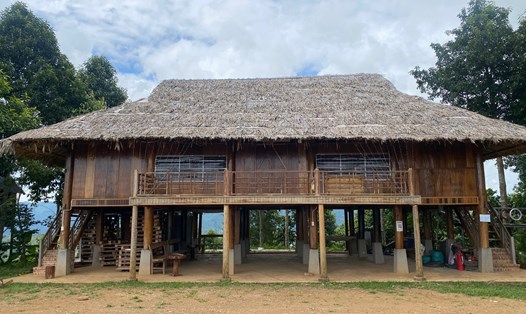
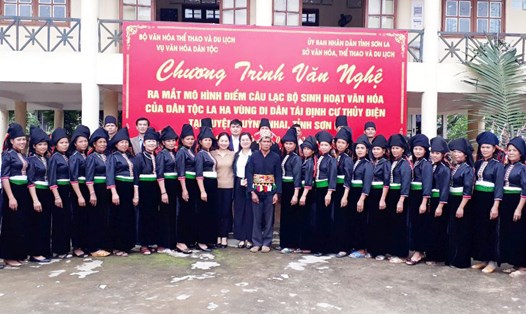
From highland markets to markets along the Da River, each market session has its own unique features, contributing to preserving identity and connecting the community.
Highland market fair, full of local colors
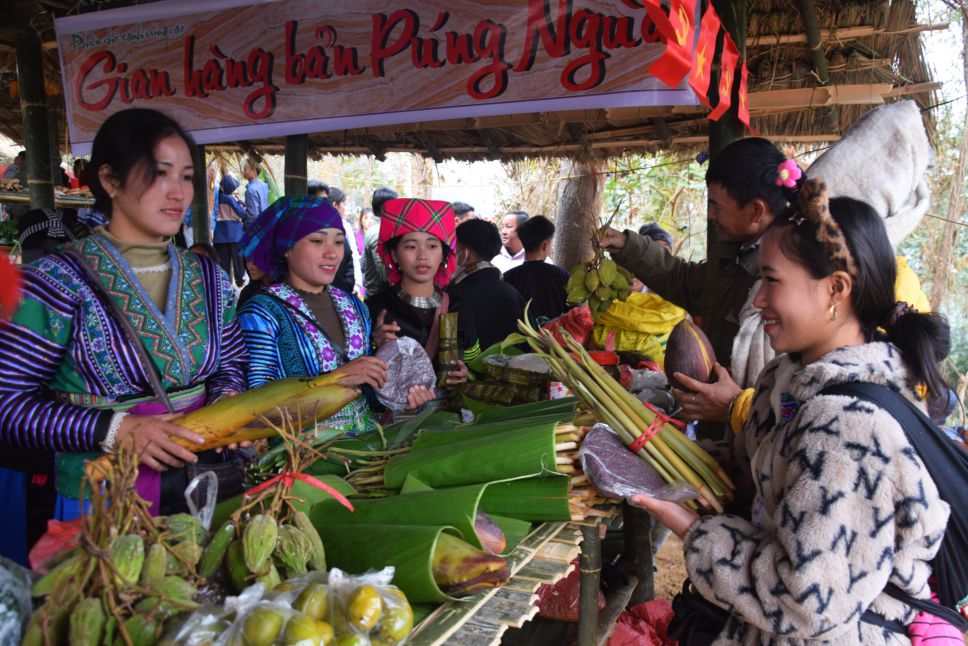
In many highland communes, market fairs are still maintained as an indispensable part of the lives of ethnic minorities. In Chieng Lao commune, the "Highland Green Market" held in Phieng Pha village community yard has become a familiar rendezvous for people and tourists every market fair.
The market space is built of bamboo, rattan, and leaf roofs, recreating the image of a traditional market, with stalls selling local products such as upland sticky rice, stone honey, river fish, dried meat, corn wine, forest vegetables, banh giay, brocade...
Besides buying and selling activities, the market is also bustling with folk games, shoe cracking contests, crossbow shooting, and cultural exchanges. Laughter, sound of khen, and drums blend together, creating an atmosphere like a festival.
Mr. Vu Minh Thai - Chairman of Chieng Lao Commune People's Committee, said: "The green market not only helps promote local products but also contributes to preserving traditional cultural identity, creating highlights for community tourism development, and increasing people's income.
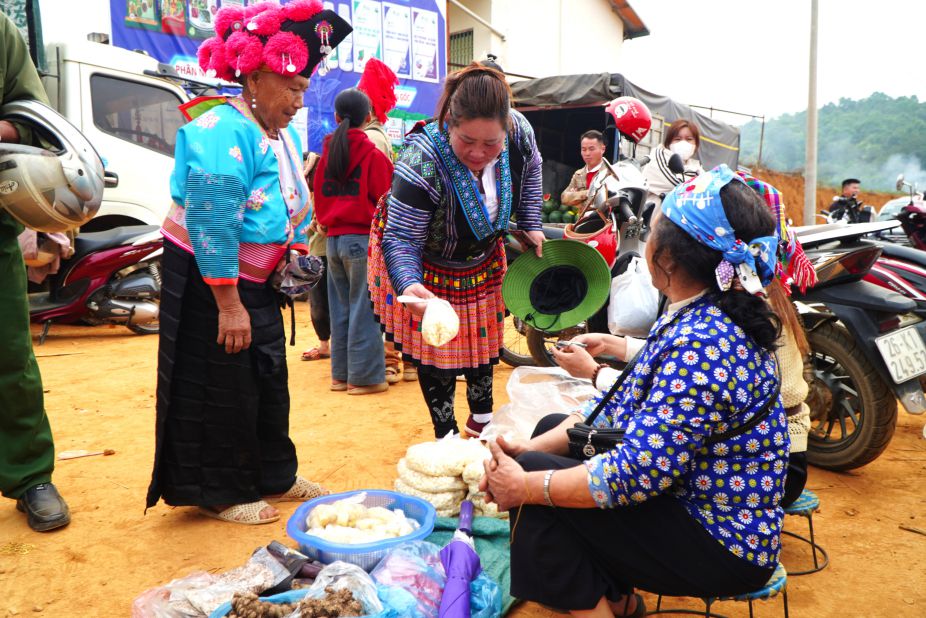
In Phieng Cam commune, the highland market fair is held in Nong Tau Thai village, right in the center of the commune. From early dawn, the space has become vivid with the brilliant colors on the costumes of the Mong, Kho Mu, Thai, Sinh Mun people in traditional dresses going to the market.
The market is divided into many areas, from agricultural products, pharmaceuticals, livestock to household and culinary items. Products such as corn, paddy, soybeans, wood ear mushrooms, chili, wild vegetables... are all grown or harvested by people to sell.
Ms. Giang Thi Sen, Co Muong village, Phieng Cam commune, excitedly said: "Since the commune has a market, my family has grown more vegetables, raised more pigs and chickens to sell. Going to the market not only increases income but also allows us to watch art performances, play folk games, and meet people, so it's very fun.
According to Mr. Dang Tien Dung - Chairman of Phieng Cam Commune People's Committee, the construction of the highland fair aims to create a place for goods exchange, linking economic development with tourism, and at the same time promoting local products.
The commune mobilizes villages to participate in booths, mobilizes socialization to build yards, roads to markets, and art stages. In the coming time, the market will be maintained twice a month, linking the market fair with tourism development, prioritizing typical local products," Mr. Dung said.
In Muoi Noi commune, the market fair has been held on Wednesdays and Sundays every week for many years. Suoi To market fair meets on the 9th of each month, Huoi Cuoi market fair, Quynh Nhai commune meets every 5 days. When mist still covers the mountains, people bring agricultural products, forest bamboo shoots, poultry, brocade to the market. Wherever they are, the highland market fair still retains its rustic beauty, where people bring what they make to exchange, meet, and share after working days.
Market along the Da River, bustling on the wharf
Not only are there markets in the mountains, the Da River lake area also maintains unique market sessions. In Chieng Sai, Tan Phong, Muong Sai, Chieng Hoa, Ta Khoa communes, riverside markets meet 3 times a month, attracting merchant boats from many provinces to exchange goods.
From the afternoon of the previous day, boats full of household goods, fabrics, needles, and agricultural tools had docked. The next morning, people in the area brought rice, corn, forest vegetables, and river fish to sell, creating a bustling trading scene on the wharf.
Mr. Ta Xuan Phu, a trader from Bac Giang, said that he has been following boats along the Da River for more than 30 years to sell goods. "In the past, each session had dozens of boats, now it's less, but people are still waiting for the market day. Not only to sell goods but also to meet and ask about each other," Mr. Phu said.
The riverside market has a very unique feature. Sellers display goods right on the boat, buyers stand on the shore or go down to the side of the boat to choose goods. Hot food vendors such as vermicelli, pho, sticky rice smoke make the market atmosphere even warmer.
Mr. Vang A Chu - Chairman of Chieng Sai Commune People's Committee, said that the riverside market has existed for many years, associated with the lives of people in the lake area.
The market fair not only serves the needs of buying and selling but is also a traditional cultural activity. The commune always coordinates to organize the market, ensuring safety so that people can feel secure in trading," Mr. Chu said.
Although traffic is more convenient and goods can be bought in many places, people still maintain the habit of going to the market fair. For them, the market fair is not only a place to exchange goods but also an opportunity to meet and share after working days.
Preserving identity
The common point of the market fairs in Son La is that they are always associated with the cultural life of ethnic minorities. People going to the market often wear traditional costumes, carrying products made by their own hands. The market atmosphere is therefore always close, simple and full of humanity.
Many localities are restoring and maintaining market fairs as a way to preserve identity and develop community tourism. Green markets, highland markets, riverside markets... not only help consume agricultural products but also become attractive destinations for tourists.
Ms. Nguyen Thi Hoa, a tourist from Hanoi, said that every time she goes to the market fair, she feels like participating in a festival. "Clean goods, friendly people, very cheerful atmosphere. Going to the market is like going out, both buying delicious food and understanding more about the culture of the highlands," Ms. Hoa said.
According to local leaders, maintaining market fairs contributes to preserving the language, costumes, cuisine, and customs of ethnic groups Thai, H'Mong, Kho Mu, Dao... At the same time, this is also a direction for sustainable economic development associated with tourism.
In the modern pace of life, the highland markets of Son La still echo with laughter, invitations, khen sounds, and flute sounds. It is not only a place for trade but also a place to preserve memories, preserve identity and connect communities through many generations.