
Lack of human resources behind the scenes
Concert nights with tens of thousands of spectators are becoming an increasingly familiar image of the Vietnamese performing arts market.
The stage is invested in more, technology is more modern, requiring more professional organization, attracting a large force behind the lights. However, the positions that make up a complete program such as director, sound, lighting, technique, arrangement... are lacking well-trained personnel.
Colonel, musician, Master Nguyen Mai Kien - Vice Rector of the University of Culture and Arts of the Army, said that Vietnam's artistic human resources are still scarce and the quality is not uniform.
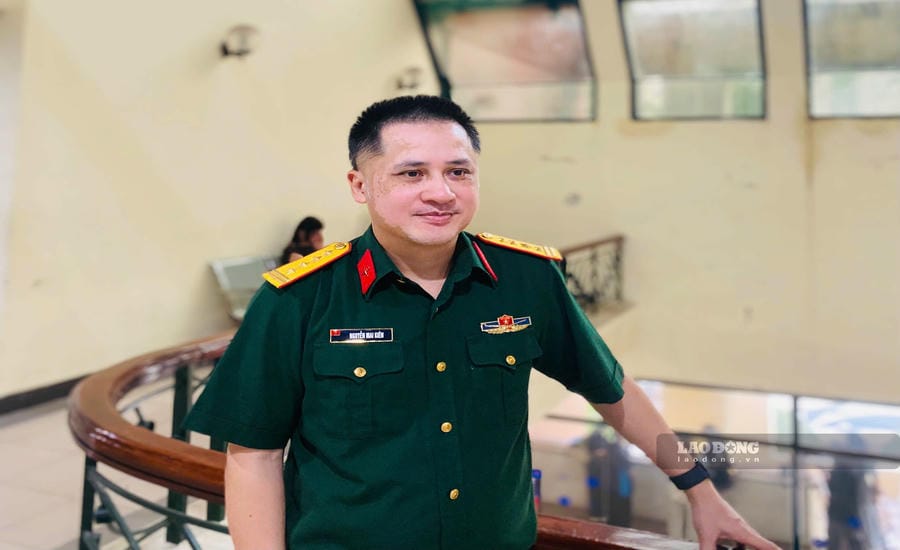
According to Mr. Kien, for a long time, when talking about artistic human resources, people often think of singers, musicians, people who directly create products. Meanwhile, to form a music industry, many factors are needed behind.
To have an art product, many stages are needed, from directing, ideas to singers and musicians directly performing on stage. Besides, there are also music, sound, lighting, technical and many other departments. These human resources are still very thin," Mr. Kien said.
This reality is also pointed out by music researcher, musician Nguyen Quang Long. He believes that the departments serving art today are "all very lacking and weak". The reason, according to him, is that Vietnam previously did not fully care about an entire industry but mainly focused on the final product.
To create a good product, there needs to be many systems below to support it. Our products may be good, may be good, but abroad people do not know about them because the product has not gone through a complete and professional production process," musician Nguyen Quang Long commented.
This gap is quite clearly shown in fields such as sound and lighting. According to Mr. Nguyen Mai Kien, art schools today still maintain training in directing, sound, lighting, theater, design and techniques surrounding art, but human resources in these fields are still lacking, including the teaching staff.
Meanwhile, market demand is increasing. Large programs still have to hire outsiders for some specialized positions. Musician Nguyen Quang Long said that the sound and lighting industry includes many jobs from directors and designers to sound and lighting techniques, studio techniques, but Vietnam still lacks highly trained human resources.
It is worth mentioning that the shortage is not only in the number of people in the profession but also in the view of the art profession. According to Mr. Long, the public sometimes only sees singers, and the parts behind are considered secondary. Students, therefore, often aim to become stars without seeing enough career opportunities in other positions.
From personal training to building a whole system
If you only look at the number of singers, musicians or artists, it may be difficult to fully recognize the human resource problem of the cultural industry. But when putting art products into a complete production chain, the gap becomes clearer.
According to musician Nguyen Quang Long, Vietnam is not short of capable people. The problem lies in the fact that talented human resources are not connected into a strong enough system to create products together. This is also one of the important differences when looking at the artist training model in developed markets.
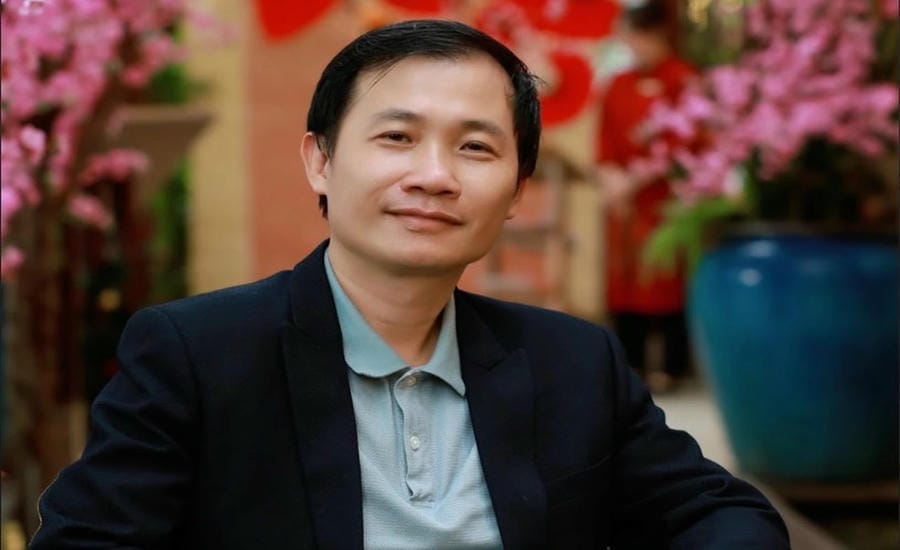
The important thing is to have a whole system. Maybe we have good singers, good music, but if the promotion, marketing and other support departments are not synchronized, it is very difficult to develop" - Mr. Long said.
From the perspective of training, Mr. Nguyen Mai Kien also emphasized that the human factor must be placed at the center. According to him, some countries like Korea have sent their entire systems and teams to train abroad and then return to work together. This approach helps trained people to coordinate with each other according to the same process, instead of each person having their own way of doing things.
The most important thing is people. In all circumstances, at all times, people are still the center. Therefore, investing in people is long-term investment," Mr. Kien emphasized.
This is also the reason why the story of human resource training cannot just stop at opening more majors or increasing the number of enrollments. If the market needs a complete team, the training institution must consider even positions that are less noticed, from stage techniques, sound, lighting to communication, management and promotion of artists.
Technology and AI can partially support this process, but cannot completely replace the requirements for humans. Mr. Nguyen Mai Kien said that AI can now perform many stages well such as harmony, orchestration, and even create relatively complete products. However, there is still a gap between a product that meets technical requirements and a work with artistic depth.
Therefore, in the process of developing the cultural industry, technology can become a tool to support training and production, but the foundation is still a well-trained workforce, capable of coordinating in a professional system.
Mr. Kien said that as the art market is expanding, the formation of a strong enough human resource system behind the stage will be one of the important conditions for Vietnamese cultural products to improve quality and gradually approach the international market.


