
City of silver and legends
In the novel "The Hidden Island" by writer Robert Louis Stevenson, the parrot of pirate Long John Silver continuously calls "pieces of eight" - famous Spanish coins. Few people know that many of those famous coins are cast from silver mined in Cerro Rico, a mountain located on the Bolivian plateau.
From the 16th century, silver from South America opened trade routes connecting Europe, America and Asia. Throughout the 16th - 17th centuries, Potosi city at the foot of Cerro Rico mountain was once one of the richest and busiest cities in the world. Traders, artisans, llama-less camel herders and convoys of goods created a bustling atmosphere in the dry and cold high mountains of the Andes.
Today, the journey to Potosi is still like stepping into a classic adventure novel. On the plateau, the wind blows through the reddish-brown mountainsides stretching to the horizon. Sometimes the road is just a small strip of land in the vast space, where flocks of birds are swept by the wind and sway like pieces of paper. Then suddenly ripe valleys with patches of yellow copper interspersed with stone walls, rows of sunflowers curving in the wind and terracotta houses nestled at the foot of the mountain.
Occasionally, a native woman in a multi-layered flared skirt and a faded fur hat leads the llamas across the road, creating a scene that is both ancient and surreal. In Bolivia, llamas are not only pets but also associated with the cultural life of the Andes region for hundreds of years.
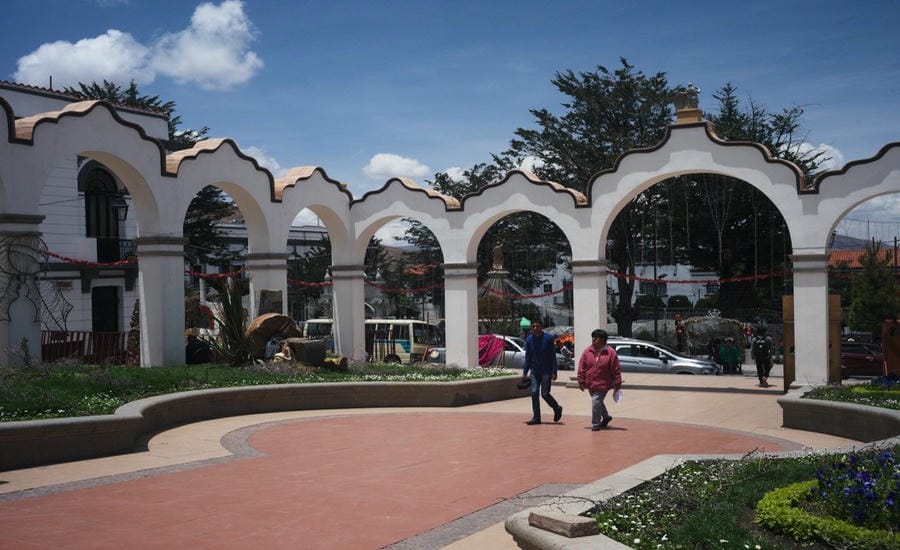
Not far from Potosi is the city of Sucre - considered the "white pearl" of Bolivia with ancient squares, Baroque-style churches and elegant white-painted streets. Plaza 25 de Mayo is always crowded with strollers. Couples sitting on stone benches in the shade of trees, old people washing shoes and chatting, and local women selling grilled corn by the fragrant smoke.
If Sucre has a gentle and noble beauty, then Potosi has a more mysterious attraction. The streets here are narrow and dark, the ancient houses have fox-eye wooden windows protruding from the walls as if wanting to observe every movement outside the street.
In the center of Potosi is Casa Real de la Moneda - Royal Mint, now a famous museum of South America. The building is almost an entire neighborhood wide with thick stone walls and many adjacent yards. Inside are giant silver rolling machines, ancient coin presses and hundreds of sparkling silver artifacts. There are galleries displaying crosses, candlesticks, silver frames; some rooms are like treasures stepped out of pirate stories. Few people expect that the place that once stored silver for the Spanish empire was also once a prison and a heavily guarded treasury.
The evening in Potosi has a very unique beauty. Yellow lights shine through the ancient wooden windows, music echoes from small roadside shops. People gather to drink chicha - a traditional Andean drink - and tell each other legends about the silver mountain that has fed the city for centuries.
Down the Cerro Rico Mountains
From any angle of Potosi you can see Cerro Rico. The pyramid-shaped mountain stands majestically against the sky, both majestic and mysterious. Locals call this place simply "Rich Mountain".
For centuries, thousands of indigenous miners have worked in harsh conditions under Cerro Rico. The narrow tunnels, mineral dust and mine collapses once made this place considered one of the harshest mining areas in South America.
Today, Cerro Rico is still mining. Although silver is no longer as abundant as before, many people continue to look for new silver channels alongside tin and zinc. For tourists, the most memorable experience is following a guide down the mountain.
Before entering the mine, tourists often stop by a small shop to buy gifts for miners: coca leaves, cigarettes or strong drinks. This is a long-standing custom in Potosi. The mouth of the mine appears under the dark red stone layer, and on the outside there are also marks of local auspicious rituals.
Just a few steps after daylight, the outside world almost completely disappears. The tunnel is so low that you have to bend over to walk. The sound of the carriage echoes in the dark, sometimes making the ground shake slightly. Old wooden ladders connect the deep underground tunnels, where the only light comes from small flashlights attached to helmets.
Sometimes the tunnel opens into deep darkness, only hearing the sound of water dripping echoing from somewhere underfoot. The air is thick with the smell of soil, rocks and minerals, making people feel like they are lost in a completely different world with the sunny and windy plateau outside.
When returning to the tunnel entrance, the light on the Bolivian plateau suddenly becomes unusually bright. The Andes sky is blue to the eye, cold wind blows through the reddish-brown mountainsides and somewhere birdsong echoes in the Andes sky. After many hours in the darkness of Cerro Rico, people understand why this mountain is not only a symbol of silver, but also the soul of Potosi - a city that still lives with old stories in the modern world.
El Tio - the mysterious god under the mountain
In Bolivian mining culture, El Tio is a supernatural entity that is both scary and believed to bring protection to miners. El Tio statues often have horns, large mustaches and strange smiles. Miners believe that offering cigarettes, beer or coca leaves to El Tio will bring good luck and peace when working in deep tunnels. This belief reflects a unique blend of Andes indigenous culture and European folk elements, creating one of Bolivia's most unique cultural features.
Pieces of eight" - the gold coin in the pirate legend
Pieces of eight" is the common name for the Spanish silver coin worth 8 reales, circulating since the 16th century. This type of currency has appeared densely in pirate novels and movies, especially "The Hidden Island". Thanks to its widespread use on international trade routes, "pieces of eight" was once present in Europe, America and even Asia. Many of those famous silver coins were cast from silver mined in Cerro Rico in Bolivia - once known as the "mountain that changed the world".


