
Lacquer is also the crystallization of heritage, creativity and Vietnamese cultural identity in the contemporary flow.
Journey from handicrafts to painting language
The cultural activity series "Touching the Old Quarter 2026" at the Hanoi Old Quarter Cultural Exchange Center officially opened on April 15. This year, the program chose lacquer painting as a highlight, aiming to connect heritage, contributing to preserving and promoting the value of traditional handicrafts in contemporary life.
Vietnamese lacquer art has a relatively special history of development. The origin of this art form is associated with the birth of the Indochina School of Fine Arts. Here, pioneering painters began experimenting, combining traditional lacquer techniques of handicrafts with modern Western art thinking.
Names like Le Pho or Tran Quang Tran have laid the first bricks for the transformation of lacquer, from a decorative art material to a real means of artistic expression.
An important turning point came when artisan Dinh Van Thanh invented the technique of mixing tan paint with pine resin, allowing paint layers to be polished underwater. This technique opened up the ability to create multi-layered, deep and magical color effects - something that had never existed before.
The pinnacle of lacquer art is marked by Nguyen Gia Tri - who is considered the "father of modern lacquer". He elevated lacquer to the position of a scientific painting form, bringing this pure Vietnamese material to the world.
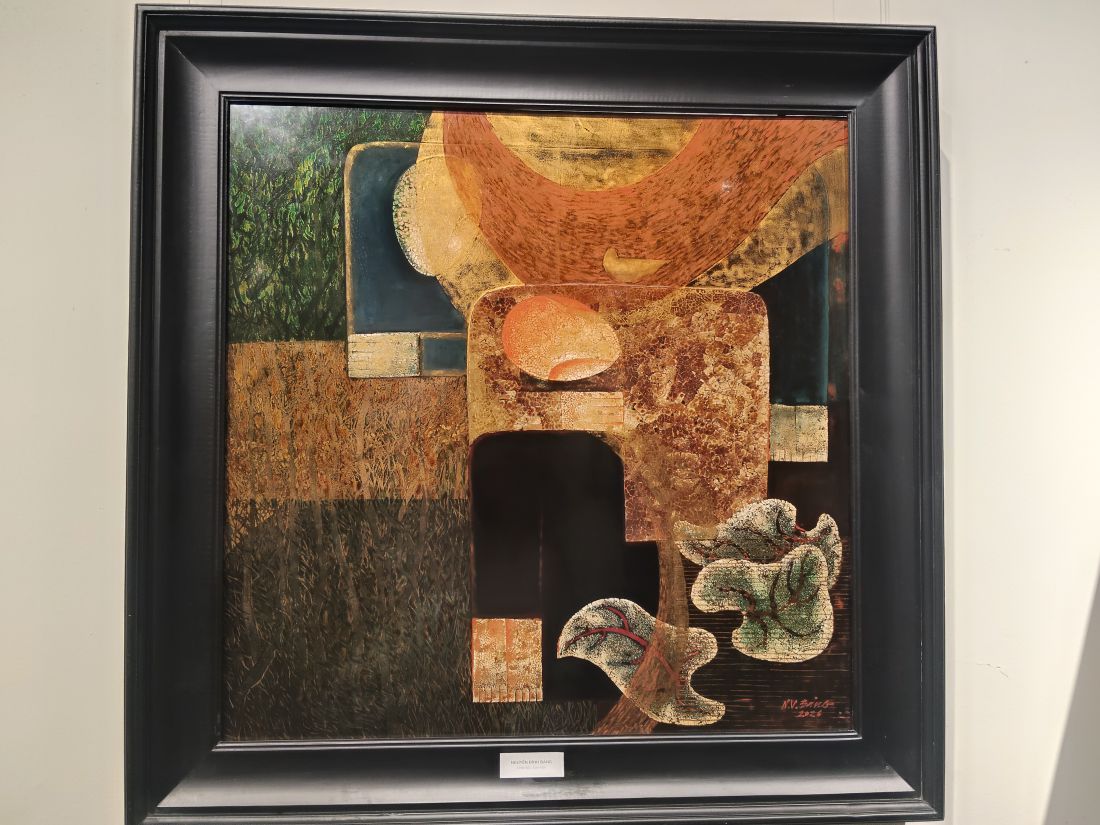
The core of lacquer lies in a special material: Rhus succedanea. This is a plant that mainly grows in the midlands, especially Phu Tho province - considered the "capital" of the lacquer resin mining industry.
Vietnamese paint resin has high adhesion, superior durability and good moisture and termite resistance. However, this is also a "difficult" material, which can cause skin irritation (commonly known as "eating paint"), requiring the craftsman to have experience and long-term adaptation.
A paint tree usually has a lifespan of 8 - 10 years, of which the resin harvesting time lasts from 4 - 6 years. Each drop of resin is harvested manually, undergoing a process of filtering, composting and stratification lasting many months to create paints of different quality.
Not only serving fine arts, our paint resin is also applied in life such as waterproofing, insulation, or even in traditional medicine - showing the versatility and long-standing value of this material.
After being harvested, the paint resin will be depositioned for 3-6 months, naturally divided into many different layers. These layers, depending on thickness and quality, will be used for each separate stage.
In which, moth oil paint and goutter paint, especially the high-end paint layers, play an important role in creating durability and depth for the work. Besides, paints such as then paint (black) or cockroach wing paint are processed through the process of painting with metal or wood, creating distinctive, difficult-to-mix colors.
The special feature of lacquer is not in "drawing up" but in "hiding" the layers of color. Each layer of paint is covered with a layer of meaning, a layer of image buried, waiting until polishing to gradually appear.
Lacquer is one of the art forms that requires the most elaborate and meticulous crafting process. A complete work often has to go through many stages lasting months, even years.
First is the "shaping" stage - creating a base for the painting with many layers of paint and fabric on the wood surface, to ensure durability and stability. Then, the artisan proceeds to attach materials such as eggshells, mussel shells, gold, silver... to create shapes and visual effects.
According to painter Nguyen Dinh Bang, former Head of the Fine Arts Department of Hanoi General Vocational Secondary School, the shaping stage plays a particularly important role, determining the durability and long lifespan of each lacquer work.
Next are layers of paint stacked on top of each other, interspersed with the water grinding process - the most characteristic step of lacquer. The artist will grind the surface of the painting underwater so that each layer of color gradually reveals itself, creating a unique depth effect.
To complete a lacquer painting, the artist not only needs skill and skillful techniques but also requires dexterity and sophistication in each stage, in order to create layers of color that reach harmony and are satisfactory," Mr. Bang shared.
Finally, the completely manual polishing stage helps the painting surface reach a mirror-like brightness, reflecting light vividly.
Keeping the color of painting through generations
Today, lacquer art not only exists in the space of painting but also extends to the field of applied fine arts, from furniture, decorations to spiritual products. Vietnamese lacquer products are increasingly favored by the international market thanks to their unique beauty and high handcraft value.
Training institutions such as Hanoi General Vocational Secondary School still play a key role in teaching and preserving the lacquer craft. Although the creative process requires high creativity and meticulousness, according to artist Nguyen Dinh Bang, for the younger generation to "keep the fire" with the craft, it is necessary to have formal training classes, and at the same time strengthen exchanges and share experiences from previous artisans to help them understand more deeply about the value of traditional crafts.
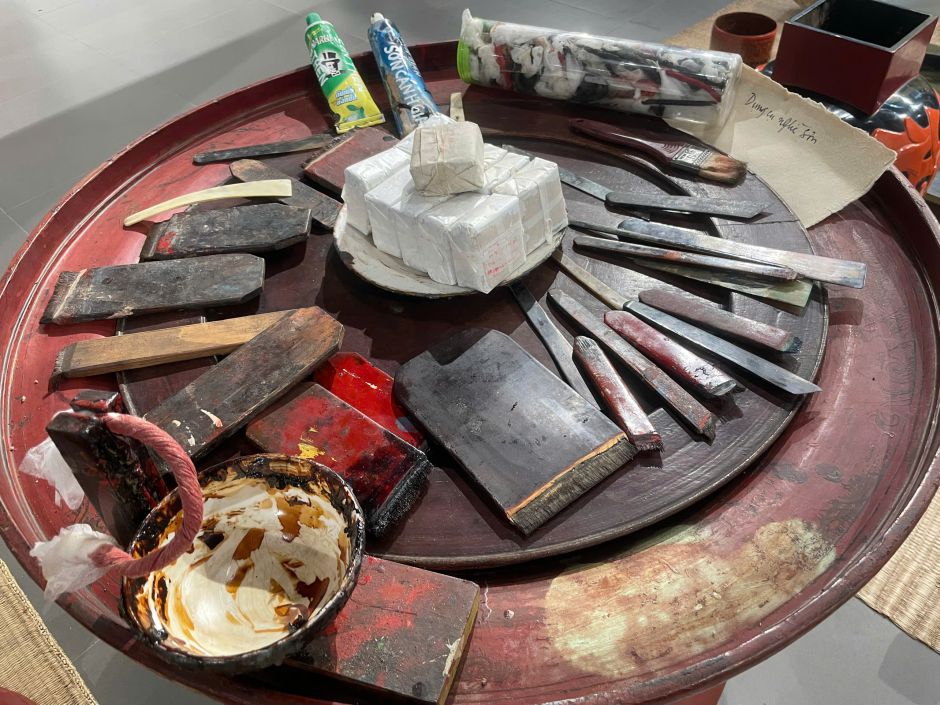
In addition, contemporary artist groups such as Son Ta Group are also striving to preserve the material of lacquer, while expanding creativity, bringing lacquer into new artistic experiments suitable for contemporary life.
In the context of globalization, lacquer is not only a technique, but also a declaration of cultural identity. Maintaining and developing this art not only helps preserve heritage, but also contributes to positioning the position of Vietnamese fine arts on the world map.
Vietnamese lacquer art is proof of the miraculous intersection between nature and people. From simple lacquer sap, through the skillful hands and creative thinking of painters, lacquer works have become symbols of sophistication, depth and national identity.


