Cap Sac ceremony - a milestone for maturity
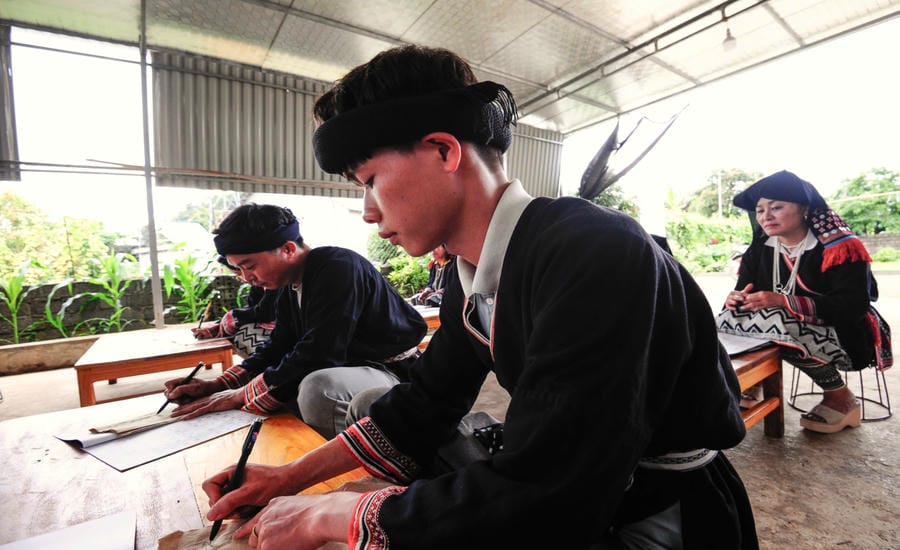
In the concept of the Dao Tien people, the Cap Sac ceremony is a milestone of maturity for a man, when the son is recognized by the community as having matured enough in spirit and knowing how to shoulder responsibilities with the family and lineage.
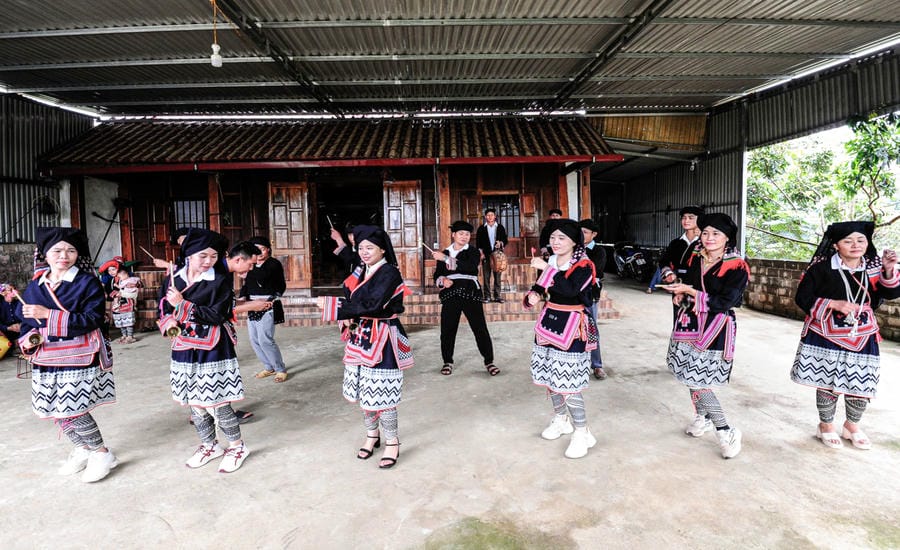
According to custom, boys from about 7 years old can hold the Cap Sac ceremony. The ceremony usually lasts 2 days and 2 nights, guided by shamans, elderly people and clan heads, with bells and dances in a sacred space.
Through rituals, young people are taught how to respect ancestors, live responsibly and understand the origin and customs of the nation. The Cap Sac ceremony of the Dao people was included in the list of national intangible cultural heritage in 2016.
If the initiation ceremony marks the maturity of the man. When the man truly matures, the traditional wedding will open a new journey, connecting the two families and clans. Customs that are no longer suitable in weddings such as white offerings, expensive organizations are gradually eliminated, many rituals are simplified but still retain the core beauty.
In particular, the bride's outfit carries the meaning of blessing. When returning to the husband's house, the bride wears an outfit prepared by the bride's family, then is given a new dress by the groom's relatives. This is a wish for the bride to be loved, protected and expresses the connection between the two families.
Pung Hieng - when community memories return
If the Cap Sac ceremony is associated with each person's journey of maturity, then Pung Hieng, or Tet Ha Nien, is a story of the entire lineage and community.
This is one of the major festivals, playing an important role in the religious life of the Dao Tien people. The festival promotes the role of the lineage head, and is also an opportunity for members to reunite, remember their ancestors and pray for good things. Some lineages still maintain Pung Hieng in a traditional form, usually held every 3-4 years, lasting 4-6 days during the Lunar New Year.
From the clan's rituals, Pung Hieng gradually became a community festival. The clan head's house became the center, where people returning from afar, the elderly meet their children and grandchildren, and young people have the opportunity to observe and learn traditional rituals. The sound of drums, gongs and dances echoed, creating an atmosphere that was both sacred and bustling.
The festival includes many rituals such as opening the year, offering sacrifices to ward off bad luck, offering sacrifices to welcome good things, along with thanksgiving rituals, praying for harvests and autumn. Each ritual has its own meaning but all sends wishes for family peace, favorable harvests, a prosperous life and community solidarity.
Pung Hieng is not only a festival but also a space for practice and cultural exchange. Songs, dances, and traditional rituals are preserved and passed down to the younger generation, helping the community understand more about their roots. Through each festival season, Dao Tien memories and identity continue to be awakened, preserved and extended in today's life.
Storytelling patterns on the indigo background
If rituals preserve memories with faith, costumes preserve identity with color and lines.
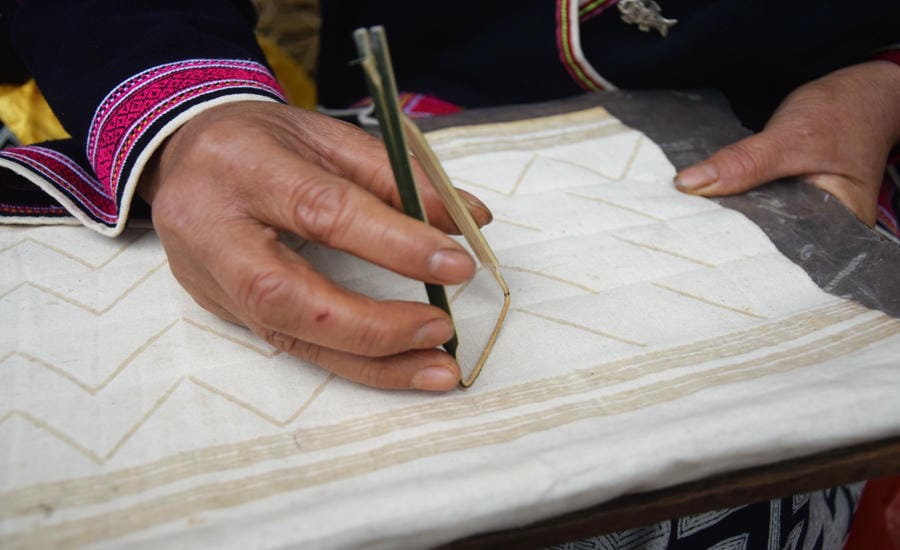
Dao Tien costumes are not too colorful, standing out with deep indigo and delicate white patterns. Characteristic is the technique of drawing patterns with beeswax on fabric, which is preserved and passed down by many generations of women.
Women's clothing includes shirts, scarves, belts, leggings and silver jewelry; men wear shirts, pants, headscarves and belts.
To create patterns, beeswax is drawn on the fabric according to traditional patterns, then indigo dyed many times. When the wax is removed, white patterns appear on the indigo background. geometric patterns and waves not only beautify but also express the views of the Dao Tien people on nature and life.
Ms. Ban Thi Mai in Ta Long sub-area, Thao Nguyen ward said that this technique is passed down from mother to child. Young girls must persistently learn and practice to create beautiful fabrics.
Behind each piece of fabric is ingenuity, patience and cultural values conveyed through each line. Therefore, preserving the craft is also preserving the Dao Tien identity.
To keep heritage alive in the younger generation
Besides the recognized values, Dao Tien culture also has bell dancing, ancient books in Nom Dao script, folk songs, back-and-forth singing and traditional cuisine.
Phu Yen currently has more than 8,000 Dao people, concentrated in some villages in Muong Coi, Muong Bang communes... In modern life, many villages have established art troupes, maintained practice, performances and taught cultural values to the younger generation.
In Khoai Lang village, Muong Coi commune, bell dances, cap sac dances, and back-and-forth singing along with embroidery and traditional costume tailoring are still maintained. Ms. Ly Thi Son, a member of the art troupe, said that the practice sessions help young people understand more about ethnic culture. Ly Diem Quynh is also actively learning bell dance, embroidery and costume tailoring, considering it a way to preserve the values passed down by grandparents and parents.
In the modern flow, some rituals are simplified, unsuitable customs are gradually eliminated, but core values are still preserved. From the sound of the Cap Sac ritual bell, the Pung Hieng ritual to the indigo color, beeswax patterns, each heritage contributes to telling a story about the history, beliefs and identity of Dao Tien.
Thanks to the transmission between generations, Dao Tien culture is not only in memory but continues to be present in today's life, contributing to enriching the picture of Son La cultural heritage and the Northwest region.