Fire dance ritual of the Dao and San Diu people in Quang Ninh creates cultural attraction

Đoàn Hưng |

Quang Ninh - The fire dance ceremony is a unique culture and belief of the Dao and San Diu people, expressing the aspiration for peace and the spirit of community cohesion.

The fire dance ritual is a long-standing custom, associated with major festivals such as the Ban Vuong festival of the Dao people and the Dai Phan festival of the San Diu people in Quang Ninh.

These festivals are usually held from the end of November of the lunar calendar to the end of January of the following year - the time when people have just finished the harvest season and entered the festival season at the beginning of the year.
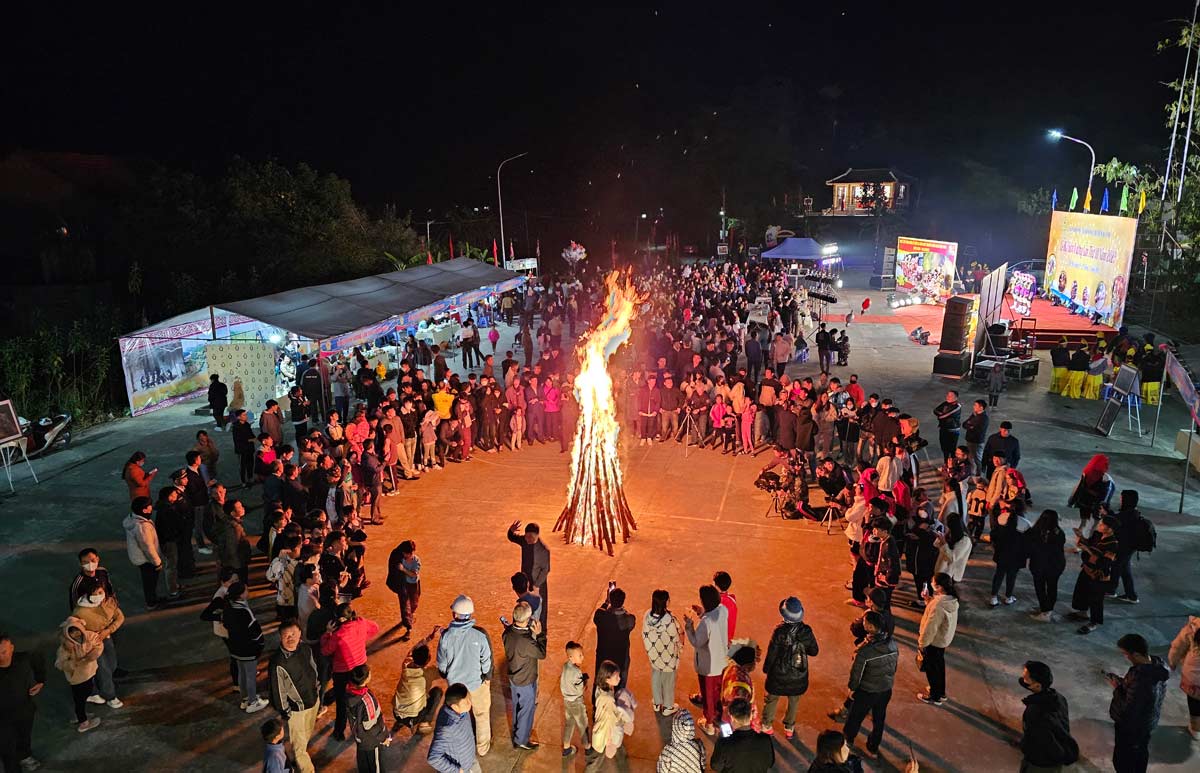
Khoảng sân rộng cho nghi lễ nhảy lửa tại Lễ hội Bản Vương, xã Ba Chẽ, tỉnh Quảng Ninh. Ảnh: Đoàn Hưng
Wide yard for fire jumping ritual at Ban Vuong Festival, Ba Che commune, Quang Ninh province. Photo: Doan Hung

To prepare for the fire jumping ceremony, the organizers will choose a wide yard, arrange firewood in the middle of the yard (like a campfire), burn it to form red charcoal and then spread it in the middle of the yard.

Members participating in fire dancing are usually from 4-6 people, mainly artisans and shamans in the community.

Before jumping into the fire, the participants will perform the "spirit possession" worship ceremony. After the worship ceremony, the participants will use barefoot, jump on red charcoal, and even use their hands to push the charcoal up high, creating bright streaks of fire in the night.

Folk artisan Trieu Thanh Xuan (Lang Cong village, Ba Che commune) said: "The ritual cannot be arbitrarily imitated, only those who have been trained can perform it.

Dancing on charcoal embers, participants will have moments of "spiritual" walking on charcoal embers, dancing, and releasing charcoal embers high. The ceremony has the meaning of chasing away diseases and bad luck.

Fire dance is the most anticipated ritual part of the Ban Vuong Festival in Ba Che commune. This is also an opportunity for people to thank the gods, pray for favorable weather, good harvests, peaceful life, and place their faith in the sacred fire that will bring good luck at the beginning of the year.

Along with the Dao people, the San Diu people in Quang Ninh also maintain the fire jumping custom (also known as coal wading) in the Dai Phan Festival, as in some San Diu ethnic communities in the Van Don special zone, Hai Hoa commune, Thong Nhat commune...
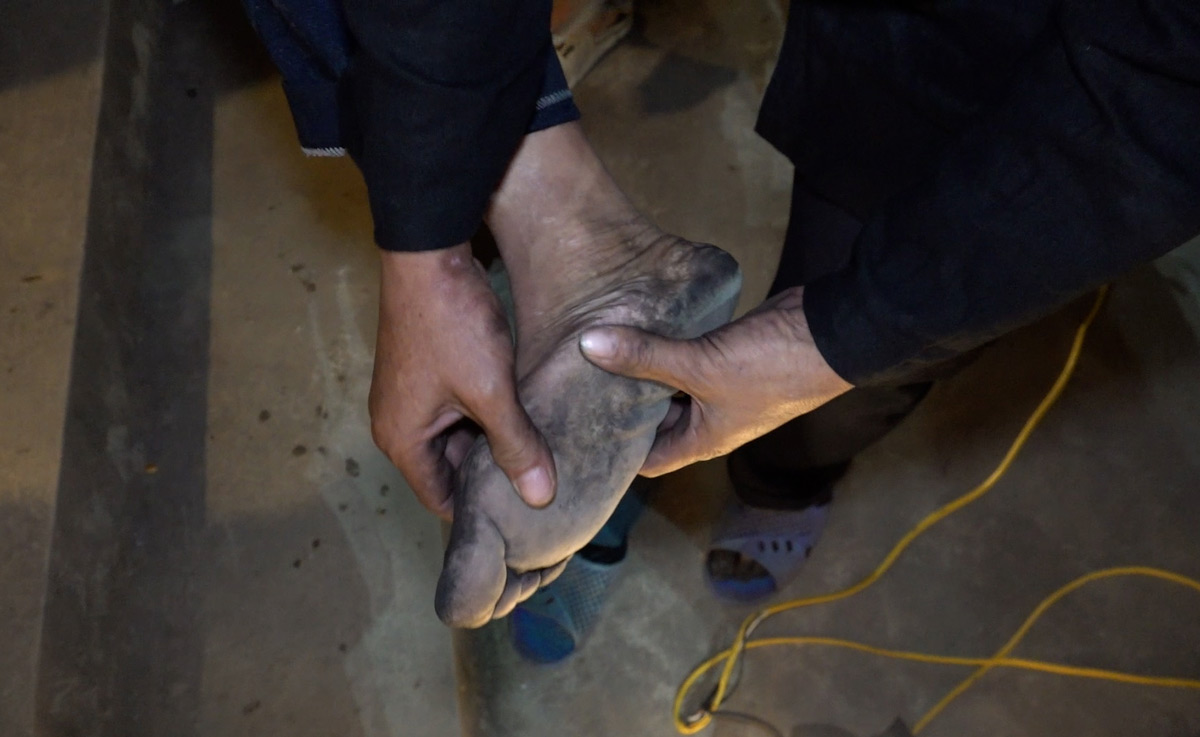
Bàn chân trần của nghệ nhân sau khi thực hiện nghi lễ nhảy lửa. Ảnh: Đoàn Hưng
The bare feet of the artisan after performing the fire dance ritual. Photo: Doan Hung

Ms. Nguyen Thi Thuy Anh - Doctor of Culture (Hai Phong City) - said: "In the worldview of the Dao and San Diu people, the gods are always present, protecting people. People participating in fire dancing believe that they are protected by gods, so even when walking on red charcoal, they are not burned, creating the mysterious color of the ritual.

The ritual usually takes place at night, imbued with spiritual elements but also rich in festival spirit. This is an opportunity for people to thank the gods, pray for good harvests, a prosperous life, and healthy villagers; thereby educating traditions and strengthening the spirit of community cohesion".

With unique cultural and religious values, the fire dance ritual has become a typical intangible cultural heritage, contributing to preserving national identity, and creating unique cultural experience tourism products in Quang Ninh.

Đoàn Hưng
RELATED NEWS

Successfully rescued 2 cases of dangerous pufferfish poisoning in Quang Ninh

|

Quang Ninh - February 18, according to information from Quang Ninh Provincial General Hospital, the unit has just successfully resuscitated 2 cases of critical respiratory failure due to pufferfish poisoning.

Quang Ninh welcomes 122,000 tourists on the 1st day of Tet

|

Quang Ninh - On the 1st day of Tet, Quang Ninh province welcomed about 122,000 tourist arrivals.

South Korea and traditional rituals during the Lunar New Year

|

Lunar New Year in Korea is an occasion for families to reunite, remember their ancestors and preserve the solemn traditional ritual at the beginning of the year.

Reprimanded for parking a car blocking the road, a man in Ha Tinh drove an additional car to block the back

|

Ha Tinh - A man parked his car to obstruct traffic when asked to avoid the road and drove another car to block behind, causing public outrage.

Fire at a car repair shop in Hanoi on the 2nd night of Tet

|

Hanoi - A motorbike repair shop on Nguyen Canh Di street suddenly caught fire fiercely on the night of the 2nd day of Tet, fortunately there were no casualties.

Reasons for the sharp increase in gold and silver prices last night

|

Gold and silver prices increased again, in which silver continued to increase more strongly than gold.

Fire dance ritual of the Dao and San Diu people in Quang Ninh creates cultural attraction

|

Quang Ninh - The fire dance ceremony is a unique culture and belief of the Dao and San Diu people, expressing the aspiration for peace and the spirit of community cohesion.

People exhume ashes for good luck at Ba Thien Hau Temple, Ho Chi Minh City

|

Ho Chi Minh City - On the evening of the 2nd day of Tet, people flocked to Ba Thien Hau Temple to worship, many people crowded into the main hall, picking up ashes from the incense burner to bring back with the desire to pray for good luck.

Successfully rescued 2 cases of dangerous pufferfish poisoning in Quang Ninh

Diệu Hoàng |

Quang Ninh - February 18, according to information from Quang Ninh Provincial General Hospital, the unit has just successfully resuscitated 2 cases of critical respiratory failure due to pufferfish poisoning.

Quang Ninh welcomes 122,000 tourists on the 1st day of Tet

Đoàn Hưng |

Quang Ninh - On the 1st day of Tet, Quang Ninh province welcomed about 122,000 tourist arrivals.

South Korea and traditional rituals during the Lunar New Year

Bùi Đức |

Lunar New Year in Korea is an occasion for families to reunite, remember their ancestors and preserve the solemn traditional ritual at the beginning of the year.