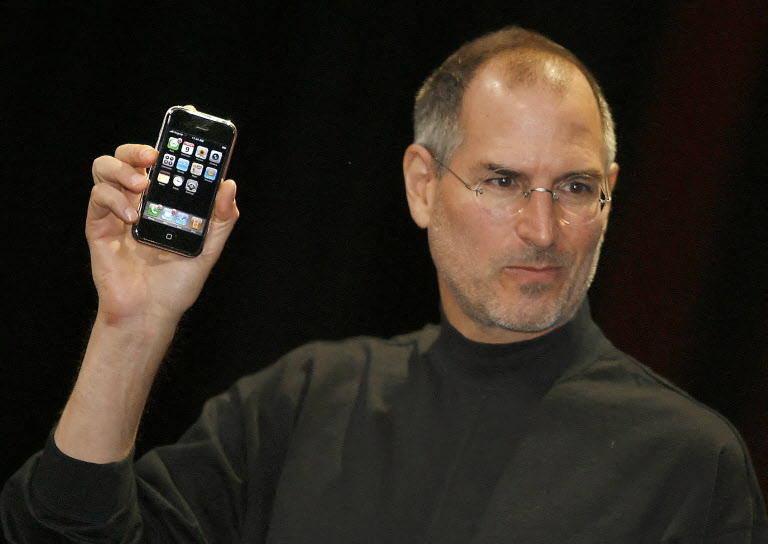
When Steve Jobs introduced the first iPhone in 2007, few people imagined that that small device would open a completely new chapter for the global technology industry. iPhone not only changed the way people communicate but also created a digital ecosystem, where software plays an equally important role to hardware. At the center of that ecosystem is iOS, the operating system that has become the "soul" of iPhone for nearly 2 decades.
In less than a month, in June 2026, the latest version of the iOS operating system will be launched, with a series of new features marking Apple's progress in the AI era. Before iOS 27 is launched, let's look back at the history of the operating system associated with this smartphone era.
The flow throughout the era
iOS's journey began in 2007 with the first iPhone. At that time, Apple did not call this platform iOS but used the name iPhone OS, based on the OS X platform for Mac computers. However, it was the intuitive touch interface and the optimization of user experience that helped iPhone be completely different from previous mobile phones.
The first turning point came in 2008 when Apple introduced the App Store on iPhone OS 2. This app store quickly created a mobile software revolution, paving the way for millions of applications and completely changing the business model in the technology industry. A year later, iPhone OS 3 continued to expand its multitasking capabilities with video recording, audio recording and support for multiple main screen pages.
By iOS 4, Apple officially renamed the operating system to iOS, and added application folders, FaceTime and Game Center. This was also the period when iPad appeared and expanded Apple's ecosystem. The following years witnessed a series of important changes. iOS 5 brought Siri and iCloud to iPhone, making virtual assistants and data synchronization a popular experience. iOS 6 marked the appearance of Apple Maps and Wallet.
One of the biggest shifts came to iOS 7 in 2013 when Apple completely changed the interface design to a more minimalist and modern direction. AirDrop and CarPlay also appeared, showing the ambition to connect the iPhone with all aspects of life. After that, iOS 8 and iOS 9 continued to improve the ability to link between Apple devices through Continuity and Family Sharing.
From iOS 10 to iOS 13, Apple focused on seamlessness and privacy. HomeKit, Universal Clipboard, Dark Mode or the ability to log in with an Apple account have contributed to creating an increasingly closed but convenient ecosystem. iOS 11 also opened the era of gesture navigation with iPhone X, changing the way users interact with smartphones.
Recent versions show that Apple is increasingly focusing on AI and personalization. iOS 15 brings Live Text and Visual Lookup, allowing direct content recognition from images. iOS 16 changes the lock screen with dynamic widgets, while iOS 17 adds NameDrop and a protective layer against device theft.
By iOS 18, Apple began to lay the foundation for a long-term AI strategy. iOS 26 later became a major milestone when Apple changed its year-by-year naming and introduced the Liquid Glass interface. Features such as live translation, call filtering or call waiting support show that iPhone is becoming a smarter digital assistant than ever before. iOS 26.5 continues to upgrade security with end-to-end encryption for RCS and expands AI suggestive features on Apple Maps.
Promising future with AI
After iOS 26, Apple's focus is on iOS 27, the version considered a major turning point in the company's AI strategy. If Apple previously mainly developed a closed ecosystem, iOS 27 is said to expand the ability to integrate artificial intelligence models from third parties.
According to revealed information, Apple is testing a feature called "Extensions", allowing users to choose an AI model that suits their needs. Familiar tools such as Siri, Writing Tools or Image Playground can connect to different AI platforms instead of just operating within Apple Intelligence. This means that the AI experience on iPhone will become more flexible and personalized.
Google, Anthropic and ChatGPT are said to be partners undergoing Apple's testing process. This approach shows that Apple wants to take advantage of existing hardware power to deploy AI directly on devices instead of completely relying on cloud computing.
If iOS once opened the era of modern smartphones, then iOS 27 may mark the next turning point, where AI becomes the center of mobile experiences. After nearly 20 years of development, the core flow of the "apple house" continues to move forward, not only with changes in interface or features, but also with the ambition to redefine how people interact with technology in the future.
Apple is said to be preparing a major upgrade for Siri with a new "AI brain" this year. However, catching up with competitors is not only a technology issue, but also related to how Apple integrates AI into the product ecosystem - from iPhones, Macs to wearable devices.
iOS 27 will be a breakthrough update for those who are passionate about photography and filming on iPhone. Up to now, Apple's default camera application has been considered quite simple, lacking in in-depth manual customization. Users often have to rely on third-party applications that come with troublesome costs or advertising to be able to fully control exposure or focus. However, this is about to change when Apple decides to integrate professional features directly into the operating system.