
Lao Dong Newspaper reporter had a conversation with designer (NTK) Duc Hung. He currently holds the position of Deputy Director of Thang Long Puppet Theater. Designer Duc Hung has his own perspective on fashion and investment and development for the cultural industry.
It is known that designer Duc Hung is currently Deputy Director of Thang Long Puppet Theater, is a designer, and also has many interesting roles in "Tao Quan", TV series, which role do you like to be remembered by the audience most?
- I was trained as an actress from the age of 16. After more than 40 years, many people still think I am a designer, in fact, when TV series are broadcast, especially through the movie "The Judge", it has helped me become known to many people. Through that, many people ask why a designer can act like that. But in fact, my job is a stage actor, I was trained from 1983 to 1986, after the 1st course of NSND Hoang Dung. Whether acting in movies or plays is still my profession, but I do not appear often, so many people are surprised.
Regarding fashion, I have achieved certain success, being known by more people. But I let emotions speak out to choose work in each stage, the most important thing is that I feel happy, wanting to dedicate the most beautiful creations to the audience.
He is currently Deputy Director of Thang Long Puppet Theater. It is known that in the context of many difficult stage theaters, Thang Long Puppet Theater is "sold out", with high revenue. In your opinion, what is the core strength that helps Vietnamese water puppetry not only exist but also "live well" in the face of the dominance of many modern entertainment types?
- Most of the audience who come to see puppetry is because of the naivety and innocence of the puppetry. The strength of water puppetry, in my opinion, the first thing is the specialness of the art form from 1,000 years ago, which is only found in Vietnam. That "uniqueness" is what attracts international visitors. Secondly, the stage of puppetry is on a water surface, in the middle of the water the puppet rises up, stimulating the curiosity of the audience.
Puppetry in general and water puppetry in particular, the innocence and naivety without arrangement of the puppets is the most attractive point to the audience. When watching movies, audiences often think about shaping, messages or arguments, but when watching water puppetry, the audience's mindset is relaxed and lightest. 45 minutes of watching water puppetry, laughing happily, the uniqueness of the puppet shaping, the way puppetry is performed... will remind international tourists of Vietnam with a special art form that cannot be confused with anything else.
That is what has attracted a large number of international visitors to Thang Long Puppet Theater, creating a high revenue source for our theater. Because of this attraction, many puppet theaters have been established nationwide such as in Nha Trang, Vung Tau (HCMC).
As a manager, what specific plans or strategies do you have to bring puppetry closer to the general public?
- Thang Long Puppet Theater has high revenue because we have art products that are attracting more customers in the world. But to make this type of art attract more customers, we must invest heavily in sound, lighting, stage and services. More importantly, we must make young Vietnamese and young people around the world love water puppetry, then revenue will be even more positive.
In the role of manager, I do the assigned functions and tasks correctly, but I am also fortunate to be an artist known to the audience, which is also a favorable point for the theater. That is also the common point of many art units today when the directors are all artists, people of the public such as: NSND Trung Hieu at Hanoi Drama Theater, artist Thu Huyen at Cheo Theater, artist Tan Minh at Song and Dance Theater...
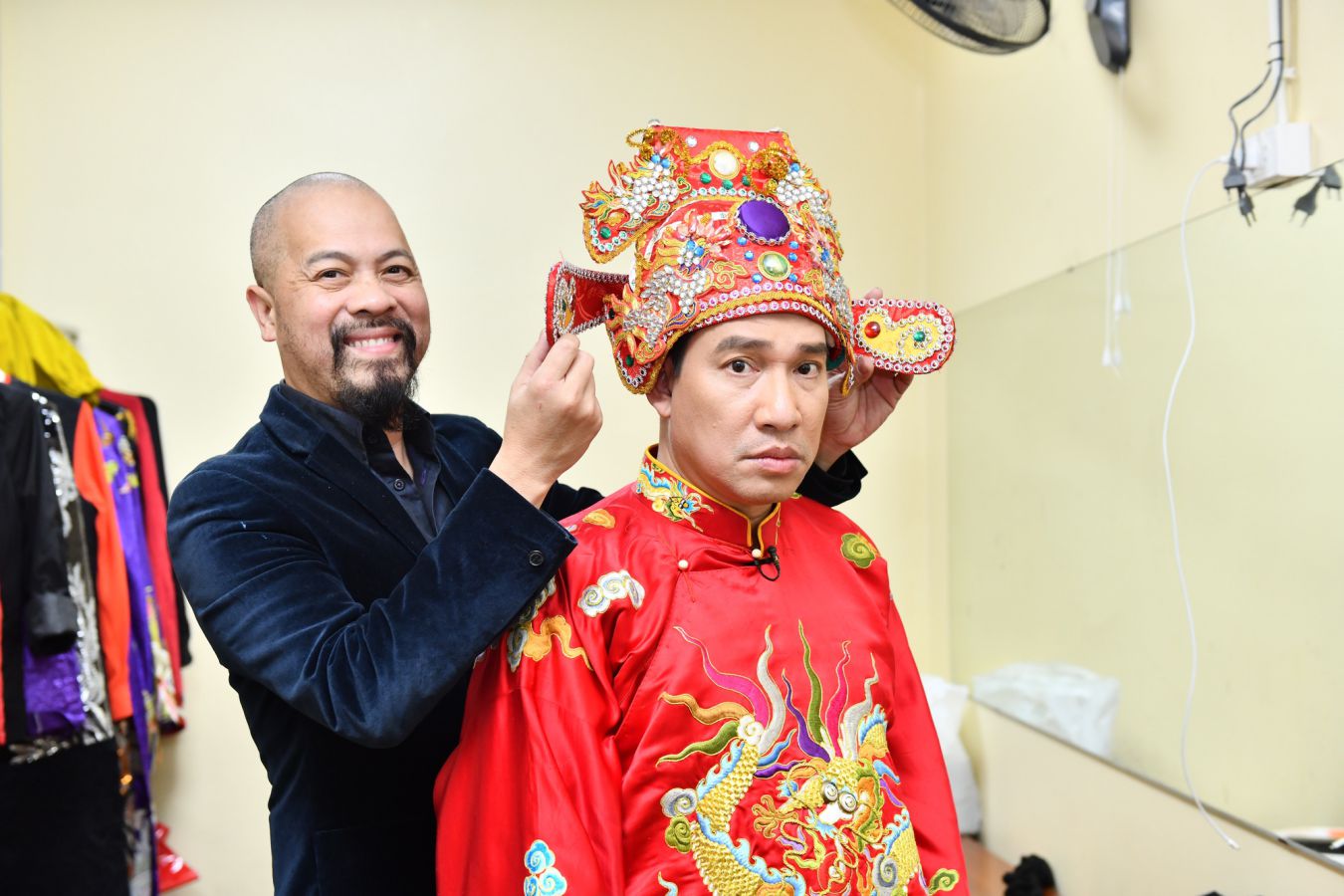
When mentioning designer Duc Hung, audiences often immediately remember the costumes in the Tao Quan program. Do you see this as a way to promote Vietnamese ancient costumes on national television?
- Initially, I did not set a design goal for promotion. Everything started when director Do Thanh Hai asked me to change the image for the character Bac Dau (NSND Cong Ly plays) to be more novel and attractive.
When the first episode aired, I was surprised by the public's reception but never intended to use the program's appeal as a lever for my personal brand. After more than a decade, I am happy because in addition to the content, the audience is also waiting for the appearance of the Tao. Up to this point, I realize that those costumes not only serve the year-end court but also unintentionally become archival materials in the media, even a reference model for students when making projects on culture related to the characters Nam Tao - Bac Dau.
Designing for "Tao Quan" requires a balance between aesthetics and symbolism. How do you maintain your artistic ego while still conveying the program's message?
- As a designer, when making performance collections at international fashion weeks, I can freely create according to my preferences. But with "Tao Quan", everything must be within the framework of the script to maximize support for the actors' acting. The designer is usually the third person who masters the script after the screenwriter and director. We discuss carefully about the shaping of each character. For example, in a year with the theme of "Continental Beauty", Beidou wearing a white dress is especially due to the script requirements and must be approved by the director.
I don't feel pressure because I always consider this as creating my own collection, which is aesthetically oriented for viewers. Usually, I prepare 3-4 months in advance so that everything goes smoothly because the program is filmed close to Tet, it is very difficult to edit if there are errors.
However, I still remember a year full of stress. Just 15 minutes before filming, director Do Thanh Hai called to request a change of costume for Bac Dau because the character's dialogue changed. At that time, I had to calmly return to the workshop in Hang Dau, taking advantage of unused costumes to create a completely new design in less than 10 minutes. Fortunately, the workshop is near the Vietnam-Soviet Friendship Labor Culture Palace, so I managed to send photos for approval and hand over clothes on time. Such ups and downs helped me gain more experience and bravery to handle incidents later.
The folk element is always strong in your designs. How do you make them not look old, so that foreigners see it as "fashion" and not "souvenirs"?
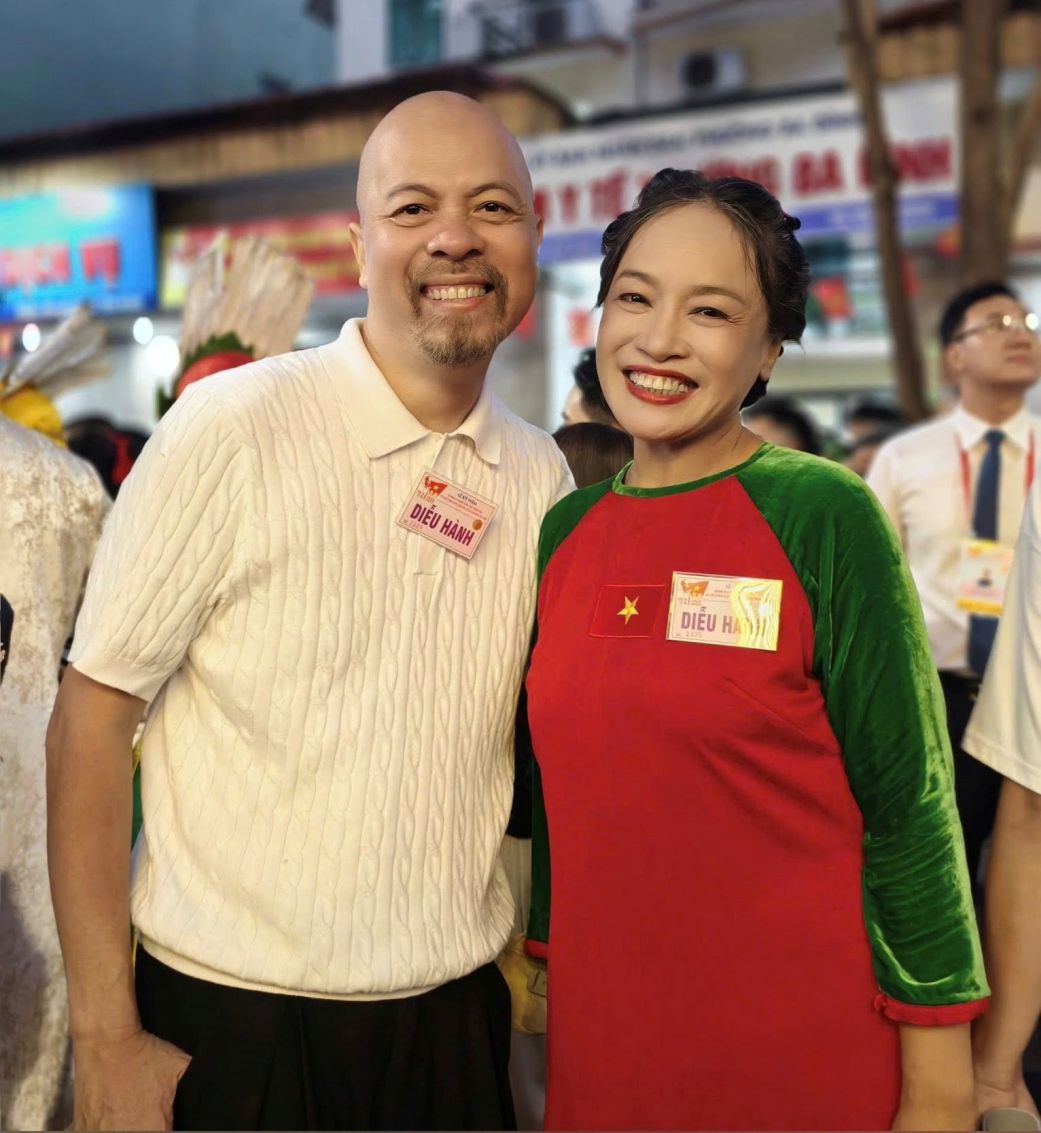
- My guiding principle is: "The end of the nation will reach the end of the world". I was born in Hanoi's Old Quarter, grew up in the cheo music of puppetry, so folk quality has permeated my blood.
However, if you simply bring in the old one, it will fail. We only use a small "painting" of tradition placed on a contemporary form. Fashion is the breath of life, it must change. I do not break the mold to lose the core spirit, but I "translate" it with materials, with modern tailoring techniques so that a Westerner can still wear it to the street and still feel proud.
How do you assess the young generation of designers today in bringing Vietnamese fashion to the big sea?
- Young people are very good now but a bit "gentle". When going abroad, foreign designers know how to "embellish" themselves, they have professional organizations to promote their image. Vietnamese fashion houses are often too simple, reluctant to talk about themselves.
I want to tell you: Don't be afraid to prove yourself worthy. Be bold to push your personal image up. Fashion is not just a shirt, it's a brand story.
Resolution 80 places high expectations on fashion. In your opinion, what roadmap do we need to have a real breakthrough in the next 5 years?
- I think that in the cultural and fashion industries, fashion is an extremely powerful "weapon", if not to say the top spearhead. Why? Because people don't always watch movies or music, but everyone has to wear clothes every day.
To break through, we need synchronous investment and consider fashion as a real economy, not just entertainment. There must be a connection between designers - producers - and national media channels. When we have fashion brands of national stature, that is when Vietnamese culture is "parading" around the world in the most natural and effective way.


