
According to research from Bloom Consulting - the world's leading brand consulting group - the true value of a brand lies in the emotions and impressions that remain in the minds of the international community.
Redefining branding
To make a brand "vive", that country must form a central idea. This must be a prominent, distinctive and consistent value and strength. For Vietnam, that central idea is not far from a massive cultural treasure.
However, Vietnam is currently in the "approaching" stage of forming a national cultural brand. This can be evidenced by the telling numbers in the list of Vietnamese National Brands in 2024. Among the 359 products that achieved the title, the tourism service industry group - which is considered a " spearhead" - appeared extremely modestly. The whole country only has 3 representatives named in this category: Saigontourist, Vietravel and Dalattourist.
This is a paradox worth considering. Vietnam has dozens of world heritages, thousands of festivals and a globally famous cuisine, but that strength has not yet been transformed into "brand products" that meet the standards to stand in the same ranks with other manufacturing and industrial sectors. The fact that there are only 3 travel agencies - all of which are giants in the industry - shows that we are lacking a diverse tourism brand ecosystem, especially brands based on creative economy or digital cultural services.
Not only stopping at domestic rankings, the necessity of repositioning the national brand of tourism is also clearly demonstrated when looking at international rankings.
Building a national tourism brand is one of the 5 indicators for the World Economic Forum (WEF) to measure "Priority for the tourism and travel industry", in the Tourism and Travel Development Index (TTDI) set. In the 2024 report, Vietnam ranked 59/119, down from the 2022 assessment period; the "Priority for the tourism and travel industry" index only reached 3.63 points (ranked 98/119).
It is time for Vietnamese tourism to enter a comprehensive overhaul, shifting from the mindset of exploiting cultural resources in the style of selling what you have, to creating a sharp brand ecosystem, where heritage becomes the driving force leading all experiences of the new era.
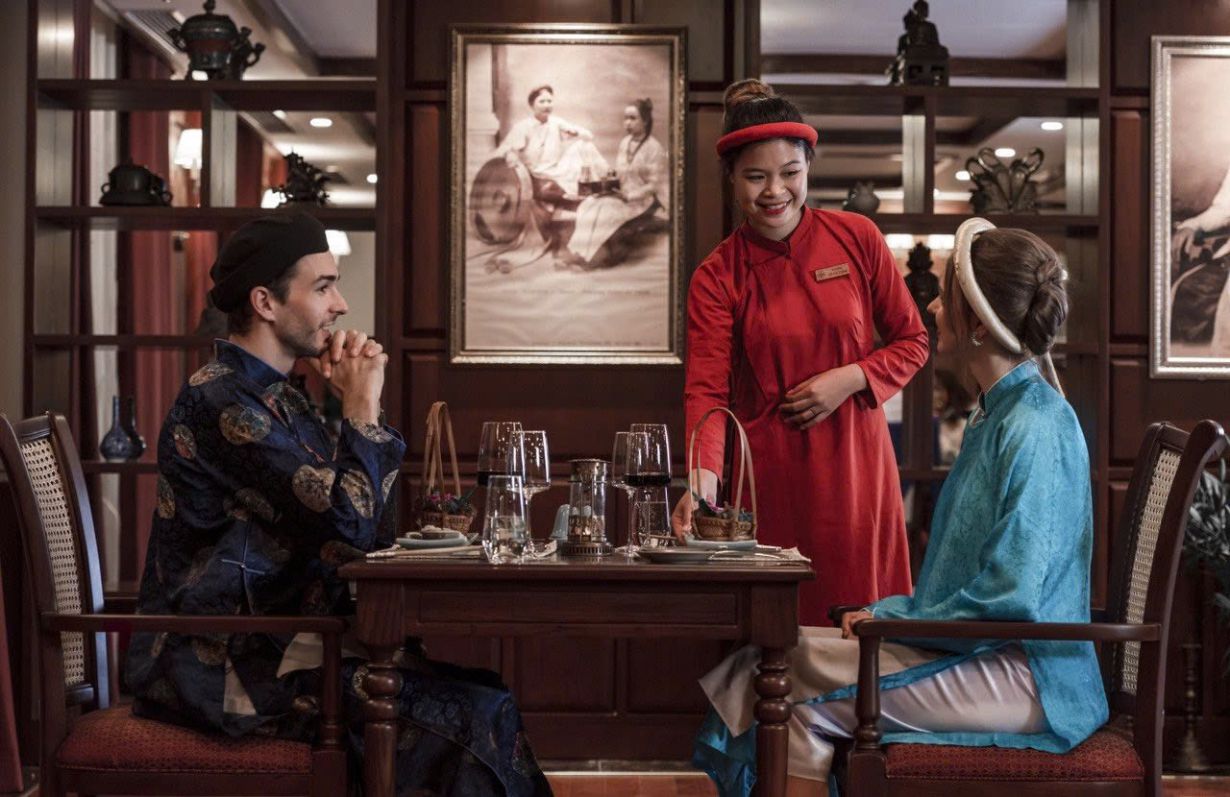

National tourism brand overhaul
Data from Bloom Consulting's 2024-2025 tourism brand ranking proves Vietnam's internal attraction: We rank 16th in Asia and 46th worldwide.
The ranking shows that Vietnamese tourism has huge potential, but to go further, we need a 3-5 year roadmap focusing on key campaigns instead of spreading out.
As of December 2025, Vietnam has 17 intangible cultural heritages recognized by UNESCO. According to Assoc. Prof. Dr. Bui Hoai Son - Member of the National Assembly's Committee for Culture and Society, this is an extremely important "symbolic capital", because it creates international trust and affirms identity. But it needs to be clarified: Heritage recognized is a brand resource, not automatically becoming a brand if there is a lack of modern storytelling, productification and distribution mechanisms.
Agreeing with this view, Mr. Vu Van Tuyen - CEO of Travelogy - said that to realize Resolution 80, creative cities such as Hanoi, Da Nang or Ho Chi Minh City become brand manufacturing plants. Vietnam needs to shift its thinking from purely communication to building a creative - data - market ecosystem.
We need a "long-term ordering" mechanism for digital tourism brands. If only doing short-term projects, creative spaces can hardly create an international mark. Successful countries all invest long-term in destination brands. Resolution 80 opens up opportunities for Vietnam to consider creative hubs as part of the cultural and tourism industry infrastructure, with clear budgets, mechanisms and goals.
Meanwhile, Dr. Pham Ha - Chairman of Lux Group, frankly pointed out a paradox in tourism development in the past: "We develop tourism but let many other industries interfere, including real estate, and many times take real estate as the center of tourism.
According to him, this is a deviation, because the core strength of Vietnam must lie in 4 pillars: Culture, nature, cuisine and human hospitality.
Mr. Ha emphasized that positioning Vietnam as a heritage destination is not simply promoting UNESCO titles, but a way to filter and attract high-quality groups of visitors - people with education, willing to spend a lot of money to enjoy and deeply understand cultural values.
Tourists look at a destination without clearly seeing the imprint of Vietnamese culture, they have no reason to choose Vietnam instead of another country," Mr. Ha said.
Therefore, identifying heritage as the center will help tell the story of Vietnamese tourism in a slower way but touching the emotions of tourists, instead of developing widely and lacking depth.
In addition, in the context of fierce competition, Mr. Pham Ha believes that the message "Vietnam - Timeless Charm" has existed for more than a decade and is no longer powerful enough to spread strong emotions. Vietnam's tourism brand really needs to change to be more suitable and newer... to focus on the emotions of tourists.
Brand renewal at this time is not about chasing quantity, but a strategic look back to enter a sustainable orbit. Resolution 80-NQ/TW is not just a guiding document, but a design to rebuild the ecosystem for the national brand.


