
Resolution 80-NQ/TW also sets a target that by 2030, 5 - 10 national brands must be formed in key areas such as: Cinema, performing arts, fashion design, tourism, culture...
If consumer goods manufacturing industries are aimed at exporting products, then with the cultural industry, we will export "Vietnamese stories", "Vietnamese style", "Vietnamese dreams", "Vietnamese colors"... To bring those dreams to the world, both meeting international standards and having unique features that cannot be mixed, we need national Brand selection measures and criteria for each cultural field.
And, for cultural industries that are carrying a great mission and great expectations such as cinema, fashion, cultural tourism... to achieve national brands, in addition to the selection criteria, a direct perspective on weaknesses is needed to be invested in and overcome soon.
Cinema and human resource training stories
In the direction of General Secretary To Lam at the Conference to thoroughly grasp and implement Resolutions 79, 80 of the Politburo, the General Secretary emphasized that the cultural industries (including cinema) are facing a serious shortage of human resources, especially a shortage of high-quality human resources.
Vietnamese cinema in 2025 has made outstanding breakthroughs, likened to a "trillion-dong steering wheel" bringing Vietnamese film revenue at 3,650 billion VND, nearly double that of 2024 (with 1,900 billion VND). However, with such revenue potential, investment in cinema is still very limited.
Human resources are still a major weakness of the Cinema industry when industrializing. The number and quality of films released annually are still far behind film industries in the region such as China and South Korea.
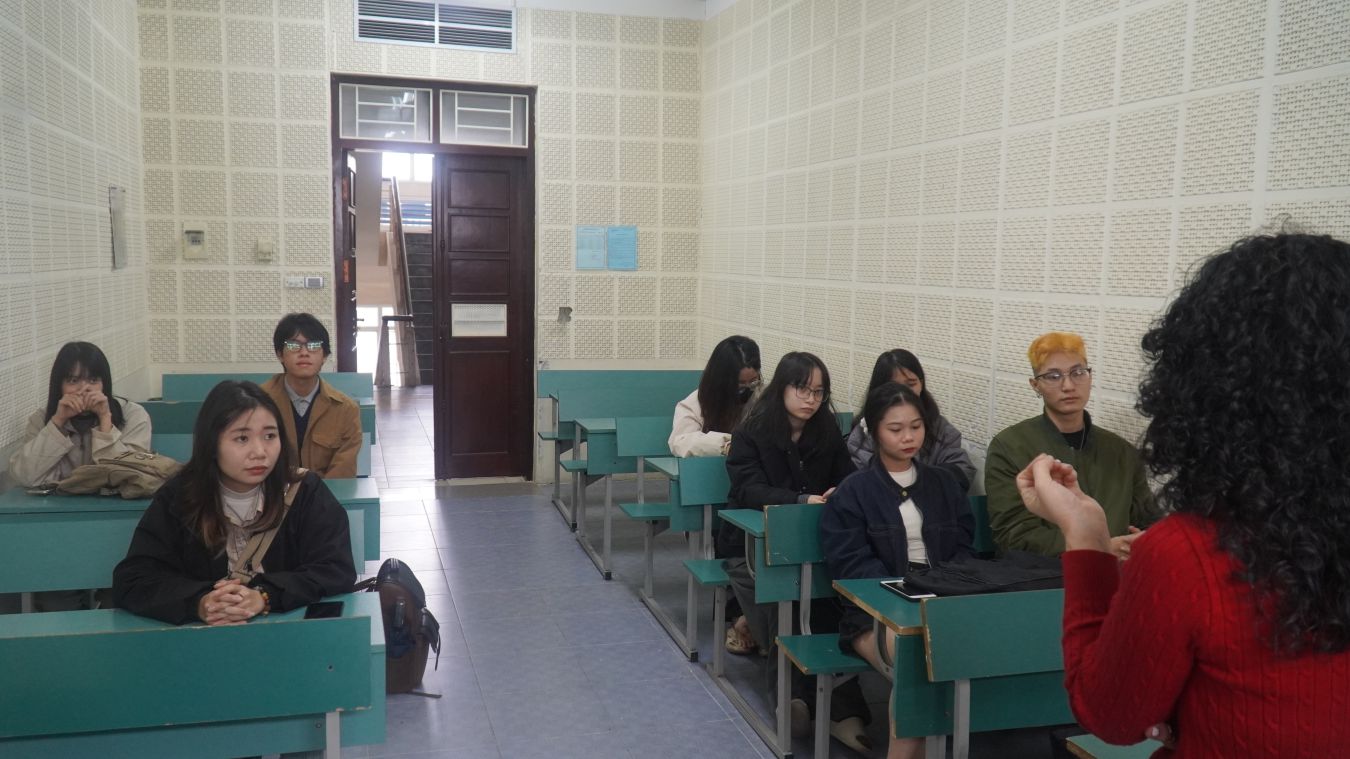
Talking to a reporter from Lao Dong Newspaper about human resource training for the film industry, Rector of Hanoi University of Theater and Cinema - Dr. Bui Nhu Lai said: "If other universities enroll thousands, even tens of thousands of students each year, Hanoi University of Theater and Cinema only enrolls a few hundred students for all majors. In which, each director class has about 15-20 students, the actor class has 15-20 students, and the screenwriting class is also the same. Especially, there are classes about Tuong, for decades now no one has been able to enroll anyone, because no one has registered to study.
When asked about the number of 15-20 students per class of directors and actors when the market is in great need, Dr. Bui Nhu Lai explained: "Because of the characteristics of our teaching, we cannot teach more. Classes are cramped. The school's facilities are also limited. For example, in filming classes, we lack modern filming equipment, because it is very expensive. Cameras used in teaching have been bought for decades, while the speed of science and technology development has been dizzying.
We also once dreamed of having a color car with many screens on it, so that a student of the Faculty of Directing could imagine what the job of a television director is like, they could see many different angles. However, the price of such a color car is up to 70-80 billion VND. So the dream only stopped at... a dream.
Before the question: "So it can be understood that because the price of filming equipment and color cars is expensive, the school only trains... vegetarians?", Dr. Bui Nhu Lai informed: "The school is still making efforts to find sources of income to rent equipment in a short time to help students have... access. The school also links with television stations and film crews to send students there... to admire, visit, intern, and learn.
According to Dr. Bui Nhu Lai, other universities with a large number of students can have large revenue from tuition fees. However, with Hanoi University of Theater and Cinema - the most professional and largest human resource training institution for the film industry - with a small number of students, it often faces many difficulties in training costs. Low lecturer salaries, limited teaching conditions.
Each director course has about 60 students divided into 3 classes. In the training process, many students cannot keep up, so when they graduate, there are about 40-50 students left. With a number of 50 directors and 50 actors graduating, they will usually have jobs immediately. Even students of the University of Theater and Cinema can start working from the 2nd year. So I can be proud that the unemployment rate of students of Hanoi University of Theater and Cinema is definitely very low compared to other professions," said Dr. Bui Nhu Lai.
Dr. Bui Nhu Lai expects that with Resolution 80-NQ/TW, when the cultural industry is given more attention and investment than ever before, when cinema is considered a key industry, education and training in the field of cinema will be given more attention.
To develop human resources, there is no other way but to invest. Invest in teaching equipment, for teachers. For example, we really want to invite foreign experts to teach students, this requires funding. Or, we have a plan to build an internal studio in the school, this plan has been around for 20-30 years, but it cannot be implemented," Dr. Bui Nhu Lai shared.
The Rector of Hanoi University of Theater and Cinema hopes that if more investment is made in education and training for the film industry, he will have a lot to share with the Ministry of Education, the Ministry of Culture, Sports and Tourism to remove obstacles.
Studio and unfinished dream
Film studios have long been the dream of many filmmakers. Director, People's Artist Khai Hung once shared that he has traveled to many countries - places with developed film industries, where there are giant, heavily invested film studios everywhere.
“Korea can collect money from tourism services at famous film studios. After the film achieves its effect, the film studio will immediately become a destination to attract audiences. China has Hengdian, which is both a giant film studio and attracts tourism. They have exploited it very effectively, while for us, film studios are still a problem that cannot be solved” - People's Artist Khai Hung said.
Co Loa studio was once built with many expectations. However, after filming 2 films celebrating the 1,000th anniversary of Thang Long, "Thai Su Tran Thu Do" and "Huyen Su Thien Do", this studio was "covered" waiting for the overall plan.
This place was once abandoned for weeds to grow, then used to... grow grapefruit. Many hundred-billion-VND projects to build Co Loa studios have been proposed, but so far they are still only on paper.
In addition, the differences in production and distribution between state-owned and private films continue to be discussed. Socializing capital sources, mobilizing large enterprises, and upgrading the technological infrastructure for cinema are still dreams that are expected to come true, creating a "turning point" for Vietnamese films by 2030.


