
Traditional festivals for generations have played the role of the heartbeat of the community stretching across the country. Vietnamese people return to the festival space to express gratitude to their ancestors, connect village and neighborhood relations, and pass on spiritual life from generation to generation.
However, as Vietnamese society enters the era of comprehensive integration and global competition, cultural management thinking is also changing strongly. Experts no longer see festivals simply as religious and belief activities that need to be framed and protected, but they carry a much greater mission many times over.
This fundamental change in awareness perfectly aligns with the strategic direction of the Party Central Committee. The historical document named Resolution 80-NQ/TW of the Politburo clearly affirms the guiding viewpoint: "Cultural and human development is the foundation, an important endogenetic resource, a great driving force, a pillar, a regulatory system for rapid and sustainable development of the country".
We have outlined a clear goal to deeply integrate national culture, associated with the market economy. In that strategic orientation, turning festival heritage into economic assets is vital. This process requires sharp vision to both preserve the original soul of the nation and create a huge financial flow to nurture the creative community itself and protect eternal heritage.
Awakening the "resource" of culture
Instead of relying on the milk of the State budget, many localities learn to generate revenue from cultural resources themselves through the lens of the cultural industry. Let's try to observe the flow of people flocking to the spring festival at the sacred space of Yen Tu, Huong Pagoda or admire the shimmering beauty of the full moon night of Hoi An ancient town.
That flow of people not only carries respect but also creates a huge demand for travel, accommodation, cuisine and souvenir shopping. Every step of tourists touching the festival space kicks off a strong economic cycle. People directly provide a chain of services to serve tourists, from designing cultural experience tours, opening culinary spaces imbued with regional flavors, to crafting sophisticated handicrafts...
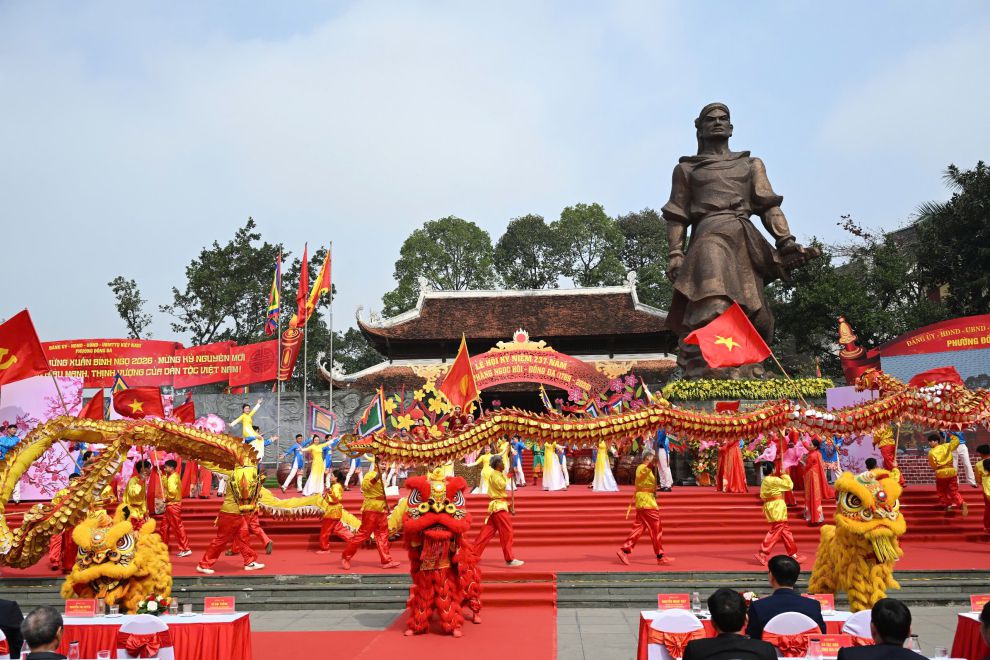
Money flowing from tourist pockets into community life brings stable livelihoods, helping people feel secure in clinging to and deeply proud of their homeland's culture and heritage. Moreover, profits continue to rotate and reinvest in relic restoration work, sewing traditional costumes and paying worthy fees to artisans who diligently pass on old skills. This closed cycle creates strong vitality, helping heritage self-sufficiently support itself amidst the bustling flow of the modern economy.
The cultural industry sees traditional events as a priceless source of materials to shape countless attractive derivatives. Contemporary artists find endless creative inspiration from bronze drum beats, lion dances or simple Quan Ho love duet... Fashion designers bring dragon and phoenix motifs from the Ly and Tran dynasties onto ao dai to perform brilliantly on the international catwalk. Film directors borrow village festival settings to weave countless vivid stories on the big screen, attracting millions of audiences to buy tickets to theaters. The delicate intersection between traditional elements and modern breath breaks down space barriers, turning traditional cultural festivals into national brands.
Institutional impetus will shape the consumer market
To realize this great aspiration, the political system from central to local levels is forced to radically change the way events are organized. State management agencies abandon the bureaucratic tapestry of subsidies, stop embracing all stages of organization that are heavily formalistic. Instead, the government apparatus plays the role of creating a transparent legal corridor, clearly stipulating safety, hygiene and environmental protection standards.
Resolution 80 especially encourages breakthrough policies to promote public-private partnerships through the policy of "deploying the model of public leadership - private governance; public investment - private management; public investment - public use for some cultural and sports facilities". Private businesses carrying abundant capital, professional management thinking and modern technology will step into this playground.
This flexible approach removes the bottleneck of a tight budget, while creating an endless space for creativity to take off. The professional organizing unit skillfully applies digital marketing skills, builds multimedia communication campaigns to promote the event to every corner of the flat world.
The driving force for promoting the cultural industry also comes from unprecedented breakthrough policies when the official document requires "Agree to choose November 24th every year as Vietnam Culture Day, with the policy of being a holiday, workers are entitled to full salary".
This humane decision creates a huge boost for the domestic cultural consumption market, giving people a precious time to enjoy a slower pace of life, with their families, participate in community activities and directly spend on service chains in heritage spaces. The soaring demand for cultural enjoyment stimulates service providers to continuously innovate and improve service quality to retain tourists.
Solving the commercialization problem by the principle of dynamic conservation
Besides favorable factors, the journey of turning heritage into commercial products always contains the risk of losing its original identity. The pressure to seek short-term profit easily pushes many organizing units into the trap of excessive theatricalization, distorting the deep spiritual meaning.
If the organizers squeeze in too many chaotic entertainment elements, abuse large-capacity electronic sound systems or display and sell a variety of poor quality foreign goods in sacred places, the festival space will quickly transform into a messy market. The fading of the traditional soul makes sophisticated tourists turn their backs, harming the pride of local residents and directly threatening sustainable development goals.
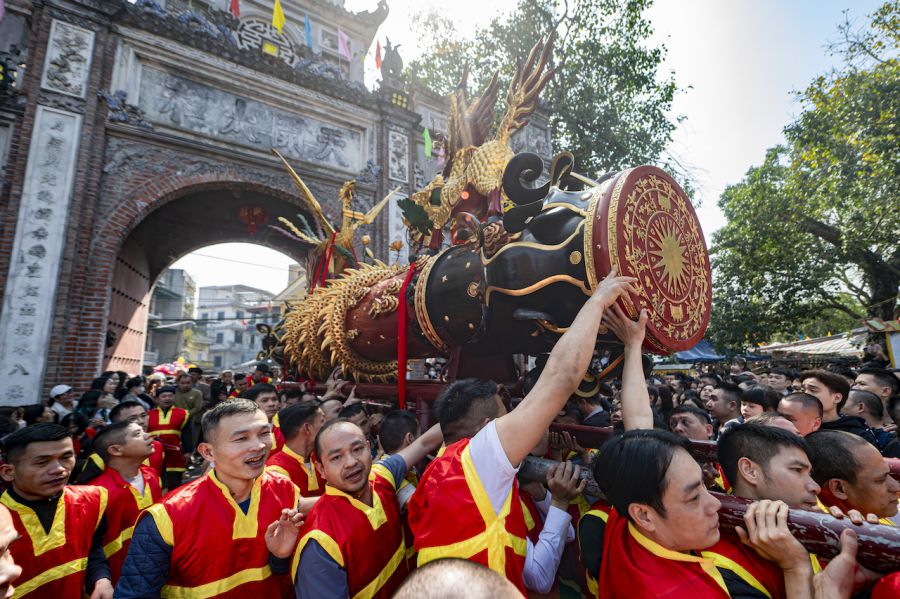
Experts put forward the principle of dynamic conservation to thoroughly resolve this thorny challenge. The golden principle requires the community to preserve the core religious practice space, the sacred ritual part and traditional interaction methods that are inherited. Creativity and commercial elements are only allowed to bloom in the auxiliary area, buffer zone outside the core of the heritage.
The program director skillfully uses advanced lighting technology, three-dimensional image projection techniques to recount the story of the formation of the craft village... The subtle approach helps the younger generation easily feel the historical message left by their ancestors without breaking the inherent quiet and solemn space.
At the same time, the screening and standardization of the service system plays a key role in shaping the festival brand. The organizing committee clearly plans a clean food area, handicraft display space and smart parking lot to permanently end the chaotic situation and offensive customer soliciting. Local artisans receive enthusiastic support from a professional design team to upgrade product designs, creating souvenirs that are both imbued with regional imprints and meet the modern aesthetic tastes of tourists.
Labeling and certifying quality for local cultural products helps elevate brand value, allowing the community to sell goods at higher prices, and earn greater profits from the process of diligent artistic labor. Tourists are always willing to pay the worthy amount of money when they fully appreciate the respect, professionalism and sincere hospitality of the local people.
Building a digital ecosystem, nurturing human resources
The fourth industrial revolution brings many tools and means to help us comprehensively digitize the festival operation process. Moreover, the technology world is actively realizing the task of "building and operating a trading floor for cultural and artistic products, especially in the form of digital assets" initiated by the Party. The smooth combination of artificial intelligence, blockchain technology and heritage resources creates a solid launching pad, driving the country's cultural industry to accelerate strongly.
People always hold a central position, deciding the success or failure of all cultural development strategies. The creative industry requires a team of personnel with multi-dimensional thinking, both deeply understanding the long history and excellently sensitive to the constant fluctuations of the global market. The national education system needs to urgently design training programs specializing in cultural event management, heritage economics and real-world art communication.
Students participate in the internship process directly at the relic management board, work as effective assistants for the director of the reality show and learn practical communication experiences from local people. This class of young experts brings a new breeze, replacing the old management thinking with a dynamic, creative and measurable working style with clear economic efficiency.
Looking back at the overall macro strategy, awakening the vitality of the festival heritage system is decisive for the solid position of Vietnam's creative economy on the world map. The festival no longer has the melancholic appearance of the remnants of the past but has truly transformed spectacularly according to the orientation of "turning heritage into assets, forming a heritage model to lead economic development".
Through the lens of innovation of Resolution 80, we deeply understand the inevitable law: "Investing in culture is investing in the sustainable development of the country, for the future of the nation". When state management agencies, private enterprises and the community hold hands tightly, joining hands to build a professional cultural ecosystem, all barriers will gradually disappear into the past.
Our country fully has the capacity to transform festivals on the S-shaped strip of land into a system of world-class tourism brands, rich in global competitiveness. Each beat of the village festival drum not only signals a sacred moment of harmony between heaven and earth, but also conveys a strong message about the will to self-reliance, aspiration to reach the peak and unlimited creativity of the Vietnamese nation in the glorious era of rise.


