
Vocational training, the key to poverty reduction
In the early days of September 2026, many workers who are ethnic minorities in Duc Co commune, Gia Lai excitedly participated in vocational training classes. Taking advantage of the day to produce and cultivate in the fields, in the evening and at night, many students come to community activity houses and traditional communal houses of villages to learn a trade.
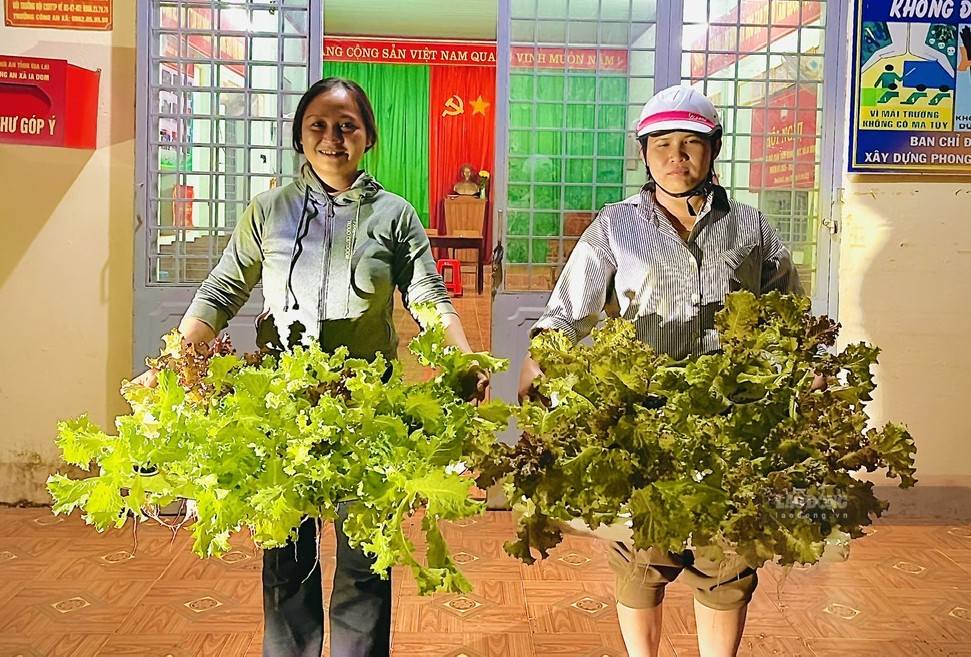
Implementing the National Target Program for Sustainable Poverty Reduction, Duc Co Commune People's Committee organized 3 vocational training classes for 70 students. The vocational skills trained are very close and practical to daily life such as growing clean and safe vegetables, cutting rubber latex...
Mr. Le Van Nghia - Deputy Director in charge of the Duc Co Vocational Education - Continuing Education Center (under the Department of Education and Training of the province) - said: "The Center identifies the goal of vocational training for rural workers, mainly ethnic minorities, who are direct human resources for production, labor, and services. Through vocational classes, workers are equipped with the ability to practice a simple profession, with discipline and industrial style.
More importantly, when learning a trade, workers in the area have the ability to find jobs, create jobs themselves and meet the requirements of the labor market”.
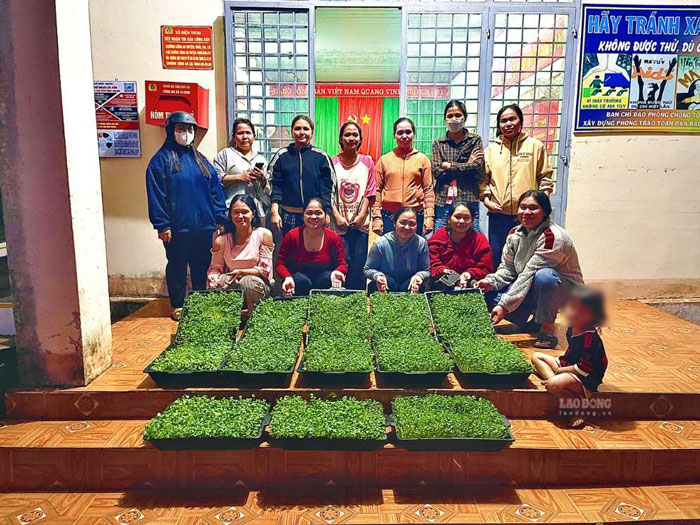
Teachers are not afraid of difficulties, going far to villages and hamlets to lecture, teach skills, and provide useful knowledge to workers.
Ms. Ro Mah H'jeng shared: "In class, the teacher taught me how to grow clean, safe vegetables, without using harmful chemicals that affect consumer health. In the immediate future, I practice growing vegetables in my family's garden to serve daily needs; when conditions permit, I will expand the area to sell to the market, supplying clean agricultural products to restaurants and supermarkets.
According to a survey by the Duc Co Commune People's Committee, after receiving vocational training, many skilled workers have good income from work to stabilize their lives.
Many students improve the productivity and quality of their family's coffee gardens and cashew gardens. Some other students participate in bricklayers and electricians teams, following construction contractors to build projects in the locality and neighboring communes.
Vocational training to give workers better opportunities
In particular, many other trainees with skills and knowledge of rubber care and latex harvesting have easily applied for jobs at companies 72, 74, 75, Binh Duong Company and Economic - National Defense Team 717 (production and economic units of Corps 15 stationed in the area).
Units provide additional support for the training class, developing "Golden Hand" skills in planting, caring for and shaving rubber latex, helping students gain more practical knowledge. At the same time, students experience practice at rubber plantations. Units commit to receiving students to work as workers after obtaining a practicing certificate.
Skilled workers receive a fairly good salary, averaging 7-8 million VND/month, and are fully covered by social insurance and health insurance.
According to Mr. Le Van Nghia - Deputy Director in charge of the Duc Co Vocational Education - Continuing Education Center, the unit regularly coordinates with the Duc Co Commune People's Committee, the Fatherland Front Committee, and reputable people in villages and hamlets to propagate and mobilize ethnic minorities to participate in short-term vocational training classes.
Teachers and officials of the Department of Culture and Social Affairs coordinate vocational counseling for workers suitable to the capacity and conditions of each trainee, so that they are interested in learning a profession, aware that vocational training aims to increase income, gradually eliminate hunger and reduce poverty, and improve material and spiritual life.
Vocational training and retraining over the years aims to improve the knowledge and skills of workers, associated with the application of science and technology in production.
When teachers provide a new variety with higher yield and drought resistance, a water-saving drip irrigation technique, organic farming methods... will bring added value to each garden of mountain workers and ethnic minorities.
According to Decision No. 328/QD-TTg of the Prime Minister on the program "Innovation and improvement of the quality of rural vocational training to 2030", the goal is comprehensive innovation, improving the quality and efficiency of vocational training for rural workers, contributing to the shift in labor structure, economic structure, creating jobs, increasing income for workers, and narrowing the gap in the rate of trained workers between rural and urban areas.
Commune and ward authorities are responsible for focusing on training quality human resources to serve advanced and modern agricultural production; training to convert a part of rural labor to industry and services, serving the cause of industrialization, modernization of agriculture, rural areas and international integration.
The goal is that by 2030, on average, the whole country will annually train, re-train, and improve vocational skills for about 1.5 million rural workers.
In which, ethnic minorities of age who are trained in occupations suitable to their needs, conditions and characteristics account for about 70%; the rate of workers with jobs after training reaches over 85%.


